4×4S.ORGTHE REGISTRY NAMED MODEL · 1968–72
NAMED MODELMilitary · UKUnited Kingdom

Series IIA Lightweight.

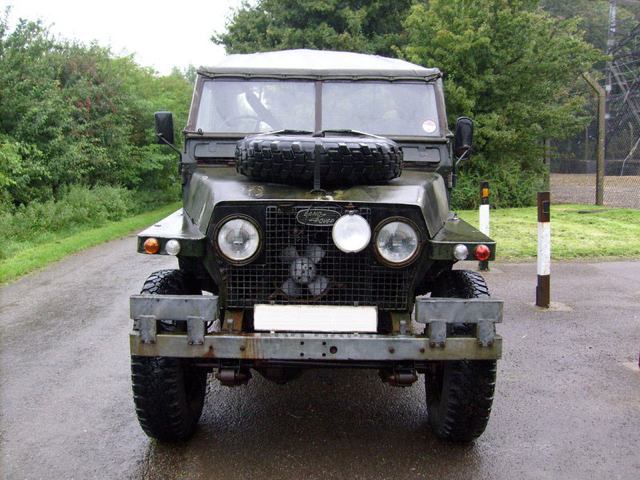
The Series IIA Half Ton Lightweight, the British Army's airportable 88-inch of 1968–72, in its early form with the headlamps set inboard in the radiator panel and shallow wings carrying paired side and indicator lamps: the 'Rover 1', built light enough to be slung under a Wessex helicopter.

Sources & evidence
BASE VEHICLESeries II 88″BUILT BYRover Company (British Leyland), SolihullIN SERVICE1968–72OPERATED INUnited Kingdom, NetherlandsPRODUCTION2,989 Series IIA LightweightsLAYOUT4 wheels · 88″

The record

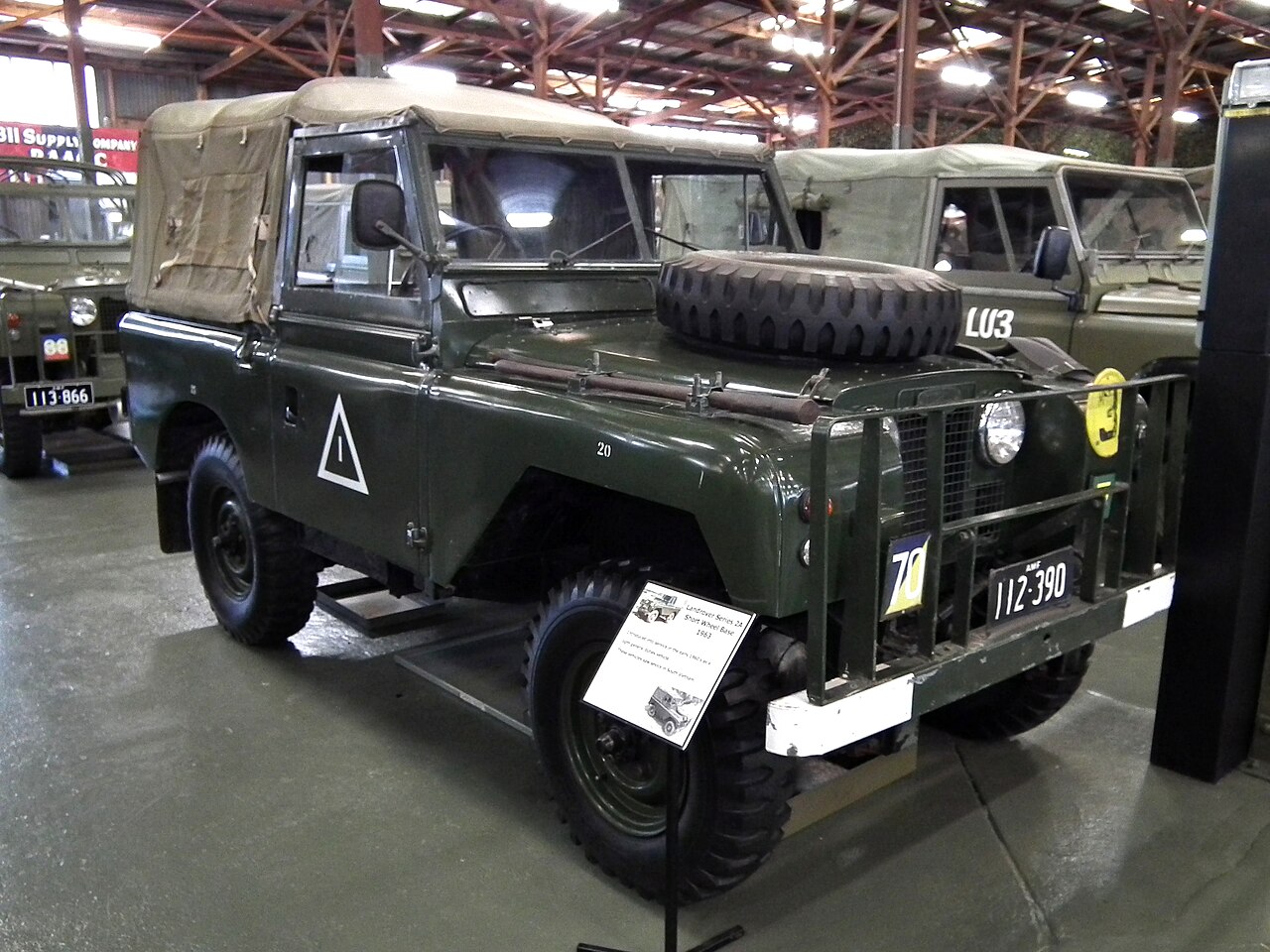
Land Rover's Lightweight was designed to a War Office requirement for a utility vehicle that a Westland Wessex, the forces' medium-lift helicopter of the 1960s, could carry underslung: a 2,500 lb (1,134 kg) load. Solihull took the 88-inch Series IIA chassis and drivetrain and drew a new, narrower, flat-panelled body around it whose wings, doors, tailgate, bumpers and windscreen could all be unbolted and left behind, so that the vehicle stripped for the sling weighed about 2,808 lb (1,274 kg). Officially it was the Truck, Utility, ½ ton, 4×4, Rover Series IIA — 'Rover 1' in service shorthand — and it was offered as a 12-volt General Service vehicle or the 24-volt FFR (fitted for radio) with its screened electrics.

Production began in November 1968 and the first examples entered service in 1969. On those early Series IIA vehicles the headlamps sat inboard in the radiator panel, because the shallow front wings were shaped only to cover the wheels and carry the side lights and indicators; in 1970 the lamps moved out to the wings, which is the arrangement the Series III Lightweight inherited when it replaced the IIA in 1972. In all 2,989 Series IIA Lightweights were built before the change-over, against 37,897 Lightweights of both marks by the end of production in 1984. They went to all three services, the great majority to the Army, and stayed in British use into the 1990s; the type was also exported to more than twenty countries, the Dutch armed forces taking left-hand-drive diesel vehicles.

The registry's model shows an early Series IIA in its inboard-headlamp form, in the Deep Bronze Green the Army painted its vehicles before the change to NATO green. It follows the Wikimedia Commons photograph by Meltie; that vehicle carries an owner's electric fan and an extra spotlamp, which are not represented.
Specification

MANUFACTURERRover Company (British Leyland), Solihull
MANUFACTUREDNovember 1968 – 1972 (Series IIA); Lightweight continued as Series III to 1984
ENGINE2.25 L petrol inline-four (73 hp); 2.25 L diesel inline-four (62 hp) for some export contracts
PRODUCTION RUN2,989 Series IIA Lightweights (37,897 Lightweights of all marks, 1968–84)
COUNTRY OF ORIGINUnited Kingdom
OPERATED INUnited Kingdom, Netherlands
STATUSretired from service; many preserved
DESIGNATIONTruck, Utility, ½ ton, 4×4, Rover Series IIA ('Rover 1')
WHEELBASE88 in (2,235 mm)
STRIPPED WEIGHT~2,808 lb (1,274 kg) with removable panels and fittings off, for the Wessex sling
HELICOPTER SLING LIMIT2,500 lb (1,134 kg) — Westland Wessex
ELECTRICS12 V General Service, or 24 V FFR (fitted for radio)
HEADLAMPSInboard in the radiator panel on early IIA vehicles; moved to the wings in 1970
RECORD KINDNamed model
MODEL LINESeries IIA
WHEELS4
NOMINAL WHEELBASE88″
CATEGORYMilitary · UK

Catalogue fields describe the vehicle's structure and body as this registry records it. They are not certified factory measurements, and no performance figures are published here.

Variants & colours

Factory colours

  • Deep Bronze Green
  • NATO Green (IRR)

Codes on hover. Hex values are representative approximations of period paint unless a source states a measured value.

AI rendering impression

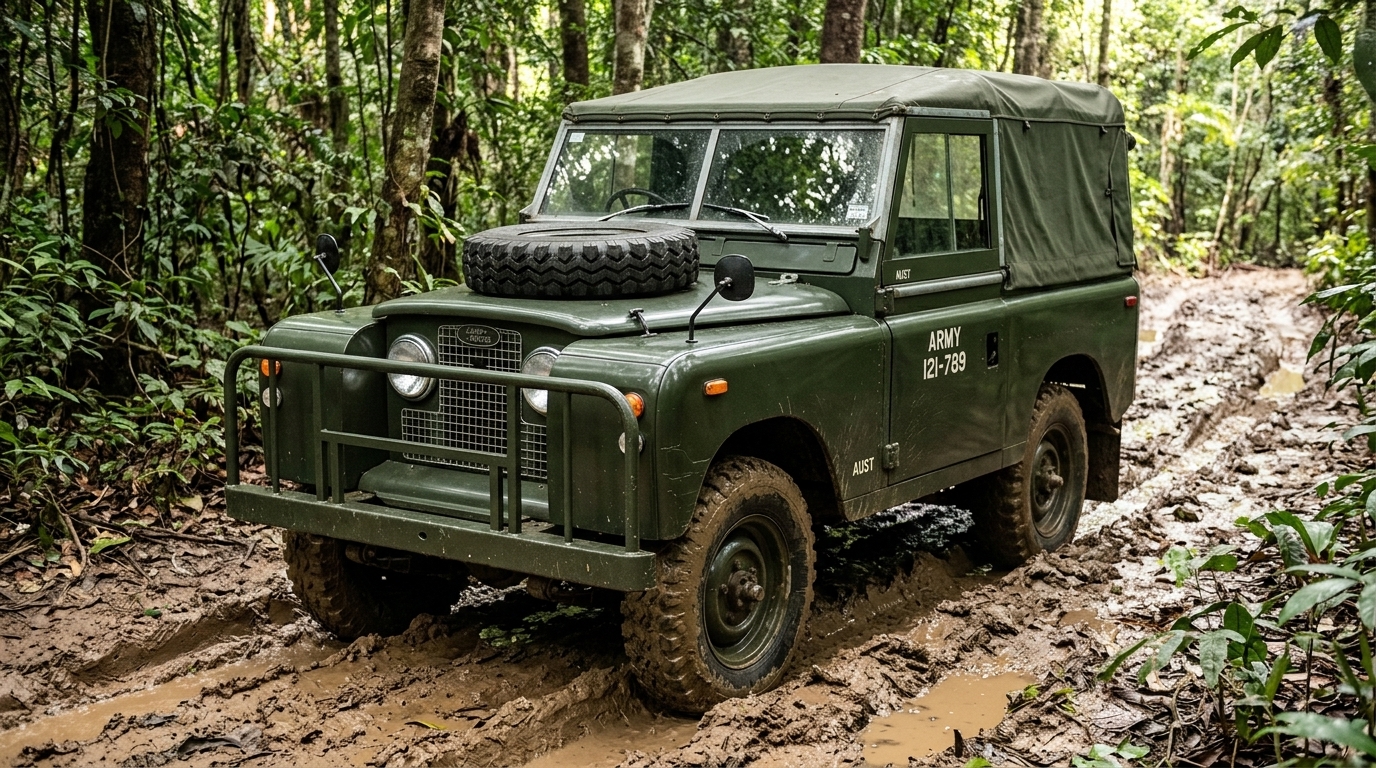
An AI rendering impression starts from a 3D model of this vehicle, which an image model then paints into a scene. It is an artist's impression of the type, made to give a feel for the vehicle in its element — not a photograph, and not a record of any particular vehicle.

Proportions, fittings, markings, colours and the setting can all drift from the original in the process. For the vehicle's actual details, rely on the specification, the photographs and the cited sources on this page.

Where it was

GB United Kingdom1968–1990NL Netherlands1973–1995
  1. BuiltLand Rover, Lode Lane, SolihullUnited Kingdom · 1968–197252.43, -1.78

Sources

  1. 1Land Rover ½ ton Lightweight ↗Wikipedia · accessed 2026-09-14SOURCE
  2. 2The history of the Lightweight Land Rover ↗Military Lightweight · accessed 2026-09-14SOURCE
  3. 3SIIa Lightweight front (photograph) ↗Wikimedia Commons · accessed 2026-09-14SOURCE
  4. 4https://en.wikipedia.org/wiki/Land_Rover_1/2_ton_Lightweight#/media/File:SIIa_Lightweight_front.jpghttps://en.wikipedia.org/wiki/Land_Rover_1/2_ton_Lightweight#/media/File:SIIa_Lightweight_front.jpg ↗REFERENCE
  5. 5
    [Jake Wright's Series IIA Lightweight photographs](https://www.jakewright.com/news/2018/october/2-lightweights-going-export): production tapered bonnet, inboard lamps, thin cut-away front wings and bumper lifting blocks. · MILITARY-MODEL-REFERENCES.md

    - [Jake Wright's Series IIA Lightweight photographs](https://www.jakewright.com/news/2018/october/2-lightweights-going-export): production tapered bonnet, inboard lamps, thin cut-away front wings and bumper lifting blocks.

    NOTES
  6. 6
    [Historics' 1969 ex-RAF Lightweight](https://www.historics.co.uk/auction/lot/lot-209---1969-land-rover-series-iia-lightweight/?lot=12893&sd=1): continuous tapered radiator panel, wire grille and square rear wheel openings. · MILITARY-MODEL-REFERENCES.md

    - [Historics' 1969 ex-RAF Lightweight](https://www.historics.co.uk/auction/lot/lot-209---1969-land-rover-series-iia-lightweight/?lot=12893&sd=1): continuous tapered radiator panel, wire grille and square rear wheel openings.

    NOTES

Registry record updated 2026-09-16T21:39:38.758Z · status: researched