4×4S.ORGTHE REGISTRY RESEARCHED · UPDATED 16 SEPTEMBER 2026

Africa Outside Edge Expedition

ALSO KNOWN AS KINGSLEY HOLGATE'S OUTSIDE EDGE · AFRIKA: DISPATCHES FROM THE OUTSIDE EDGE · CIRCUMNAVIGATION OF AFRICA 2007–08

Kingsley Holgate's family team left the Cape of Good Hope on 27 April 2007 behind a world-record convoy of 347 Land Rovers and drove clockwise round the whole outline of Africa — up the Atlantic coast, along the Mediterranean, down the Red Sea and Indian Ocean shores — in Defenders and inflatable boats, distributing mosquito nets as they went. They reached Cape Town again in mid-July 2008 after 448 days, 33 countries and well over 57,000 km, the first expedition to circumnavigate the continent hugging its edge.

448DAYS OUTBOUND58k kmDISTANCE8COUNTRIES13WAYPOINTS2VEHICLES3CREW
THE EXPEDITION FOLLOWED THE COAST OF AFRICA CLOCKWISE THROUGH 33 OF THE 34 COASTAL COUNTRIES; ONLY THE PLACES NAMED IN THE FETCHED SOURCES ARE PLOTTED, AND THE COUNTRIES LIST IS LIMITED TO THOSE THE SOURCES NAME AND TO THE REGISTRY'S COUNTRY LIST. THE LINE BETWEEN POINTS IS THE GENERAL COURSE ALONG THE COAST, NOT A TRACK. THE ANGOLA, NUBIAN-DESERT AND MOZAMBIQUE POINTS ARE STAND-INS FOR LEGS THE SOURCES DESCRIBE WITHOUT NAMING A TOWN.
THE JOURNEY IN SEVEN MOMENTS
27 April 2007Cape of Good Hope347 Land Rovers in convoy — a Guinness record — see the team off.4 May 2007Orange RiverInto Namibia and the Sperrgebiet diamond coast.2007Pointe des AlmadiesThe westernmost point of the continent.2008Ras ben SakkaThe northernmost point; then the Mediterranean and Red Sea coasts.2008Nubian desert1,200 km without roads.17 June 2008Mozambique413 days and 57,768 km; 'we can smell home'.18 July 2008Cape Town448 days, 33 countries, 64,327 km; the calabash poured back into the sea.
DEPARTED27 April 2007
Cape of Good Hope
ARRIVED18 July 2008
Cape Town
DISTANCE57,768 km had been covered by 17 June 2008 with the Mozambican coast and the run to the Cape still to go; the Foundation gives 449 days for the whole circuit
COUNTRIES CROSSED, IN ORDER
ZASouth AfricaNANamibiaAOAngolaSNSenegalTNTunisiaSDSudanMZMozambiqueZASouth Africa

The expedition

Kingsley Holgate, the Natal-born adventurer Getaway magazine called the most travelled man in Africa, had already taken his family from the Cape to Cairo by the continent's waterways, up the Zambezi, round the world along the Tropic of Capricorn and from Durban to the Somali border in Land Rovers and a dhow. The Outside Edge was the biggest of them: to track the entire coastline of Africa clockwise from the Cape of Good Hope, by Land Rover wherever a track ran and by inflatable boat where none did, through the 34 countries that line the edge of the continent. Between them the family had suffered malaria 63 times, and the expedition was built round malaria prevention under the banner One Net One Life, together with the Right to Sight spectacle programme and Teaching on the Edge mobile libraries. It carried a Zulu calabash filled with seawater at the Cape, to be emptied at the journey's end, and a Scroll of Peace and Goodwill carrying messages of support from across Africa.

The send-off from the Cape Peninsula on 27 April 2007 was a Guinness record attempt: 347 Land Rovers of every kind, from Series Is to Freelanders, drove in convoy no more than two vehicle lengths apart over the measured stretches, one of them Chapman's Peak Drive, beating the previous record of 261 set at Towcester, and finished at the De Grendel estate for a Land Rover jamboree. Seven days later the four expedition Land Rovers crossed the Orange River into Namibia and were escorted by Namdeb through the Sperrgebiet, the forbidden diamond coast — Chameisbucht, Baker's Bay and the ghost mining settlement of Bogenfels — to Lüderitz, a stretch normally closed to travellers. The expedition cars were named in the Holgate tradition: two Defender station wagons called John Ross and Mary Kingsley, after the explorers, and a Defender 130 TD5 called The Stomach because it carried all the food. Kingsley, his wife Gill and son Ross, the expedition leader, formed the core of the team.

From Namibia the route ran north through Angola and round the bulge of West Africa to Pointe des Almadies on the Cap Vert peninsula of Senegal, the continent's westernmost point, then across the Maghreb to Ras ben Sakka at Cape Blanc in Tunisia, its northernmost, and along the Mediterranean and down the Red Sea coast. In Sudan the team tracked their own path for 1,200 km through the roadless Nubian desert. By June 2008 they had covered 57,768 km and 413 days and were working south down the 2,470 km Mozambican coast, where one Land Rover was flooded crossing a river, towards re-entry into South Africa at Kosi Bay. They reached Cape Agulhas, the southern extremity, and arrived back in Cape Town in mid-July 2008, 448 days out — 'battered and bruised, just like the cars' — and emptied the calabash into the Atlantic on Nelson Mandela's birthday. The final tally was 33 of the 34 coastal countries; the team had set out to distribute 100,000 mosquito nets to pregnant women and mothers of small children, along with thousands of pairs of spectacles and mobile libraries for remote communities.

Holgate's book Afrika: Dispatches from the Outside Edge was published by Random House Struik in 2009. The Holgates went on to Boundless Southern Africa in 2009 in Discovery 3s, and to every remaining country of the continent in later Defenders; The Stomach, still in the fleet, later crossed Somalia to Ras Xaafun and drove the Karakoram Highway to Kathmandu.
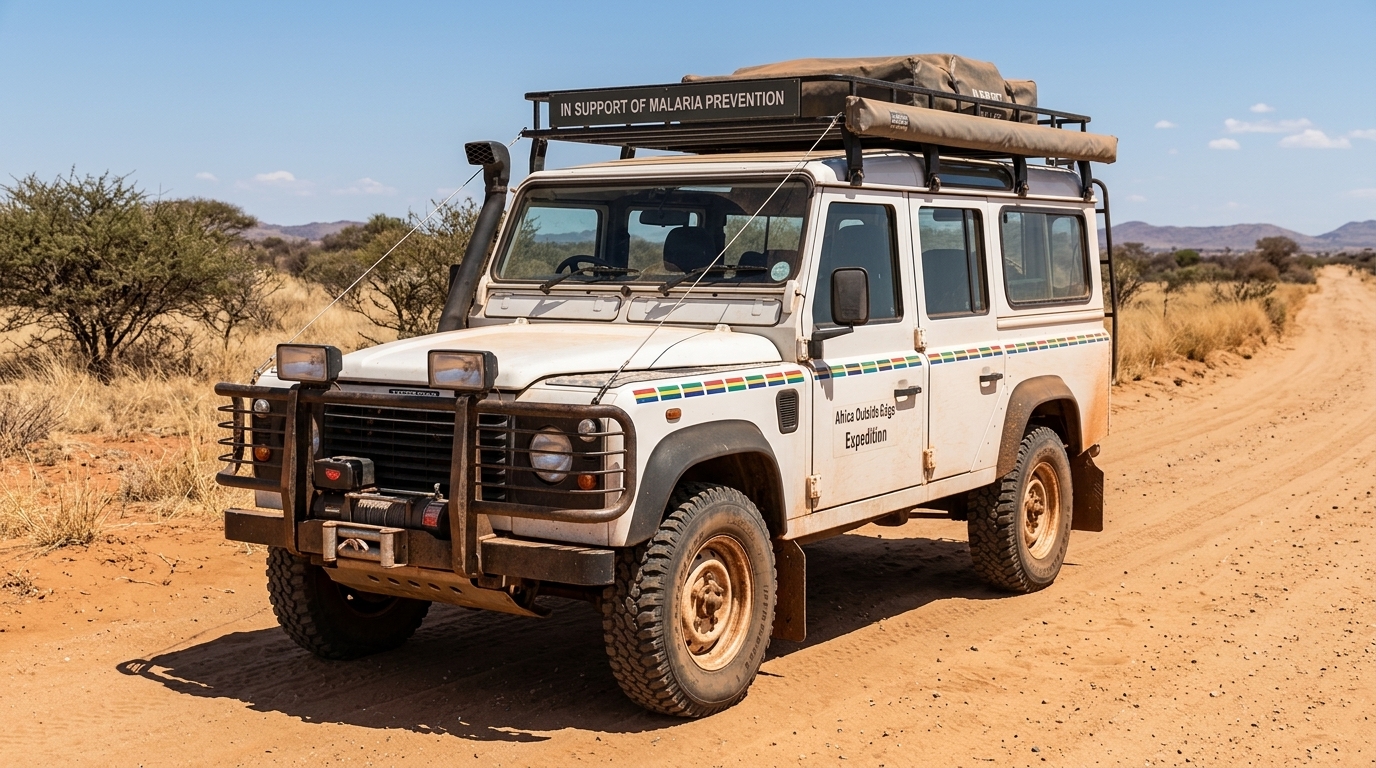
The two vehicles

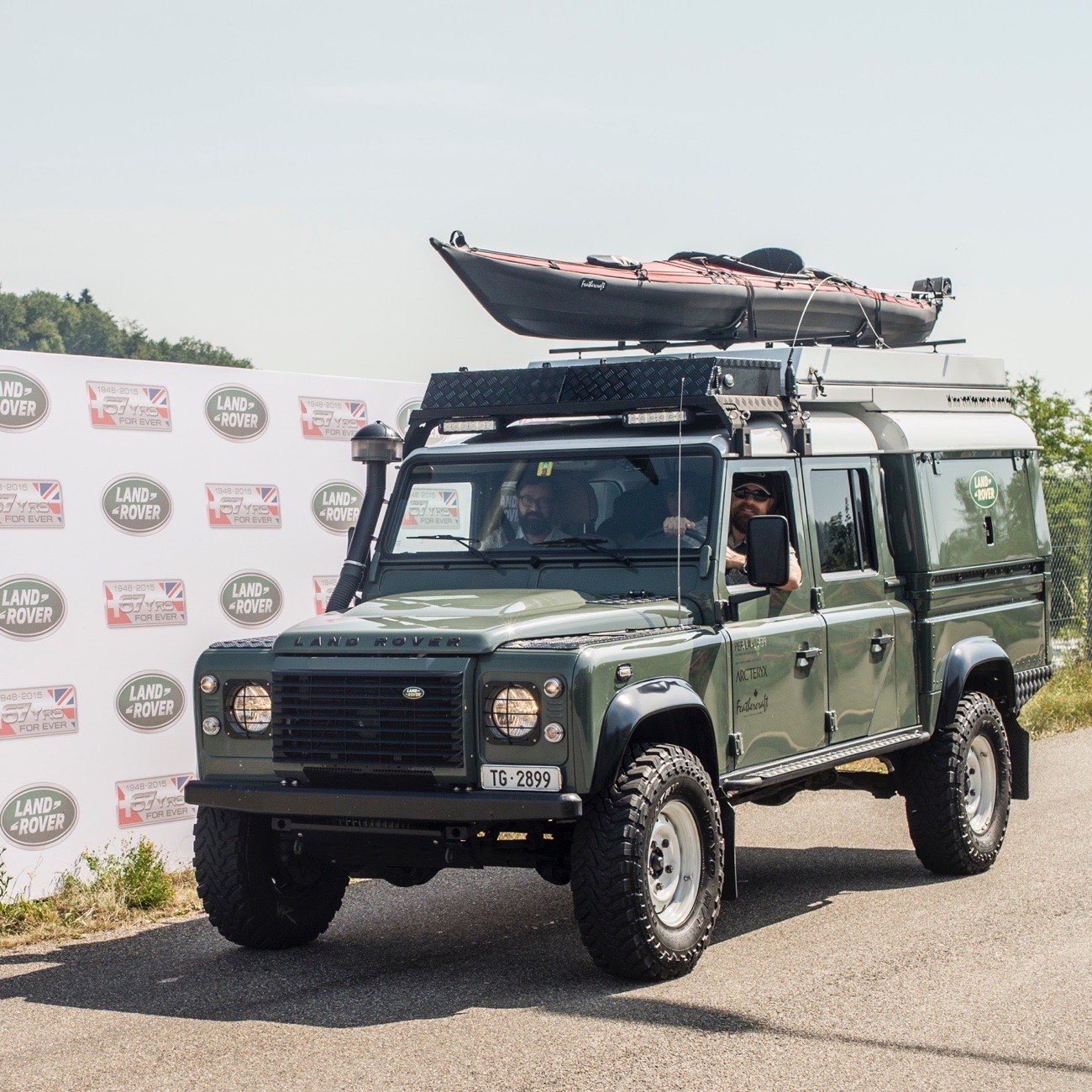
IN SERVICE WITH THE HOLGATE TEAMThe Stomach — Defender 130 TD5The supply vehicle, named because it carried all the food. Still in the Holgate fleet years later: it crossed Somalia to Ras Xaafun and drove the Karakoram Highway to Kathmandu.John Ross and Mary Kingsley — Defender station wagons — AI rendering impressionUNKNOWNJohn Ross and Mary Kingsley — Defender station wagonsThe two crew cars, named after the explorers John Ross and Mary Kingsley in the Holgate tradition of naming expedition Land Rovers only after they have proved themselves.

Imagery

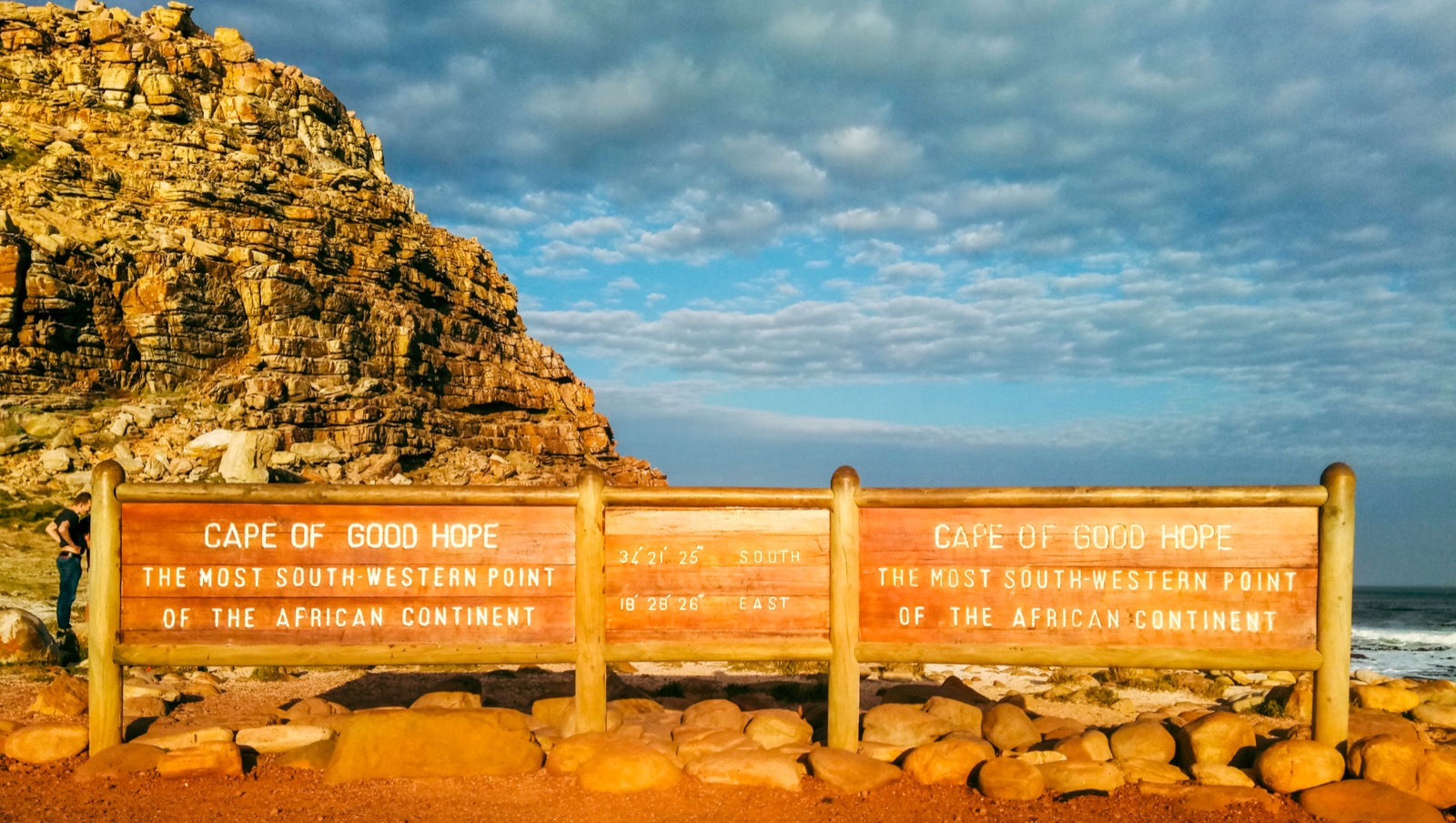
The Cape of Good Hope, where the calabash was filled and the expedition began on 27 April 2007.
MOHEEN REEYAD, VIA WIKIMEDIA COMMONS · CC BY-SA 4.0 ↗
An expedition-equipped Defender 130 crew cab of 2011 — the same model as The Stomach, the team's supply vehicle.
LRDRIVER, VIA WIKIMEDIA COMMONS · CC BY-SA 4.0 ↗

The team

Kingsley HolgateExpedition leader and authorRoss HolgateSon; expedition leader in the fieldGill HolgateWife; team member

Organised by Kingsley Holgate Foundation. Supported by Land Rover and One Net One Life malaria-net sponsors and Land Rover Owners Club of Southern Africa (convoy).

Online

The expedition's own presence on the web, checked when the record was last updated.

Books & films

Afrika: Dispatches from the Outside Edge
Kingsley Holgate · 2009 · Random House Struik, Cape Town, ISBN 9781770075047

Sources

1Another Holgate 'first' (18 June 2008) ↗ (accessed 2026-09-16)IOL / CAPE ARGUS2We made it! ↗ (accessed 2026-09-16)KINGSLEY HOLGATE FOUNDATION3Boundless Southern Africa Expedition (Leisure Wheels, 2009) ↗ (accessed 2026-09-16)KINGSLEY HOLGATE FOUNDATION4Land Rover Convoy World Record — Kingsley Holgate ↗ (accessed 2026-09-16)LANDY ONLINE5Afrika – Dispatches from the Outside Edge (excerpt) ↗ (accessed 2026-09-16)NAMIBIANA BUCHDEPOT6What's in a name? The Holgates' Defenders would say, a lot! ↗ (accessed 2026-09-16)SOUTH COAST HERALD7Kingsley Holgate ↗ (accessed 2026-09-16)KZN LITERARY TOURISM8Kingsley Holgate ↗ (accessed 2026-09-16)WIKIPEDIA
RELATEDExpedition record updated 16 September 2026 · status: researched