The expedition
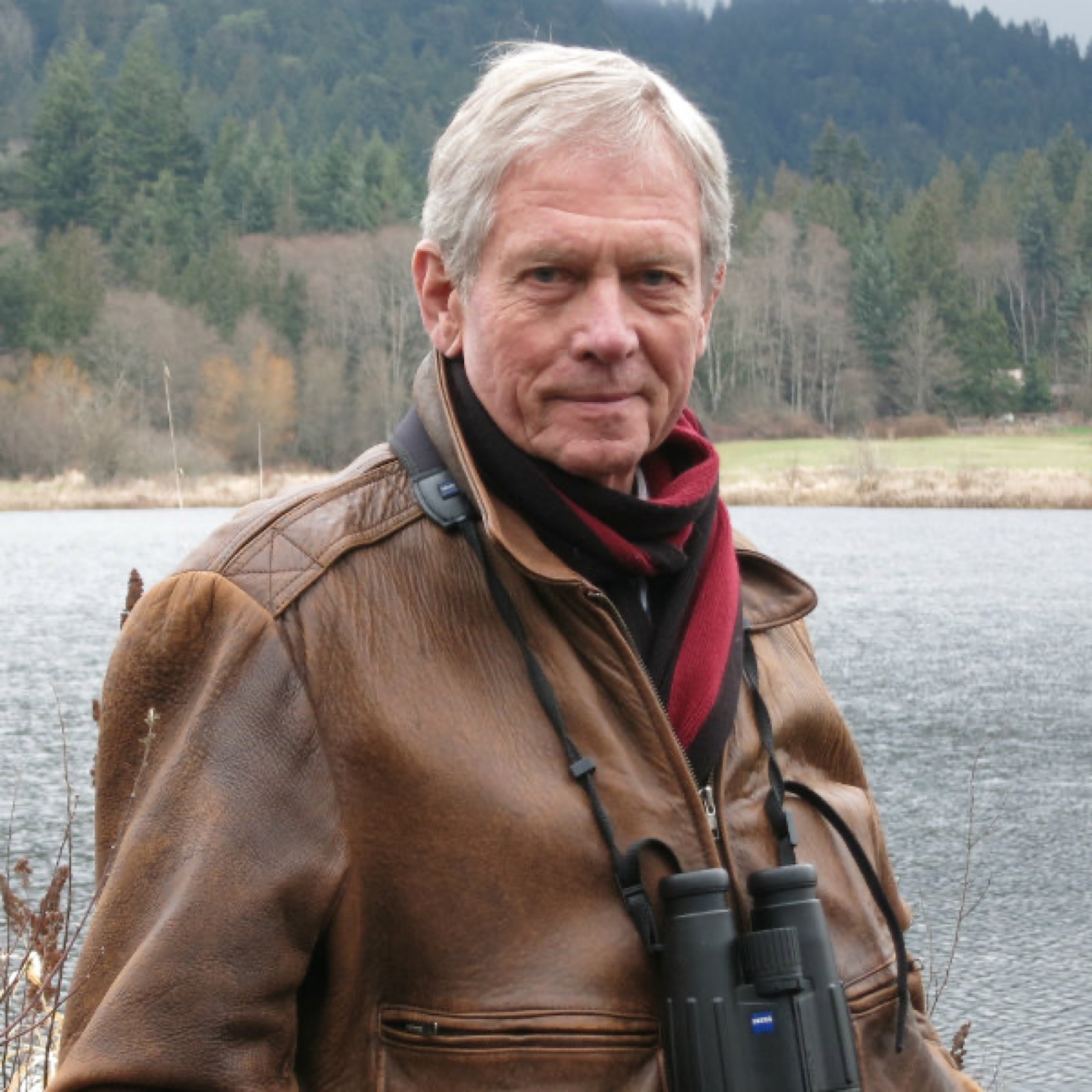
In the autumn of 1956 Bristol Foster had finished his master's in biology at the University of Toronto and wanted a year away from academia. He had known Robert Bateman, then teaching art and geography, since both were boys in the Royal Ontario Museum's nature club. Foster's father, a Toronto businessman with government contacts, agreed to fund a round-the-world journey on two conditions: each of the young men would raise $2,000 towards it, and the expedition would be properly documented on film and in photographs. They wrote and illustrated regular articles for the Toronto Telegram, whose readers called them the Rover Boys, and Foster shot 16 mm film throughout.
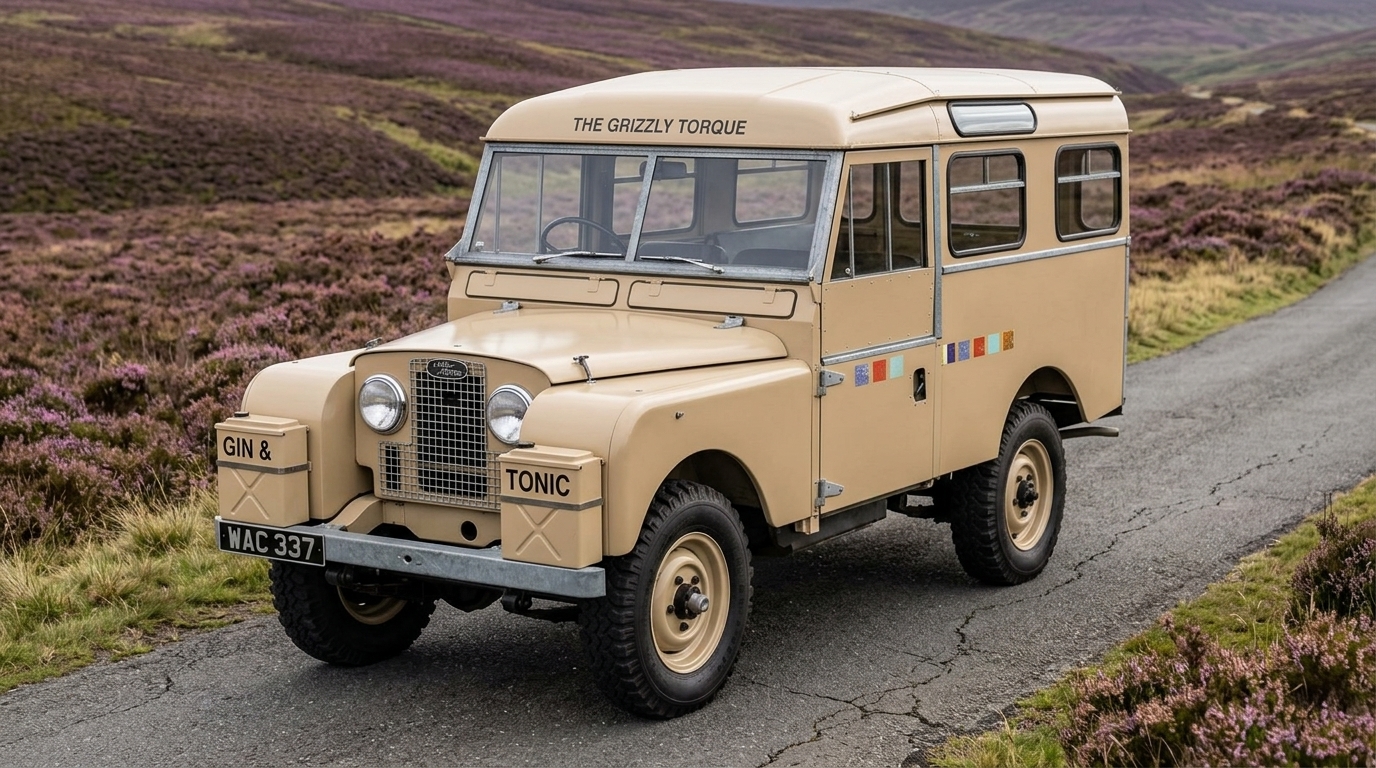
The vehicle was bespoke. Its special-order Series I 107-inch station wagon chassis, with the 2.0-litre four-cylinder petrol engine, was completed at Solihull on 2 May 1957 and sent to Pilchers of Wimbledon, who built an ambulance-style aluminium body with green leather upholstery, two bunks, a roof observation hatch for watching dangerous wildlife, an external sun visor, wind-up windows, a capstan winch and Sand Beige paint; when the bill came, Land Rover had charged only for the chassis and let it stand. Foster went to Solihull early for overland training and Bateman joined him in early summer. Bateman painted a vignette on the flat sides for each country they passed through, and above the passenger's head a tongue-in-cheek tally of the chameleons and chickens they ran over; the wing-mounted jerrycans were labelled 'Gin' and 'Tonic'. After a shakedown tour of Scotland they set off for Africa's Gold Coast in July 1957.
With Foster the only driver, the Grizzly Torque wound across Africa through Ghana, Togo, Cameroon, Spanish Guinea, Nigeria, the Congo, Ruanda-Urundi, Tanganyika, Kenya and Uganda, at the tail end of empire and with a loose timetable that let them linger, backtrack and follow their curiosity. From East Africa they went by ship to India, and on through Nepal, Burma, Thailand, Malaya and Singapore. The only serious mishap was in India, where Foster swerved to avoid a bicycle and rolled the car, denting the aluminium roof and breaking the driver's window, replaced with Plexiglas. The journey ended in Australia after fourteen months and about 60,000 km, and the car was shipped home to Vancouver in September 1958.
Foster used the Grizzly Torque for fieldwork in the Queen Charlotte Islands while working on the doctorate that produced 'Foster's Rule' on the size of island animals; he later ran wildlife ecology graduate studies at the University of Nairobi and directed the Royal British Columbia Museum, and Bateman became Canada's best-known wildlife painter and an Officer of the Order of Canada. Foster sold the car to a graduate student who took it to Texas to study peccaries, and taught a hand-reared eagle to ride between the seats; the student sold it to a British Columbia rancher, a later owner stripped the murals and painted it pale blue, and the trail went cold. It sat decaying in the BC interior for decades until Stuart Longair bought it sight unseen with three other Land Rovers near Williams Lake, on the advice of the restorer Alan Simpson of Roverworks, who found it in 2008; it sat outside Simpson's farm near Merritt for nearly a decade before Longair recognised it from a period publicity photograph online. Foster came to look, walked to the driver's window and found the Plexiglas from India still in place; Land Rover confirmed the identity by December 2014. A two-year, $300,000 restoration by Simpson's consortium followed, with parts found as far away as Australia and Singapore, Dunlop Trackgrip tyres, and the murals recreated from film by the Bateman gallery and finished by Bateman himself. The reborn car starred in Land Rover's 70th-anniversary celebrations across Canada in 2018, was reunited with both men at the Vancouver auto show, and was sold by RM Sotheby's at Monterey on 18–19 August 2023 for US$123,200. A documentary by Alison Reid, The Art of Adventure, drawn from Foster's footage, was in development; Land Rover Classic showed the Grizzly Torque again at Pebble Beach in 2025.