The expedition
The expedition began as a bet made in a Hong Kong nightclub in the summer of 1953 between David Waters and Adrian Cowell, both from Hong Kong, that a car in one university's blue could cover a circuit of Africa faster than one in the other's. Cowell, at St Catharine's College, Cambridge, planned the venture and acted as one of its base managers but could not take part himself; Waters, aged 20, led the Oxford team and Gethin Bradley, 21, the Cambridge team. The teams called it the Boat Race on Wheels and, more often, the Circuit of Africa. Each university fielded three men: Oxford had David Waters, Tony Morgan and the Australian Don Calman; Cambridge had Gethin Bradley, the American 'Buzz' Piggott and the Australian Ross Charlton, who was the cameraman. Bradley had already driven an ex-military Ford V8 staff car from Algiers to Cape Town in 1952.
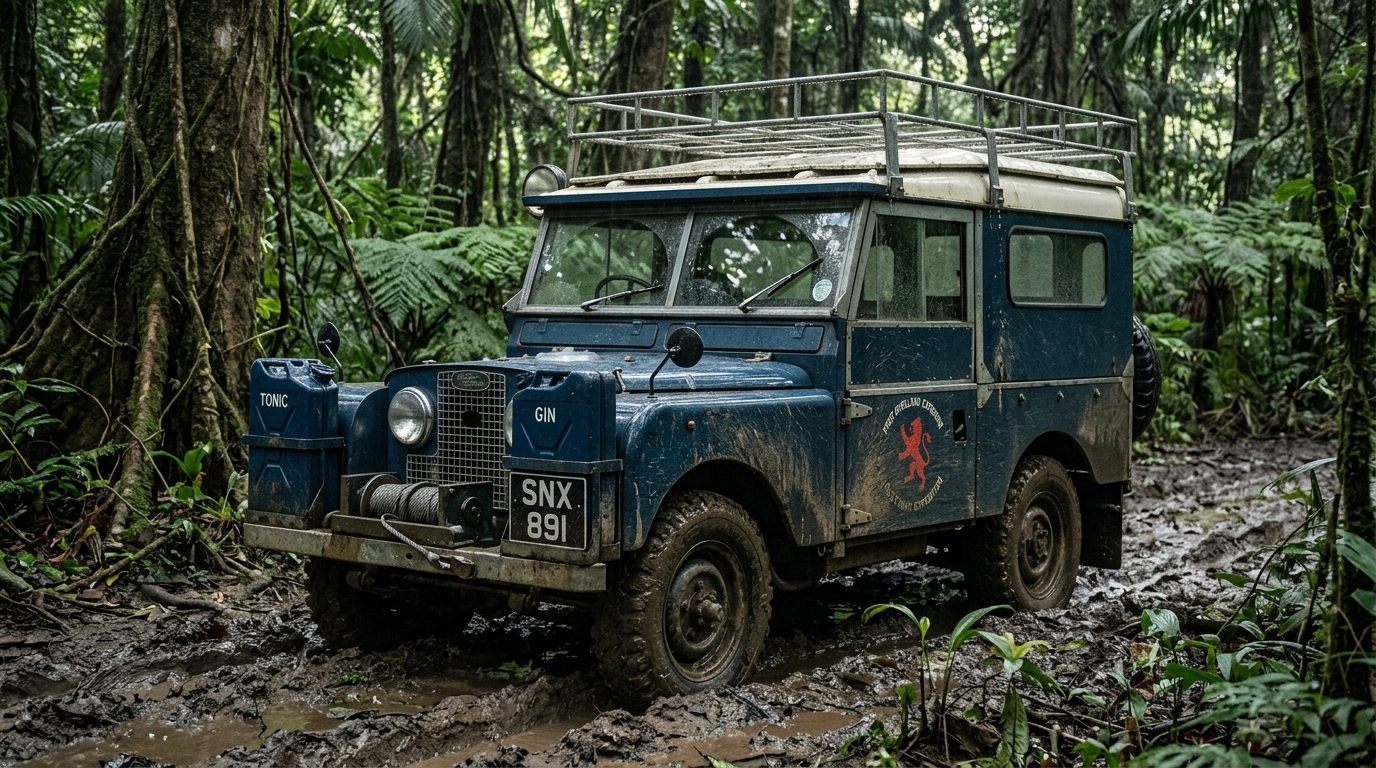
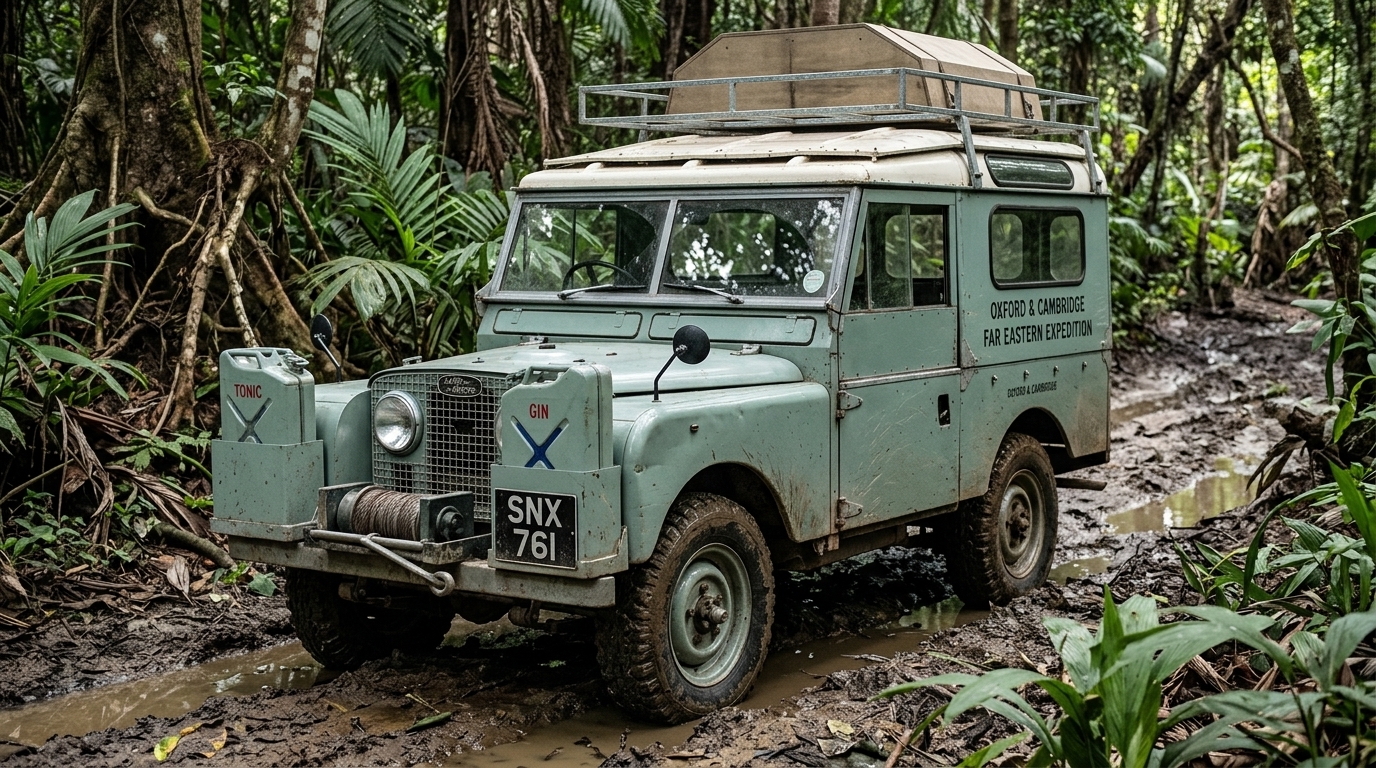
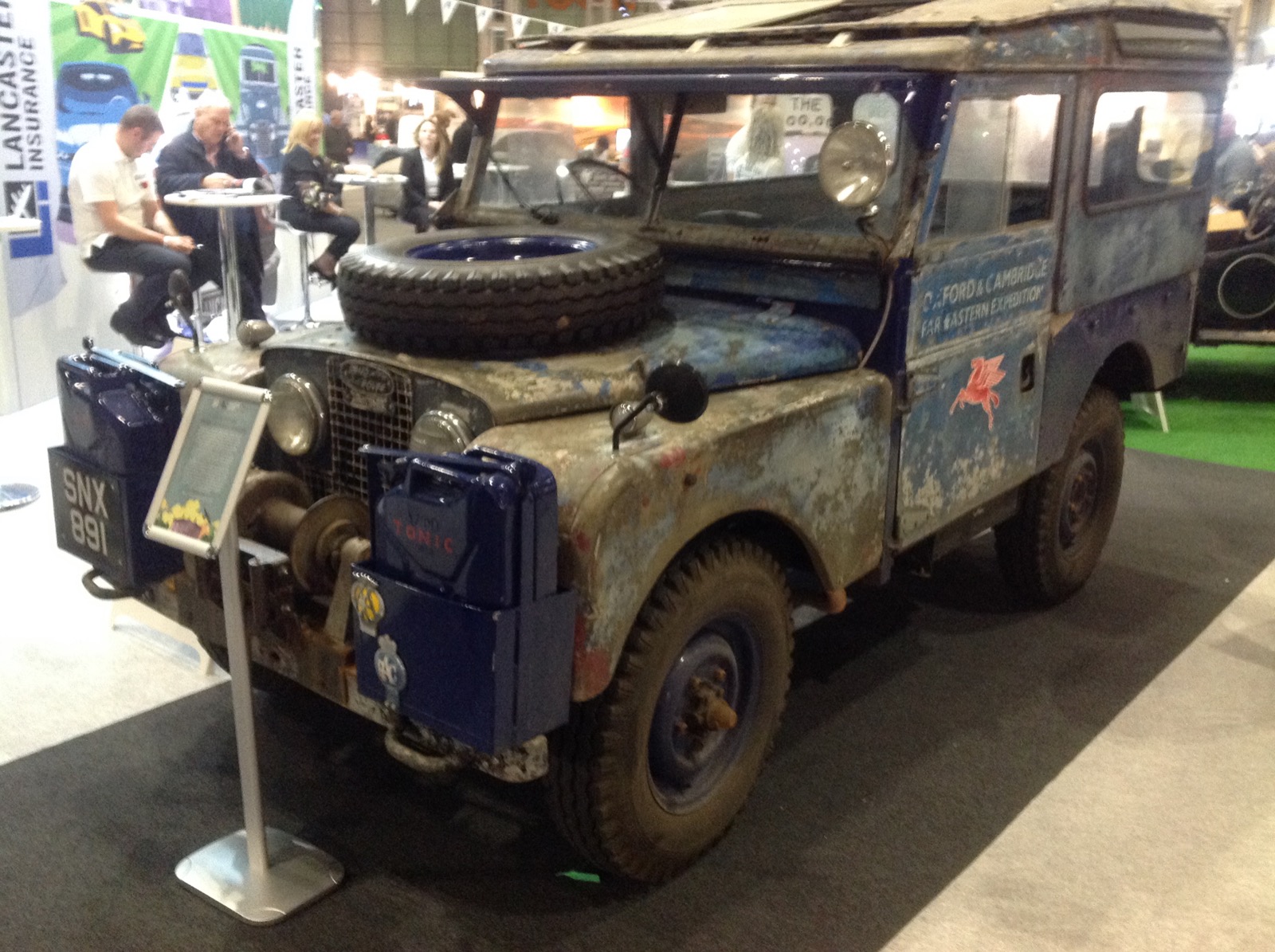
Unlike the two later Oxford and Cambridge expeditions, which were lent their cars by the Rover Company, the Trans-Africa team bought their own two Land Rover Series I 86-inch Station Wagons. About fifty British firms sponsored them, part of the object being to test equipment for those companies and to collect route information for the two universities' explorers' clubs. The teams were photographed with the cars outside the Rover factory on 25 February 1954, the press being told that the vehicles would travel over 25,000 miles, 'something never before attempted', over the Sahara, through the Belgian Congo, and back through the Nile Valley, the Middle East and Turkey. Bradley recalled that they set off with an impressive list of sponsors and a heavy load of goods but no fuel supply and little money; on the first day in France they begged petrol from garages in return for a photograph, until a Unilever executive noticed the company's logo on the cars and summoned them to the Paris headquarters, which led to introductions to Unilever's African companies and, more usefully, to Shell in France and Algeria.
The expedition was meant to fit the long vacation, leaving in June 1954 and returning by October. It overran by about two months and the cars did not reach Britain again until December 1954. Cowell, writing in the Straits Times in 1955, described the route as running through Tunisia, across the Sahara, and through Egypt and Ethiopia; the Cape Town turn-round completed the north–south crossing of the continent, and Oxford won the race home. The full account, written by Don Calman in Australia shortly afterwards, went unpublished for almost seventy years: it was finally issued in 2023 as Boat Race on Wheels, edited by James Taylor with Ross Charlton's photographs, and launched at the Australian Land Rover 75th anniversary gathering at Cooma, New South Wales, in April 2023.
The expedition's real legacy was organisational. Its good relations with Rover and other sponsors were inherited by the 1955–56 Far Eastern Expedition to Singapore, which Cowell planned with Tim Slessor, and Gethin Bradley joined the Rover Company in 1955 as press officer, where he looked after the Singapore and South America expeditions and later Laurens van der Post, Barbara Toy, Peter Townsend, Gerald Durrell and David Attenborough. In September 2011 Roger Crathorne, Mike Bishop and Steve Kerss brought the surviving members of all three 1950s Oxford and Cambridge expeditions together at Solihull, three weeks before Cowell's death; Bradley died in November 2013. Both original 86-inch station wagons have since been restored by Adam Bennett in Yorkshire, one of them carrying the registration PAC 518.
.jpg)
