The expedition
The Land Rover Bursary was created in 2008 by Land Rover with the Royal Geographical Society (with IBG) to support projects that 'promote a wider understanding or enjoyment of geography': a grant of £30,000 and the loan of a prepared vehicle, awarded eleven times between 2008 and 2020. Earlier winners had driven the line of 50° north, followed the Danube with a paraplegic adventurer, studied an Icelandic glacier and turned a Defender into a mobile volcano observatory in the Andes. Tom Allen, a Fellow of the Society who had cycled and lived in Armenia, won the 2016 award for a plan he had conceived the previous summer: to build the Transcaucasian Trail, and to start by finding and mapping its route.
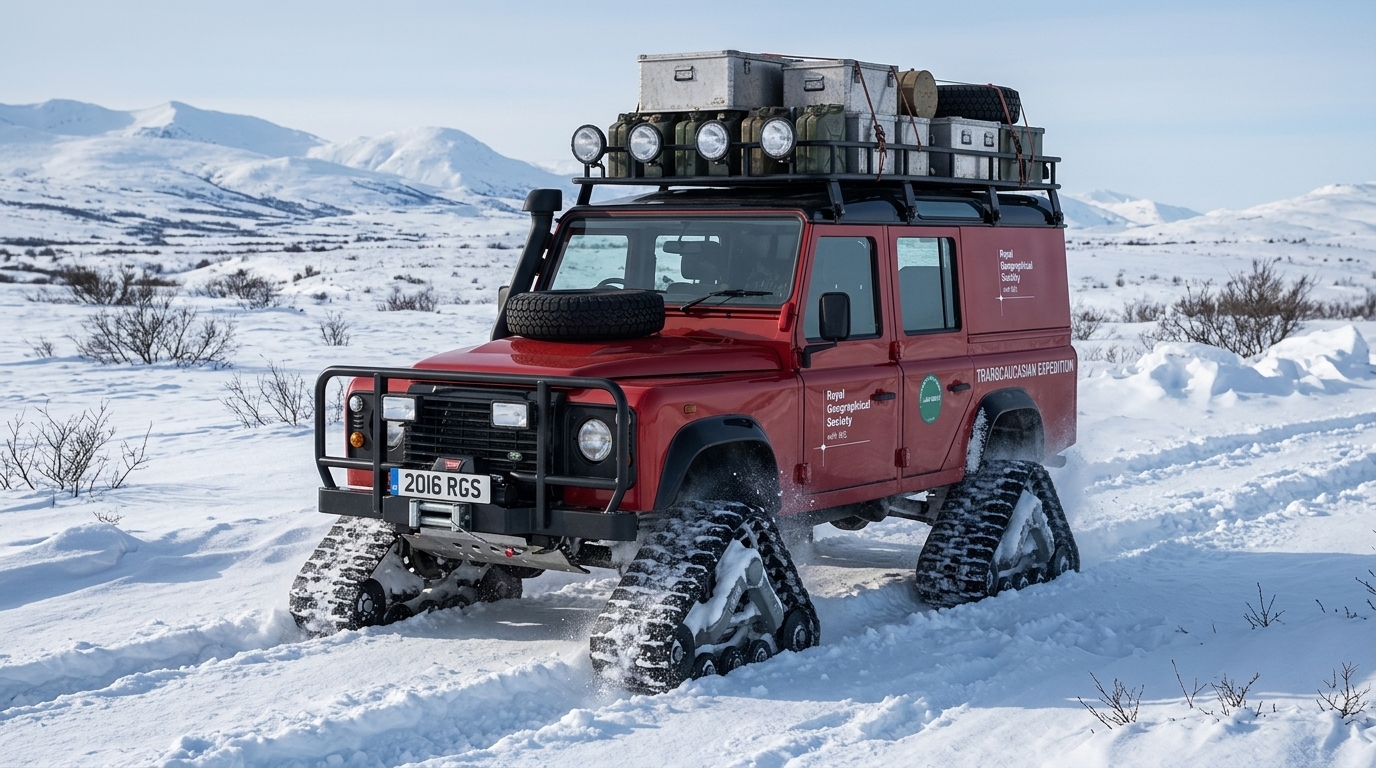
Special Vehicle Operations at Jaguar Land Rover adapted a Defender 110 Station Wagon for the work. Its electrical system gave 1,000 W of usable power, three times a standard Defender's, to run and charge the survey equipment; a lockable gull-wing door replaced the third-row window for access to kit from outside; there were a front winch, tow bar, diagnostics and a tyre compressor for self-recovery, a roof rack with 40 litres of extra fuel and 60 of water, a drone landing platform, a side-deployed tent, a fridge-freezer and a snorkel. The vehicle carried the GPS that would collect data for a new geographic information system of the region, uploaded to OpenStreetMap in real time. Access to the outdoors in the Caucasus, Allen said, was blocked by 'an absence of formal trails and up-to-date GIS data'.
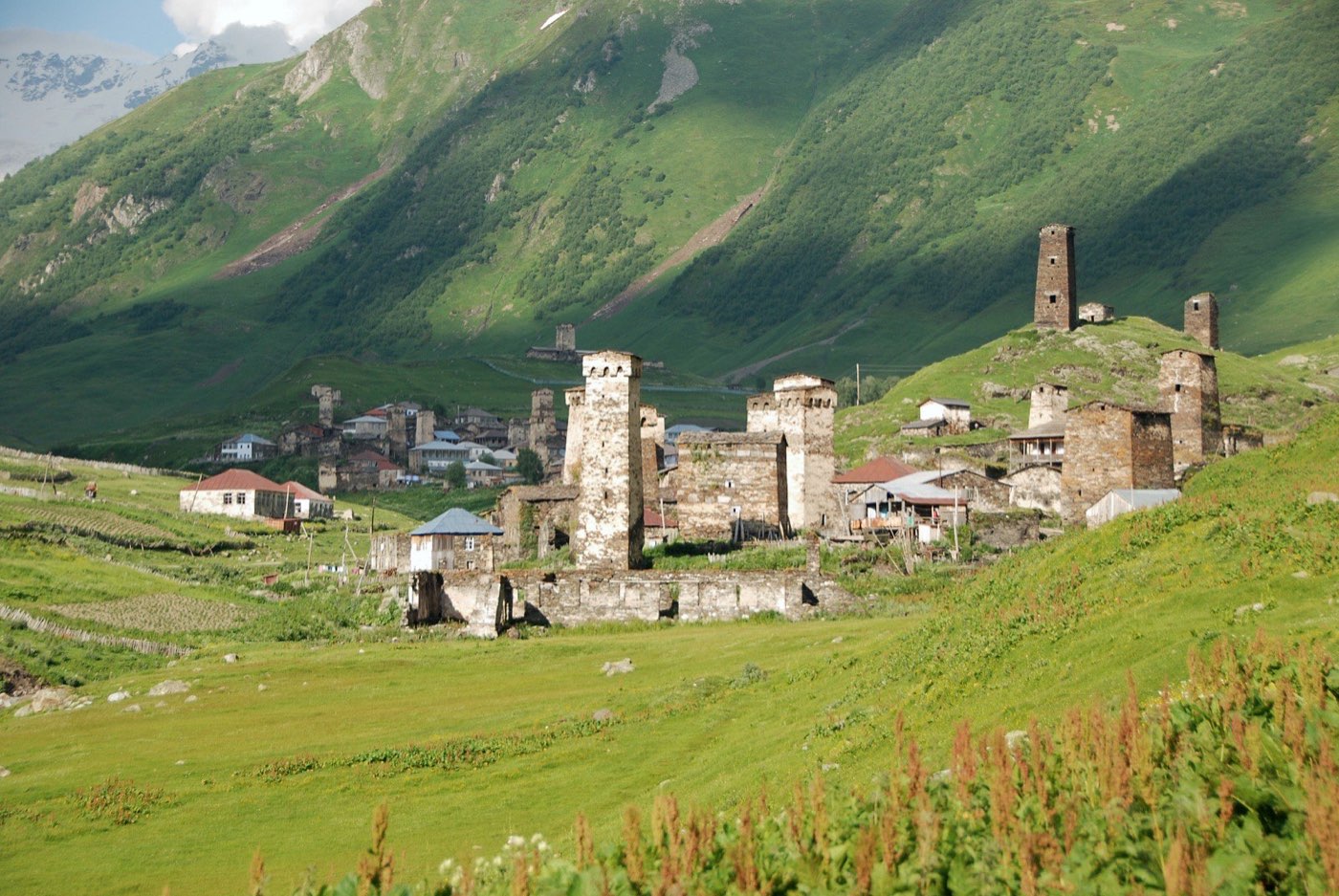
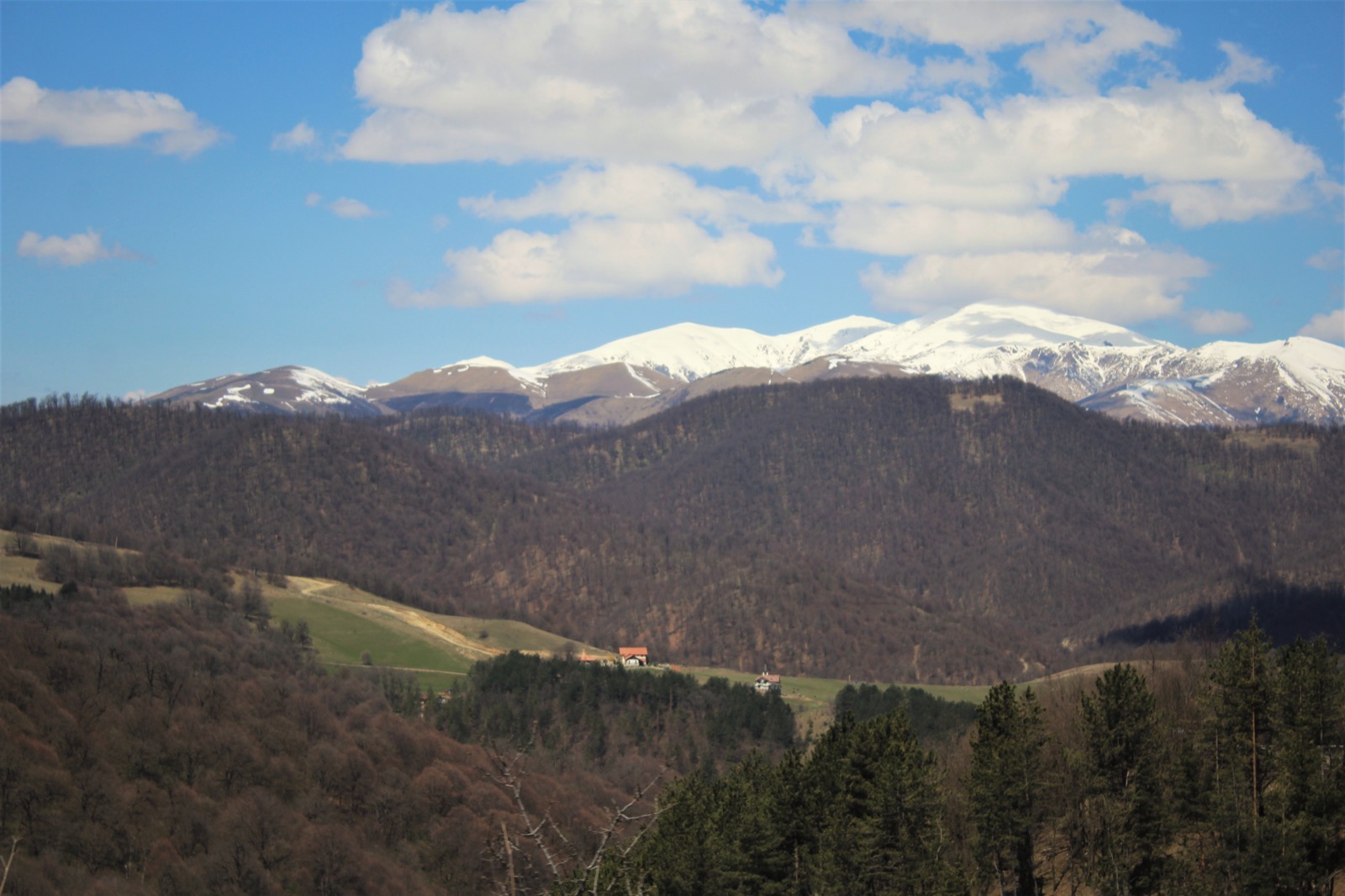
Allen and Mambelli set off from the Society's headquarters in Kensington on Tuesday 26 April 2016. Twelve days of driving on good highways — 'a really long drive on good highways does not make for particularly interesting storytelling', Allen wrote — brought them to Yerevan, and in May the Defender 'hit the dirt' in Armenia: the wild moorlands and terrible roads of Syunik province in the far south, then north to Georgia, where in June they surveyed the Mestia–Ushguli section of Upper Svaneti while a sister operation under the trail's co-founder Paul Stephens worked there too. Through the summer the daily routine was that of a trail scout — up before dawn, walking and driving candidate routes, recording tracks — and much of the work turned out to be political, negotiating with communities, agencies and protected areas about where a trail could go. The stated target was a fully mapped 1,500 km trail across Georgia and Armenia, working with the newly formed Transcaucasian Trail Association.
By November 2016 Allen was writing that he was 'exhausted, drained, overwhelmed' and that the expedition would have looked very different had he known in April what he knew then; but the groundwork was done. In the summer of 2017 local experts and international volunteers built the first 100 km of trail through Dilijan National Park in Armenia, with a Svaneti section in Georgia under Stephens; the Armenian route was published in 2021 and now takes hikers the length of the country, and the trail organisation has since extended into Azerbaijan towards a 3,000 km network. Allen later became the Society's Expeditions and Fieldwork Manager. The Defender itself is one of the RGS bursary Land Rovers recorded by the Land Rover Heritage Collection.