The expedition
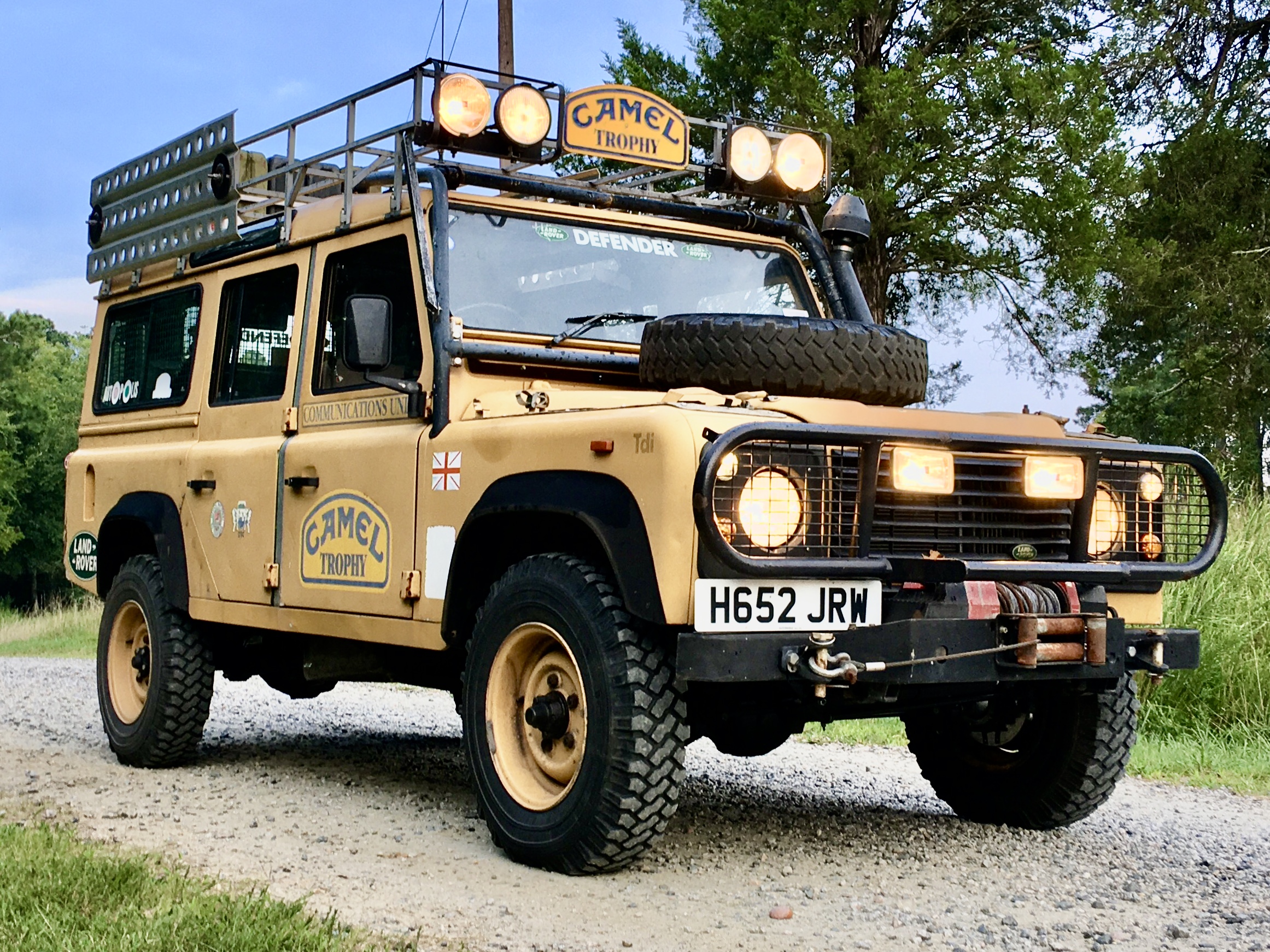
The Camel Trophy had started in 1980 as a Jeep-mounted German expedition on the Transamazonica, moved to Land Rover products in 1981 and, after two Range Rover years and the Series III event in Zaire, ran One Tens in Brazil in 1984. For 1985 the organisers went back to Indonesia — Sumatra had hosted 1981 — and chose Borneo, with a route confined to the Indonesian side of the island in the province of East Kalimantan. The field was the largest yet: sixteen teams from eight nations, with Japan, Brazil and the Canary Islands appearing for the first time alongside Belgium, West Germany, the Netherlands, Italy, Spain and Switzerland.
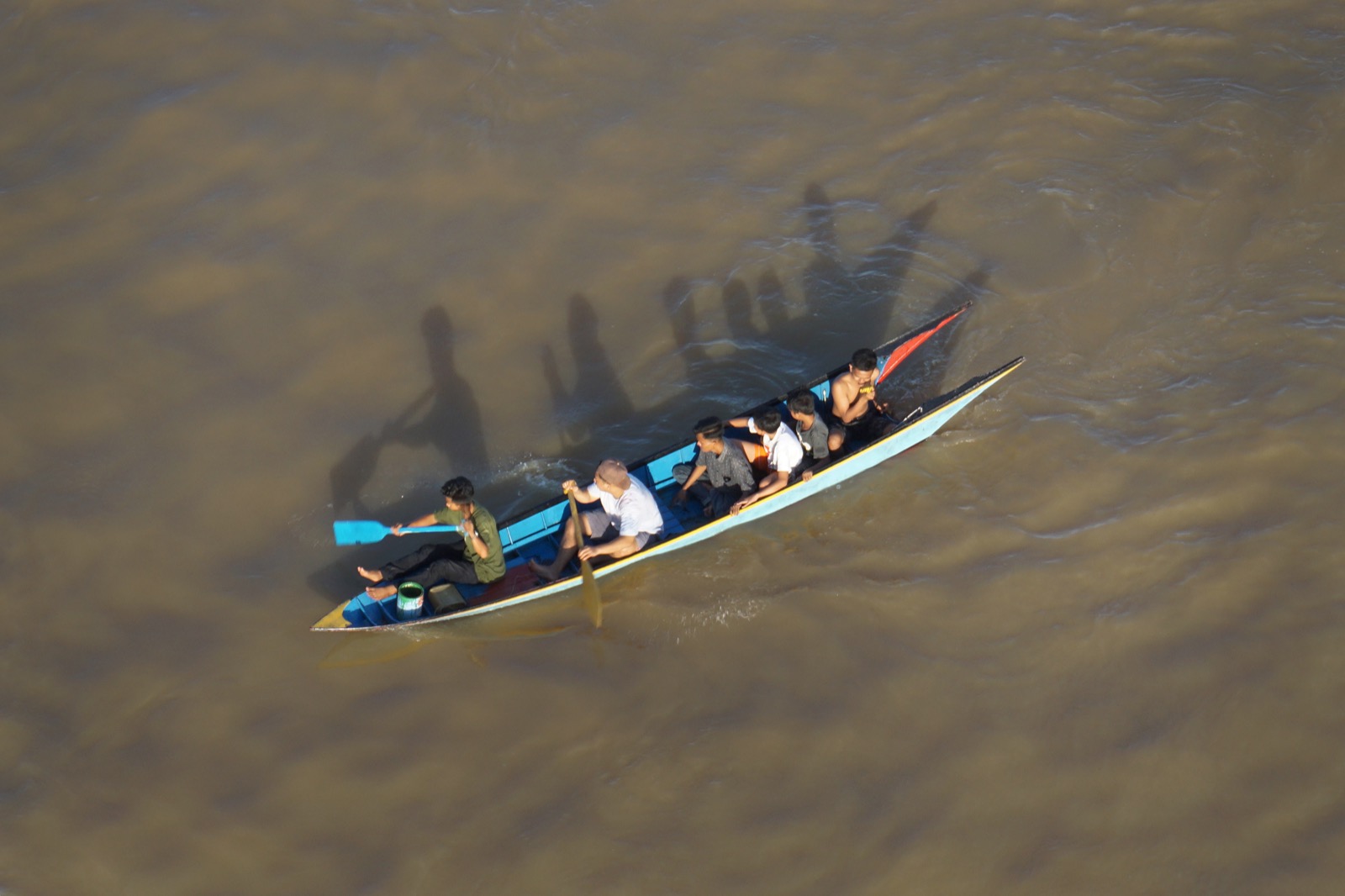
The competitors' vehicle was the Land Rover Ninety, on sale for barely a year; the support crews kept the One Ten used in Brazil. All were in the event's sandglow yellow. The route left Samarinda on the Mahakam river and made a long anti-clockwise sweep through the jungle interior before finishing at Balikpapan, the oilfield city and port on the coast to the south. The distance is given as 1,500 km by the Camel Trophy Club and as 1,600 km — the 'thousand miles of adventure' of the event's slogan — by French and Indonesian accounts.
The organisers had chosen the rainy season. Trails turned to slick mud, rivers rose to six metres and ran fast, and planned sections simply disappeared under floods and landslides, so the route was re-drawn several times on the move. In the mountains the convoy managed two or three kilometres a day, and at one point 300 metres in twenty-four hours. Rollovers were frequent enough that the Ninetys were nicknamed the 'yellow submarines'; a French account records the Swiss and German cars going over on the same rut, three more within twenty-four hours, and the Italians rolling six times down an eighteen-metre drop. The support crews spent two days building one bridge. Finally the whole convoy was marooned on a low rise in flooded forest, where without help it would have stayed until the dry season.
The answer was the first airlift in Camel Trophy history. Airfast Indonesia's Sikorsky S-58ET, registration PK-OAF, based at Balikpapan, slung the Land Rovers one at a time beneath its belly. To get each car under the helicopter's two-tonne limit the crews stripped spare wheels, batteries, jerry cans, luggage and even the front and rear doors, wrapped the body and wheels in a rope net, and hooked it to the winch. Working about six hours a day from noon in gusty wind, the helicopter moved eight vehicles a day and finished the job — 'The Big Lift' — in three days, from 23 to 25 April, putting the cars down near Kampung Rampang on the Sungai Jembayan, some fifteen kilometres on, from where the convoy could drive again. On the ground the mechanics refitted the parts, not always to the right car.
Nine special tasks decided the result. The Italians, winners of the previous two events, were favourites, but the trophy went to West Germany 1, Heinz Kallin and Bernd Strohdach, with Japan second and Switzerland third. The event also introduced the Team Spirit Award, voted by the teams themselves for the crew that best embodied the camaraderie of the convoy; the first went to Brazil 2, Carlos Probst and Tito Rosenberg, whose samba tapes, in the journalist Axel Thorer's words, had 'penetrated the jungle of Borneo' for three weeks. The Camel Trophy returned to Indonesia for Sulawesi in 1988, Sabah in 1993 and Kalimantan again in 1996; a 'Borneo Tribute' retracing the 1985 route was run by Indonesian enthusiasts in 2023.