The expedition
After the Range Rover Turbo D event in Madagascar in 1987 the Camel Trophy went back to the One Ten and back to Indonesia, which had hosted it in Sumatra in 1981 and Borneo in 1985. Sulawesi — Celebes on older maps — is the country's third-largest island, a remote place of volcanic uplands, plateaux some 500 metres above the sea and dense tropical jungle. Twelve teams took part: Argentina and Turkey were newcomers, alongside Belgium, the Canary Islands, France, West Germany, the Netherlands, Italy, Japan, Spain, Switzerland and the United Kingdom, the British pair being the traffic policeman Jim Benson and Marc Day. The Italians, winners of three of the previous six events, started as favourites.
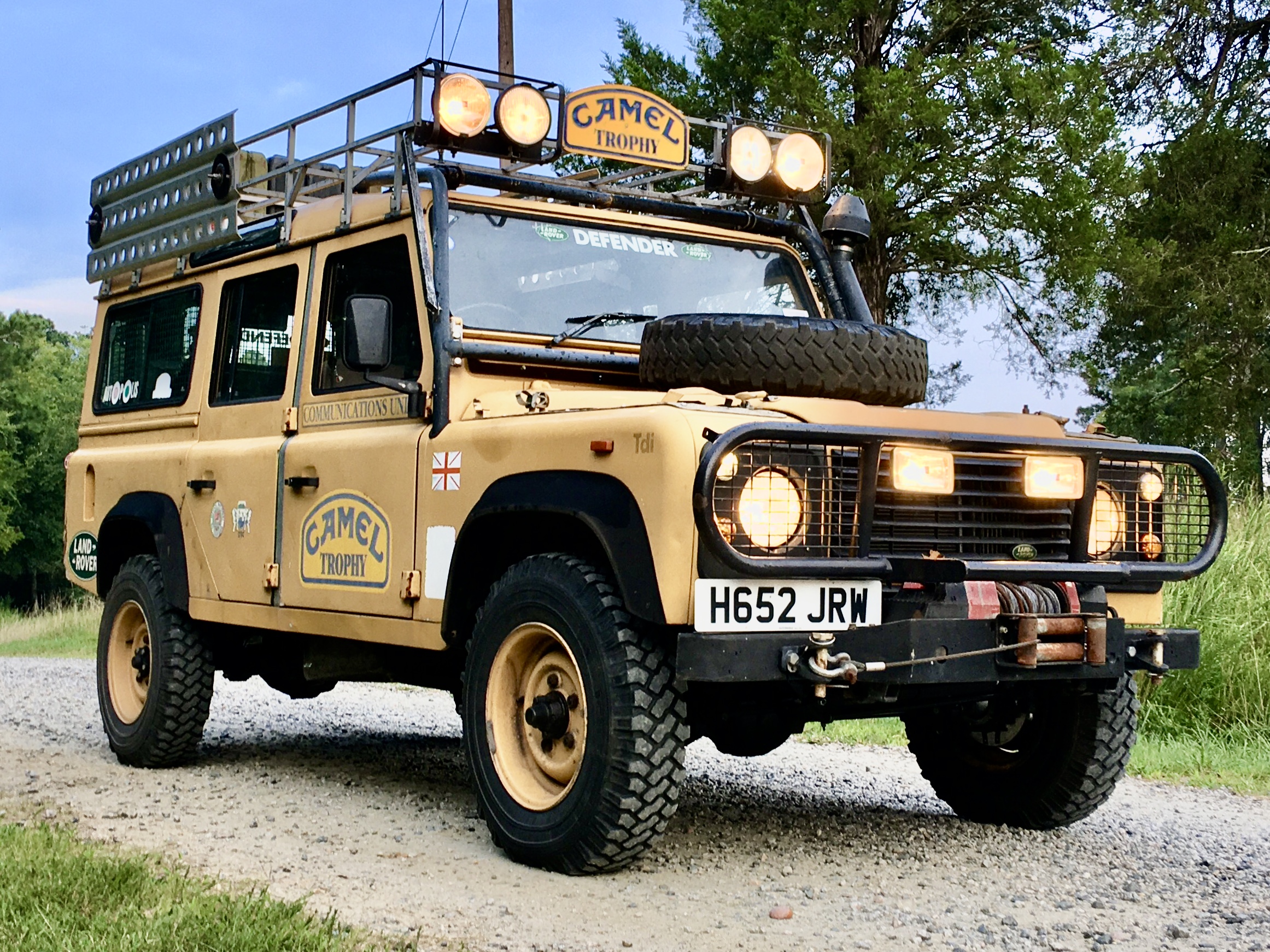
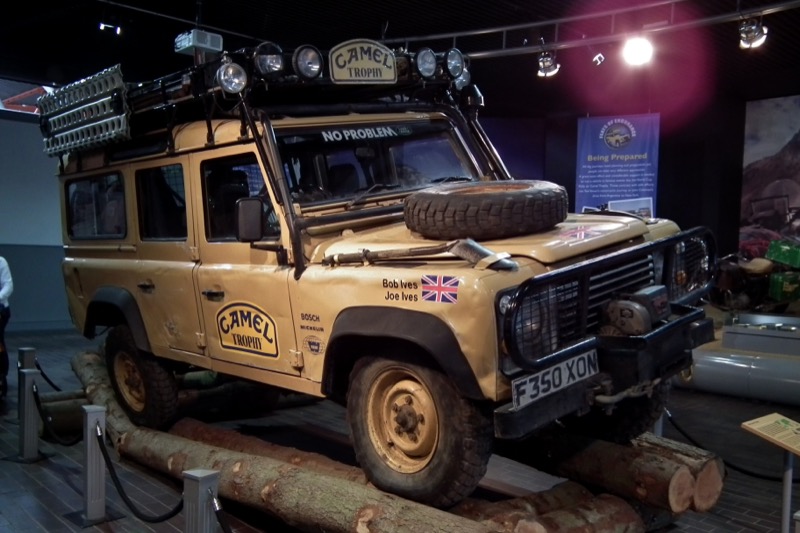
The format changed this year. Instead of special tasks scattered along the route, the twelve days were split into two days of tasks at the start, eight days of driving and two days of tasks at the finish, so the teams competed head-to-head for the first thirty-six hours before the convoy set out. The designated vehicle was the turbocharged diesel One Ten, in the event's sandglow yellow with the usual roll cage, roof rack and winch, and One Tens served the support crews too. It gave trouble from the outset: the British car cracked its differential housings after a spider gear lost a tooth and ran for a time in two-wheel drive; the Belgians broke a transfer box.
The route left Manado in the far north-east and followed the island's long curved northern arm westward along the Gulf of Tomini. The Germans rolled into a ditch, the Dutch rolled after a swarm of mosquitoes filled their cab, the Turks dropped into a river when a bridge gave way beneath them, and the Belgians put two wheels through the planks of another bridge and hung there, wedged, until the British, German, Italian and Canary Islands crews winched them out. After six days the twenty-four competitors reached Mensung, the first refuelling stop and the first shower. The next five days were spent opening a road unused since the previous September: in the Mount Tomini–Bosago pass eight kilometres took three and a half hours, more than thirty fallen trees were chain-sawed away and a landslide cleared for a day's run of 55 km to a camp on a beach. The track to Ogoamas, clinging to the mountainside, was for ten kilometres barely wider than the cars; the Belgians' broken One Ten, on tow behind the French, was dragged towards the edge on a long left-hander when the tow rope straightened, and stopped with one wheel over the drop.
By Torajaland, in the heart of the island and about 200 km north of the finish, the Turks held a comfortable lead. They came second in the fifth test, won the sixth and were second in the seventh, then coasted through the eighth while Belgium and the Netherlands fought for second, which the Belgians took; the British finished eighth overall but were voted the Team Spirit Award. Galip Gurel and Ali Deveci's win at Turkey's first entry was the event's story; Marc Day joined later Camel Trophies as the convoy's lead scout. Some competitors thought the year too easy, but the 1,325-mile drive — 2,092 km — through repair and bridge-building was generally counted a success. The One Ten returned for the Amazon in 1989 before the Discovery took over in 1990.

.jpg)