4×4S.ORGTHE REGISTRY RESEARCHED · UPDATED 16 SEPTEMBER 2026

The Grand Alpine Tour

ALSO KNOWN AS LAND ROVER / RGS-IBG 'GO BEYOND' BURSARY 2014 · LANDSLIDES ABOVE RETREATING ALPINE GLACIERS

The 2014 Land Rover Bursary expedition with the Royal Geographical Society (with IBG): three Northumbria University geographers — Mark Allan, Dr Mike Lim and Thomas Shaw — drove a bursary Defender 110 some 6,000 miles from Britain along the length of the Alps through France, Switzerland, Italy, Austria and Slovenia in the summer of 2014, flying a hexacopter UAV over the slopes above seven retreating glaciers of the Mont Blanc massif and the Rhône to build 3D models of landslide activity, and comparing them with the Society's historic Alpine archive in the footsteps of the eighteenth-century Grand Tour.

DAYS OUTBOUND9,650 kmDISTANCE6COUNTRIES11WAYPOINTS1VEHICLE3CREW
THE WAYPOINTS ARE THE SEVEN PRINCIPAL STUDY SITES NAMED IN THE TEAM'S FIELD REPORT, PLACED AT THE GLACIERS, PLUS THE COUNTRIES THE RGS LISTS FOR THE ROUTE; THE ORDER SHOWN RUNS WEST TO EAST ACROSS THE ALPS AND IS NOT THE DOCUMENTED SEQUENCE, WHICH NO SOURCE FOUND RECORDS. AUSTRIA AND SLOVENIA ARE PLACED AT THEIR PRINCIPAL ALPINE CITIES ONLY TO DRAW THE LINE.
THE JOURNEY IN FIVE MOMENTS
May 2014The bursaryMark Allan's award announced; the Defender and hexacopter prepared.2014Mont Blanc massifUAV surveys above the Argentière, Mer de Glace, Bossons and Bionnassay glaciers.2014Aosta ValleyThe Miage and Pré de Bard glaciers.2014Rhône glacierThe Swiss site; the length of the Alps to Austria and Slovenia.2014Field reportFirst 3D models delivered to the RGS schools programme.
DEPARTED2014
United Kingdom
ARRIVED2014
United Kingdom
DISTANCE'Six thousand mile journey' as stated by the RGS; round trip from the UK
COUNTRIES CROSSED, IN ORDER
GBUnited KingdomFRFranceCHSwitzerlandITItalyATAustriaSISlovenia

The expedition

As Alpine glaciers thin and retreat they expose slopes that are thought to go through a period of more frequent or larger landslides before settling to a background rate: permafrost thaws inside the rock walls, valley sides lose the buttress of ice, and rain destabilises the loose debris left behind. How large and how often such failures are, and how they relate to the former extent of the ice, was poorly known because the catchments are remote and unmonitored. The Grand Alpine Tour set out to measure it. The team were three geographers from Northumbria University in Newcastle: Mark Allan, a PhD researcher who held the award, Dr Mike Lim, and Thomas Shaw, a glaciology PhD student whose own study site was the debris-covered Miage glacier. They won the 2014 Land Rover Bursary, administered by the Royal Geographical Society (with IBG), which brought a grant and a fully equipped Defender 110 — a new white left-hand-drive 110 XS station wagon, VU14 XUG, registered in April 2014 — to carry the survey gear and get it to the ends of Alpine valleys.

The method was Structure from Motion: a hexacopter unmanned aerial vehicle photographed the slopes above and around each glacier in overlapping passes, and the images were resolved into three-dimensional models. Repeated surveys could then be overlaid to find where rock had moved and to calculate the volume of each failure, and the results set against the Society's archive of historic Alpine maps, paintings and photographs to relate the changes to past ice extents. An artist travelled with the team to record the landscapes as the Grand Tourists of the eighteenth century had, and the project was framed as a modern Grand Tour of the mountains.

The principal study sites were the Argentière, Mer de Glace, Bossons and Bionnassay glaciers on the French side of the Mont Blanc massif, the Miage and Pré de Bard glaciers on the Italian side in the Aosta Valley, and the Rhône glacier in the Swiss Valais. The Argentière had retreated a kilometre between 1870 and 1967 and then, in the five years before the visit, rapidly to the top of a steep step; the Mer de Glace, the longest glacier of the western Alps at 12 km, had lost 2.3 km since the Little Ice Age and its lowest 12 per cent was stagnant; the Bossons terminus had risen from 1,050 m in 1900 to nearly 1,400 m; the Miage had thickened in the 1970s and 1980s almost to the top of its moraines and then thinned at an accelerating rate; the Pré de Bard had broken in two at the end of the 2012 summer; and the Rhône, the largest glacier of the Alps at the last glacial maximum, had retreated 3 km up its valley. The RGS describes the journey as six thousand miles through some of the Alps' toughest terrain, from the UK to Italy through France, Austria, Switzerland and Slovenia.

The field report written for the Society's schools programme showed the first 3D models in processing and promised change-detection results to follow; the expedition became three RGS lesson modules on the Grand Tour and tourism, on fieldwork design in the Alps and on the landslides of the Aosta Valley. Where the Defender went in Austria and Slovenia, and the order in which the sites were visited, are not recorded in the sources found. The Defender went on to be rebuilt by Land Rover Special Vehicle Operations as the Trail by Fire mobile volcano observatory for the 2015 bursary in the Andes.

The vehicle

Imagery

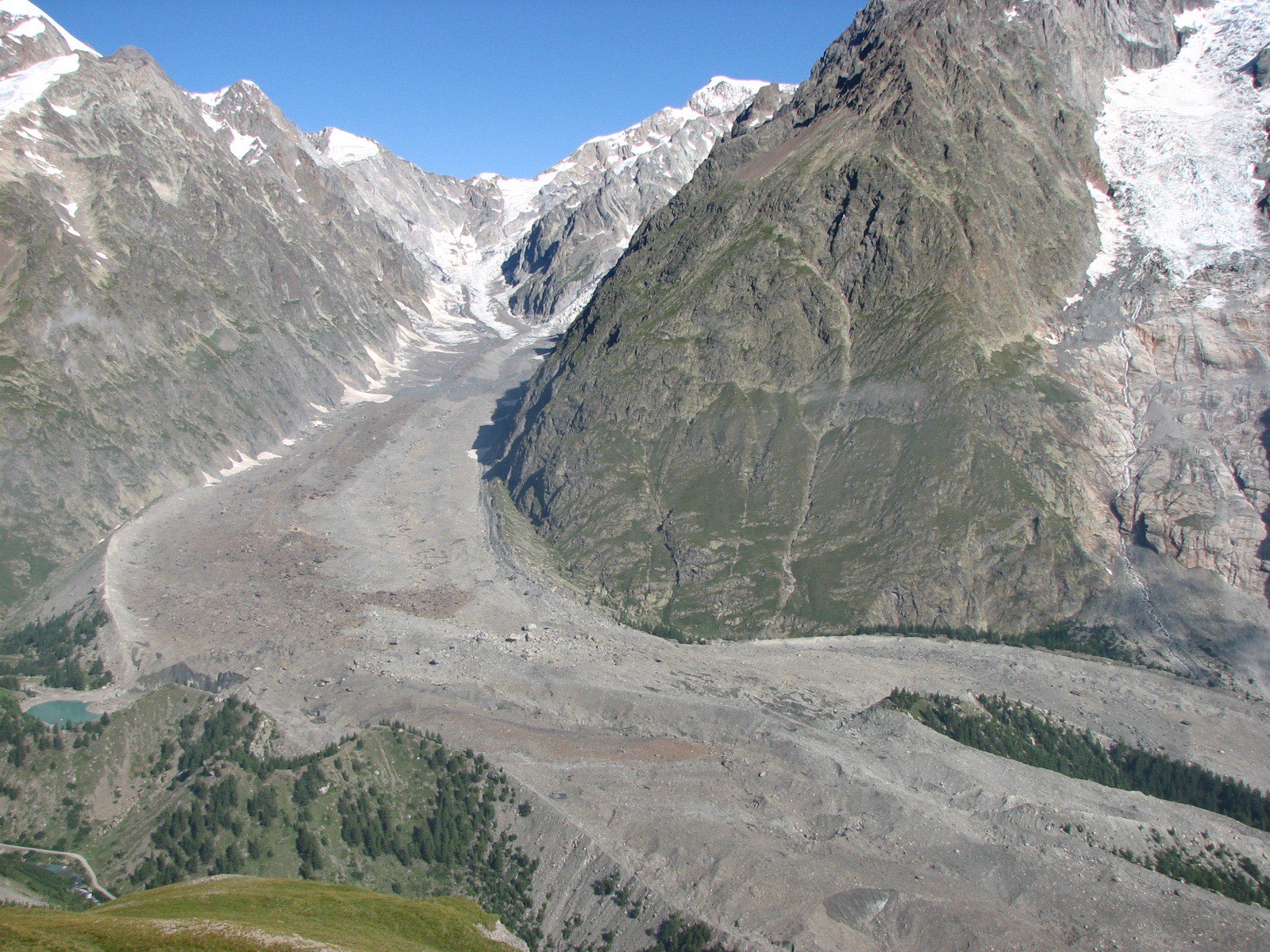
The debris-covered Miage glacier in Val Veny, Aosta Valley, one of the seven study sites and Thomas Shaw's own research glacier. Photographed in 2009.
SNAPPA2006 (FLICKR) · CC BY 2.0 ↗
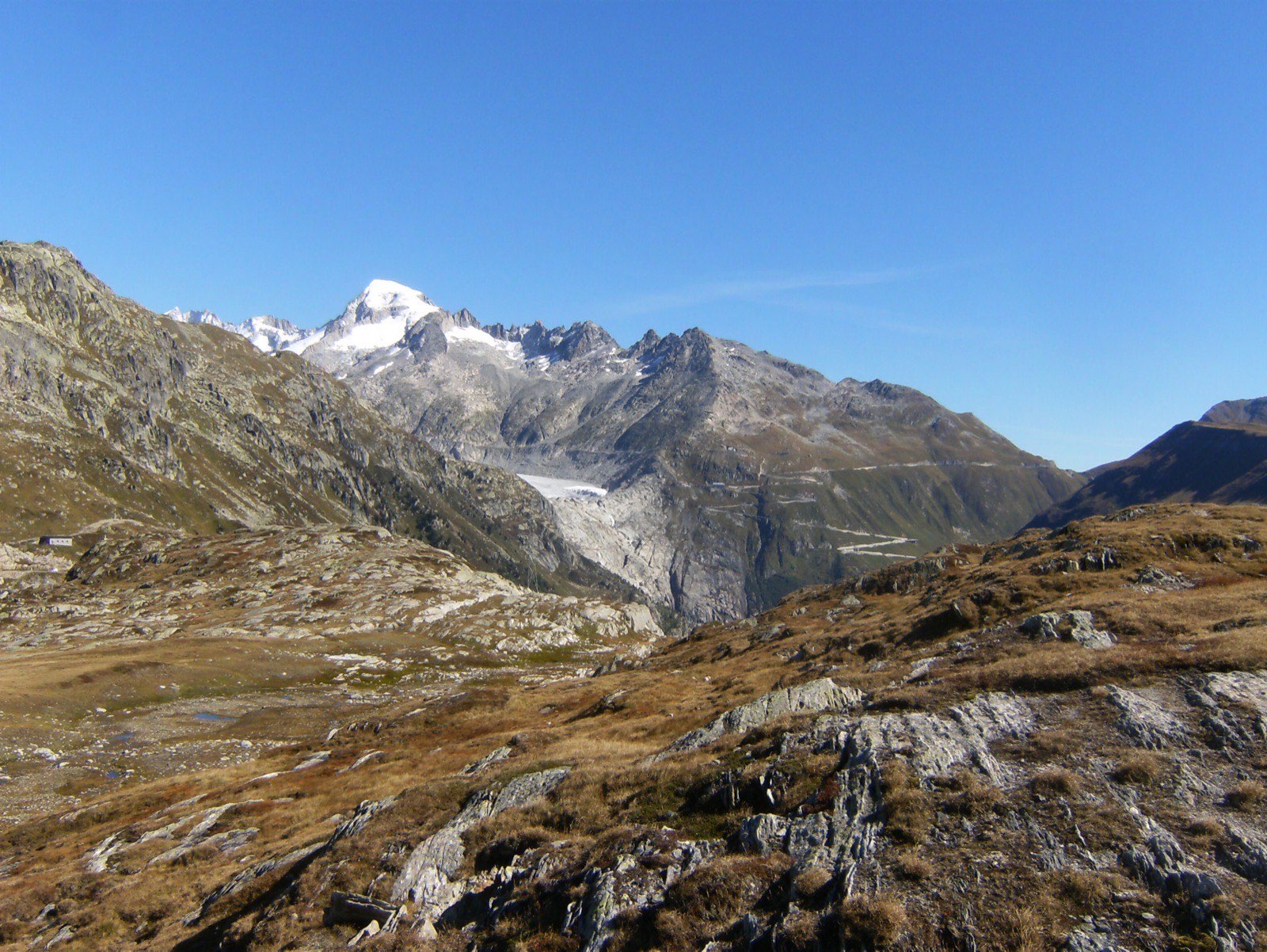
The shrunken tongue of the Rhône glacier below the Galenstock, with the Furka Pass road on the right, in September 2014 — the Swiss site of the survey.
CHRIS.URS-O · CC BY-SA 4.0 ↗

The team

Mark AllanBursary holder; PhD researcher, Northumbria UniversityDr Mike LimTeam member; Northumbria UniversityThomas ShawTeam member; glaciology PhD student, Northumbria University

Organised by The Grand Alpine Tour (Northumbria University) and Royal Geographical Society (with IBG). Supported by Land Rover / RGS-IBG 'Go Beyond' Bursary 2014 (grant and a Defender 110).

Online

The expedition's own presence on the web, checked when the record was last updated.

Books & films

Field Report for Educational Resources – Grand Alpine Tour
Grand Alpine Tour team, Royal Geographical Society (with IBG) · 2014

Sources

1Grand Alpine Tour — resources for schools ↗ (accessed 2026-09-16)ROYAL GEOGRAPHICAL SOCIETY (WITH IBG)2Field Report for Educational Resources – Grand Alpine Tour (PDF) ↗ (accessed 2026-09-16)ROYAL GEOGRAPHICAL SOCIETY (WITH IBG)3Land Rover Bursary ↗ (accessed 2026-09-16)ROYAL GEOGRAPHICAL SOCIETY (WITH IBG)4If it's a philosophy doctorate, can I just guess at stuff? — May 2014 (Grand Alpine Tour) ↗ (accessed 2026-09-16)THOMAS SHAW (BLOG)5Thomas Shaw — student profile ↗ (accessed 2026-09-16)NORTHUMBRIA UNIVERSITY6The Land Rover Bursary ↗ (accessed 2026-09-16)PAUL ROSE7RGS Bursary — Defender collection (DVLA build and registration data) ↗ (accessed 2026-09-16)LR WORKSHOP
RELATEDExpedition record updated 16 September 2026 · status: researched
EXPEDITION · 2013Pole of Cold ExpeditionFelicity Aston, Gisli Jonsson and Manu Palomeque, winners of the 2013 Land Rover and Royal Geographical Society (with IBG) Bursary, drove a winterised Defender 110 from the RGS in London in November 2013 up the length of Norway to Nordkapp, through Finnish Lapland into Russia and across Siberia to Oymyakon, the Pole of Cold and the coldest inhabited place on earth, where they met the Lord Keeper of the Cold at −54 °C and recorded −59 °C at Tomtor.EXPEDITION · 2015Trail by FireThe 2015 Land Rover Bursary expedition with the Royal Geographical Society (with IBG): six early-career volcanologists led by Dr Yves Moussallam drove a Defender 110 converted by Land Rover Special Vehicle Operations into the world's first 4x4 mobile volcano observatory down the Andes from Arica in northern Chile through southern Peru and back through the Chilean altiplano to Villarrica in the south, November 2015 to February 2016, measuring gas emissions at 15 active volcanoes along the Nazca plate subduction zone — 17,000 km, mostly on dirt roads and tracks, and the first gas composition and flux measurements ever made at seven of them.EXPEDITION · 2010Fault Line LivingThe 2010 Royal Geographical Society (with IBG) and Land Rover 'Go Beyond' bursary expedition: Serena Davies, Tamsin Davies and Adam Whitaker left Harwich on 1 August 2010 in a Defender 110 they called Lottie, carrying a British Geological Survey seismometer, for a twelve-week, 15,000-mile journey along the world's most active fault lines — Iceland, Italy's L'Aquila, Greece and Turkey's North Anatolian Fault — recording how people live with earthquakes, working with school students and seismologists.EXPEDITION · 2015Trail by FireThe 2015 Land Rover Bursary expedition with the Royal Geographical Society (with IBG): six early-career volcanologists led by Dr Yves Moussallam drove a Defender 110 converted by Land Rover Special Vehicle Operations into the world's first 4x4 mobile volcano observatory down the Andes from Arica in northern Chile through southern Peru and back through the Chilean altiplano to Villarrica in the south, November 2015 to February 2016, measuring gas emissions at 15 active volcanoes along the Nazca plate subduction zone — 17,000 km, mostly on dirt roads and tracks, and the first gas composition and flux measurements ever made at seven of them.INDEXAll expeditions57 expeditions, mapped and dated.ATLASOn the atlasThis route among the registry's vehicles, makers and service.