The expedition
In April 1959 Émile Parfait, Berliet's chairman, and Paul Berliet, its managing director, commissioned a study for a motor expedition to find new lorry routes into the landlocked centre of Africa: the aim was to link Algiers directly with Fort-Lamy in Chad across the Ténéré and the Tafassasset, avoiding the long detour through Nigeria. It took six months of lobbying to line up the support of some twenty official bodies. The mission had three stated objectives — economic (a Ténéré–Chad road usable in all seasons by heavy lorries), scientific (the geology, botany, zoology, hydrology and above all the prehistory of the Sahara) and technical (to show what the 6x6 GBC 8 'Gazelle', in production since 1956, could do). Maurice Berliet, who had been running the firm's Saharan trials since the 1940s, had charge of vehicles, crews and supplies; General Laurent was chief of mission and flew a Cessna ahead of the column; Chef d'escadron Armand of the Service géographique de l'Algérie navigated from aerial photographs and made the whole round trip without a single error or a local guide.
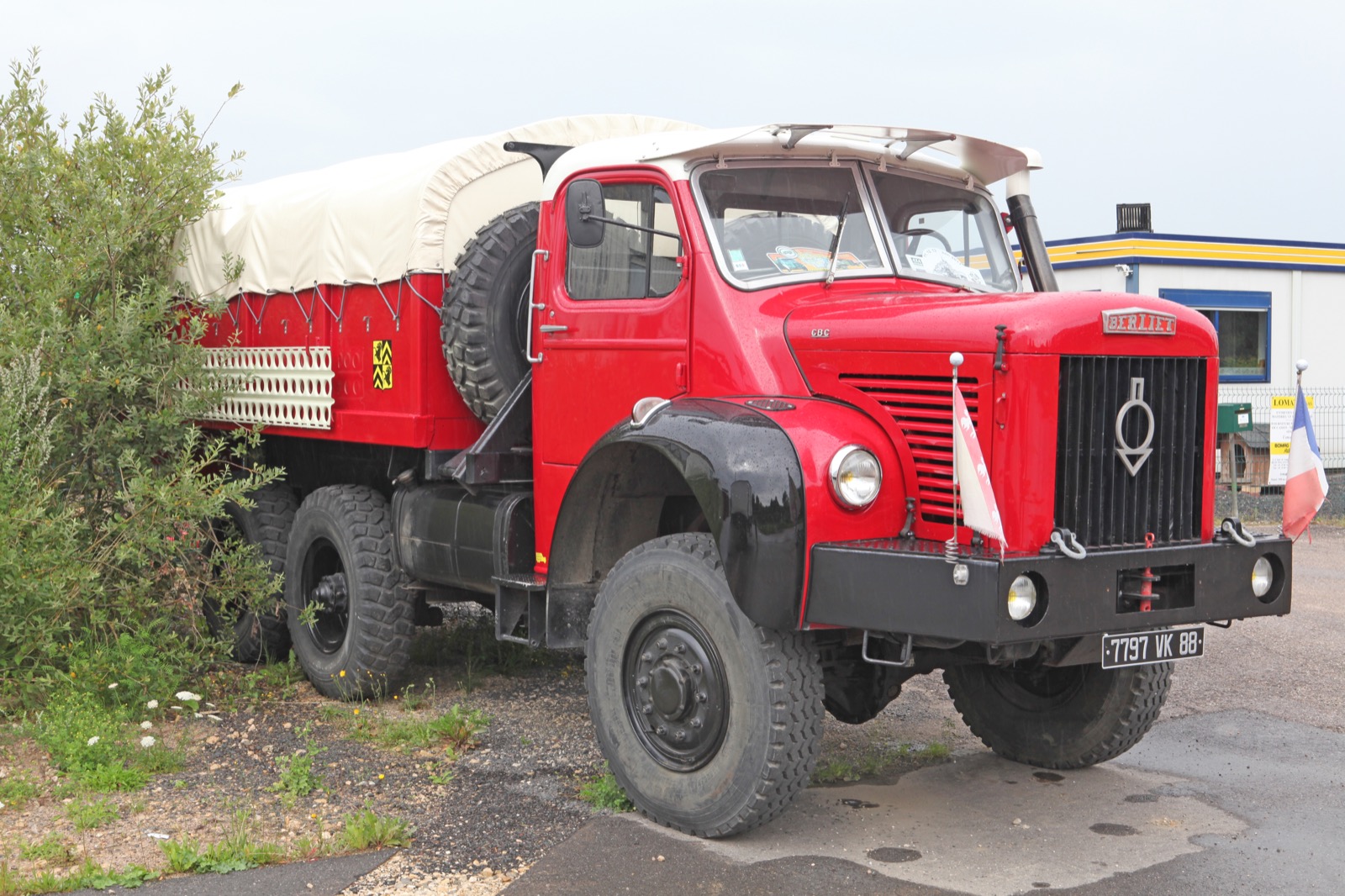
The fleet was nine Gazelles, each painted a different colour for its load — white refrigerator van, light-yellow water tanker, blue petrol tanker for the light vehicles and helicopter, orange diesel, green stores, red workshop and radio, violet for the scientific collections, grey camp equipment, Sahara-yellow film equipment — which the press called the 'arc-en-ciel du désert', plus a Bell helicopter flown by Gyrafrique and the Land Rovers. Maurice Berliet told the Journal du 4x4 in 2013 that in 1959 only Jeep and Land Rover offered a suitable light vehicle and the Jeeps were too small; five petrol Series IIs — two 88-inch soft-tops and three 109-inch pick-ups — were ordered in Algiers and modified by a mechanic at Hussein-Dey: extra fan blades, an electric fuel pump, a roof air intake, a sealed engine breather, a reinforcing section on the front axle, a fuel-bowl-to-tank link against vapour lock and a sun visor. Each carried sand ladders, a spade and pick, two 20-litre jerrycans on the front bumper, mission pennants and a radio with a tall whip aerial. (The English Wikipedia article and the Fondation Berliet give four and three Land Rovers respectively for the two missions; the Journal du 4x4 and the 3ème Groupe de Transport history, both drawing on the Fondation's archive, say five on the Ténéré mission.) The column's order never varied: the helicopter overhead, Commandant Armand's 109 in front with the 1:50,000 photo-mosaic, Maurice Berliet's 88 and a 109 carrying scientists or journalists behind him, the nine Gazelles, and a 109 as tail-end Charlie reporting by radio. The mission's sixty-five people included Roger Frison-Roche, who wrote the book 'Mission Ténéré', the prehistorian Henri Lhote of the Tassili frescoes, the hydrogeologist Cornet, the Bardo museum's Hugot, Mauny and Naeglé of IFAN Dakar, a Paris Match team and the Compagnie lyonnaise du cinéma, whose colour film became 'Les Tonnes de l'Audace'.
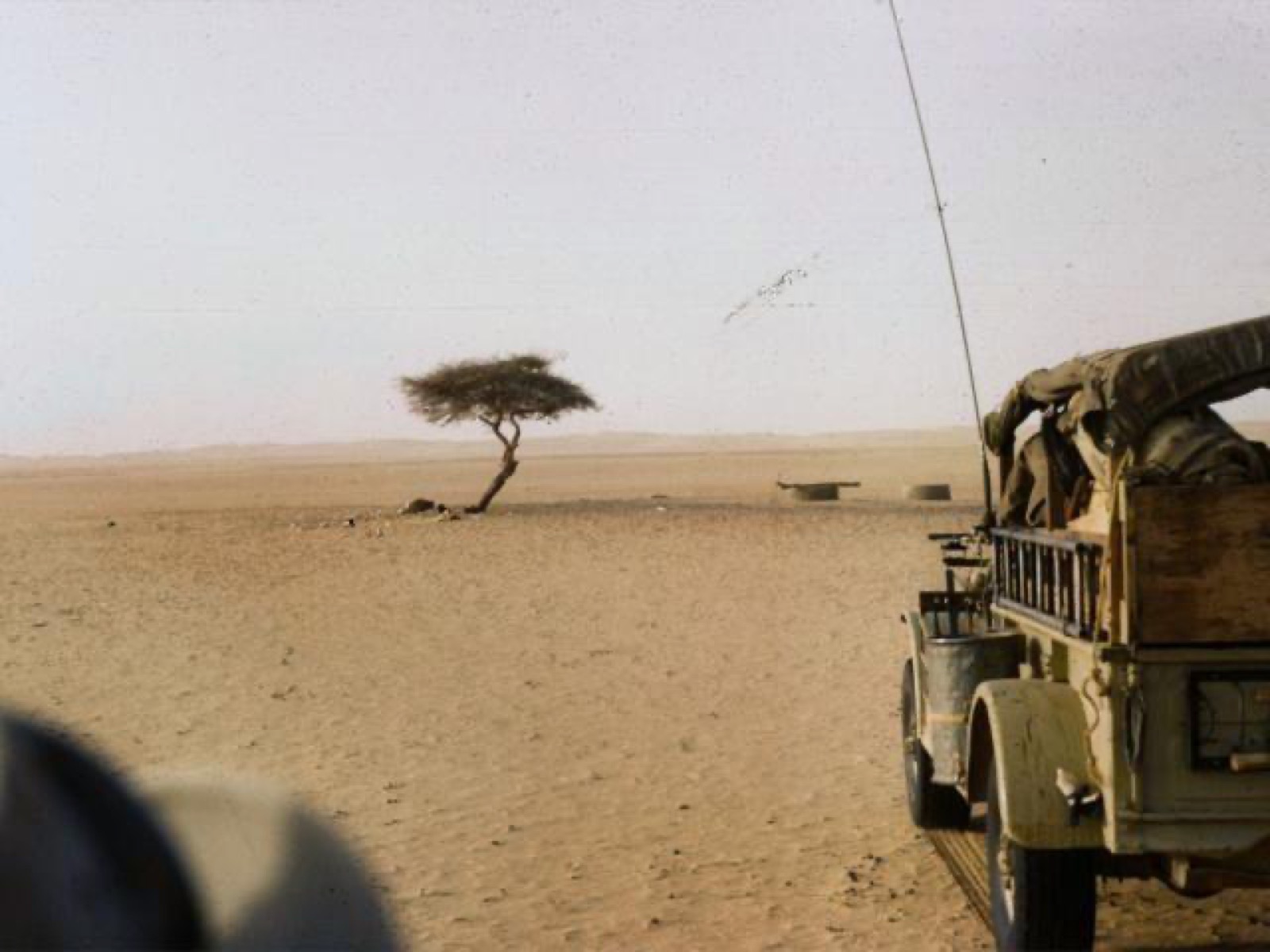
The vehicles left the Berliet branch in Algiers and gathered at Ouargla, setting off on 8 November 1959; the thousand kilometres to Djanet, where the scientists joined by air, were routine. The real start was Djanet at 11 a.m. on 17 November. The column camped that night 122 km south in the Erg d'Admer, found 'pebble tools' at In Afaleleh on the 18th, reached Adrar Bous on the 23rd and Adrar Madet after a 229 km stage on the 24th, and on 26 November came in sight of the Arbre du Ténéré, the lone acacia at the heart of the desert. Agadez was reached on 3 December over stony going, the Termit massif passed on the 6th, and on 7 December at Termit-south the Sahara gave way to the savanna and its cram-cram burrs. Lake Chad was reached at N'Guigmi on 9 December; the column rounded the lake by the north and arrived at Fort-Lamy on 12 December 1959, where Paul Berliet, flown in for the occasion, and the Chadian authorities received it and contracts were signed. The road was proven, but between the Arbre du Ténéré and Termit it was no route for ordinary lorries, so the return from 20 December went east of the lake by Koussa-Anna, Ehi-Mounto and Zoo-Baba towards Bilma. Christmas Eve was spent with a camel-corps patrol in the open desert, New Year's Eve at Bilma; the Erg of Bilma north of Agadem was the hardest crossing of the whole journey, Frison-Roche likening the Land Rover's motion to a boat in a heavy swell, and the Gazelles' driver Salmeron, bringing up the rear over sand the others had churned, being reduced to laying sand plates. Via Djado and the rock-art valley of Enneri Blaka the mission was back in Djanet on 7 January 1960 and Ouargla later that month, having driven about 10,000 km.
Not one serious mechanical incident was recorded on the trucks or the Land Rovers, though the Land Rovers regularly needed a tow on the big dunes where the 6x6s did not. The scientists came home with rhinoceros skeletons, stone tools and pottery, the 'submarine' rock-art site in the Oued Blaka and evidence of settlement in what is now open desert; the press coverage was enormous, and the Gazelle went on to sell some 32,000 examples to 1977. Berliet ran a second, more easterly crossing — the Mission Berliet-Tchad — the following autumn to find a route for two-wheel-drive lorries. The Fondation Berliet in Lyon preserves the archive, the driver Pierre Gaillard's slides and one of the Gazelles that took part, restored after its appearance in the 1964 film 'Cent mille dollars au soleil', and released the mission film on DVD in 2015.


.jpg)