4×4S.ORGTHE REGISTRY RESEARCHED · UPDATED 16 SEPTEMBER 2026

Atlantic Rising

ALSO KNOWN AS RGS-IBG LAND ROVER 'GO BEYOND' BURSARY 2009 · AROUND THE ATLANTIC ON THE ONE-METRE CONTOUR

The 2009 Royal Geographical Society (with IBG) and Land Rover 'Go Beyond' bursary expedition: Tim Bromfield, Will Lorimer and Lynn Morris, three Cambridge graduates, left Britain on 1 September 2009 in a Defender 110 they named Beatrice to drive round the rim of the Atlantic Ocean along the one-metre contour — the coastline scientists predicted for 2100 — down West Africa from Morocco to Ghana, by container ship to South America, up through Brazil, Guyana and Venezuela to Mexico and the United States, and home by ship to Zeebrugge in December 2010: fifteen months, 21 countries and 28,000 miles, documenting communities threatened by sea-level rise and linking schools along the way.

458DAYS OUTBOUND45k kmDISTANCE20COUNTRIES21WAYPOINTS1VEHICLE3CREW
DATED POINTS COME FROM THE TEAM'S ECOLOGIST BLOG SERIES AND THE ARCHIVED EXPEDITION WEBSITE; THE COUNTRIES BETWEEN (WESTERN SAHARA, GUINEA, IVORY COAST, COLOMBIA, MEXICO) ARE THOSE THE WEBSITE LISTS WITHOUT DATED POSTS AND ARE PLACED AT THEIR CAPITALS OR PRINCIPAL COASTAL CITIES. WHETHER THE DRIVE FROM FRANCE TO MOROCCO PASSED THROUGH SPAIN, AND THE PORTS OF THE TWO CONTAINER-SHIP LEGS, ARE NOT STATED IN THE SOURCES FOUND; THE LINE ACROSS THE OCEAN IS DRAWN AS A SHIP PASSAGE, NOT A ROAD.
THE JOURNEY IN SIX MOMENTS
January 2009The bursaryThe RGS 'Go Beyond' award lets the three give up their jobs.1 September 2009DepartureOut of Britain; the first night under canvas at Mont Saint-Michel.December 2009Sierra LeoneFreetown's flooded slums as the Copenhagen conference opens.23 January 2010The South AtlanticBeatrice and Bernie the buoy aboard the MV Safmarine Bayete.July 2010GeorgetownA capital city below the sea.3 December 2010HomeOff the MV Taiko at Zeebrugge after 15 months, 21 countries and 28,000 miles.
DEPARTED1 September 2009
Britain
ARRIVED3 December 2010
Zeebrugge (by ship from the United States), then London
DISTANCE28,000 miles as stated by the team on their website and blog, including two container-ship crossings of the Atlantic
COUNTRIES CROSSED, IN ORDER
GBUnited KingdomFRFranceMAMoroccoEHWestern SaharaMRMauritaniaSNSenegalGMGambiaGWGuinea-BissauGNGuineaSLSierra LeoneLRLiberiaCIIvory CoastGHGhanaBRBrazilGYGuyanaVEVenezuelaCOColombiaMXMexicoUSUnited StatesBEBelgium

The expedition

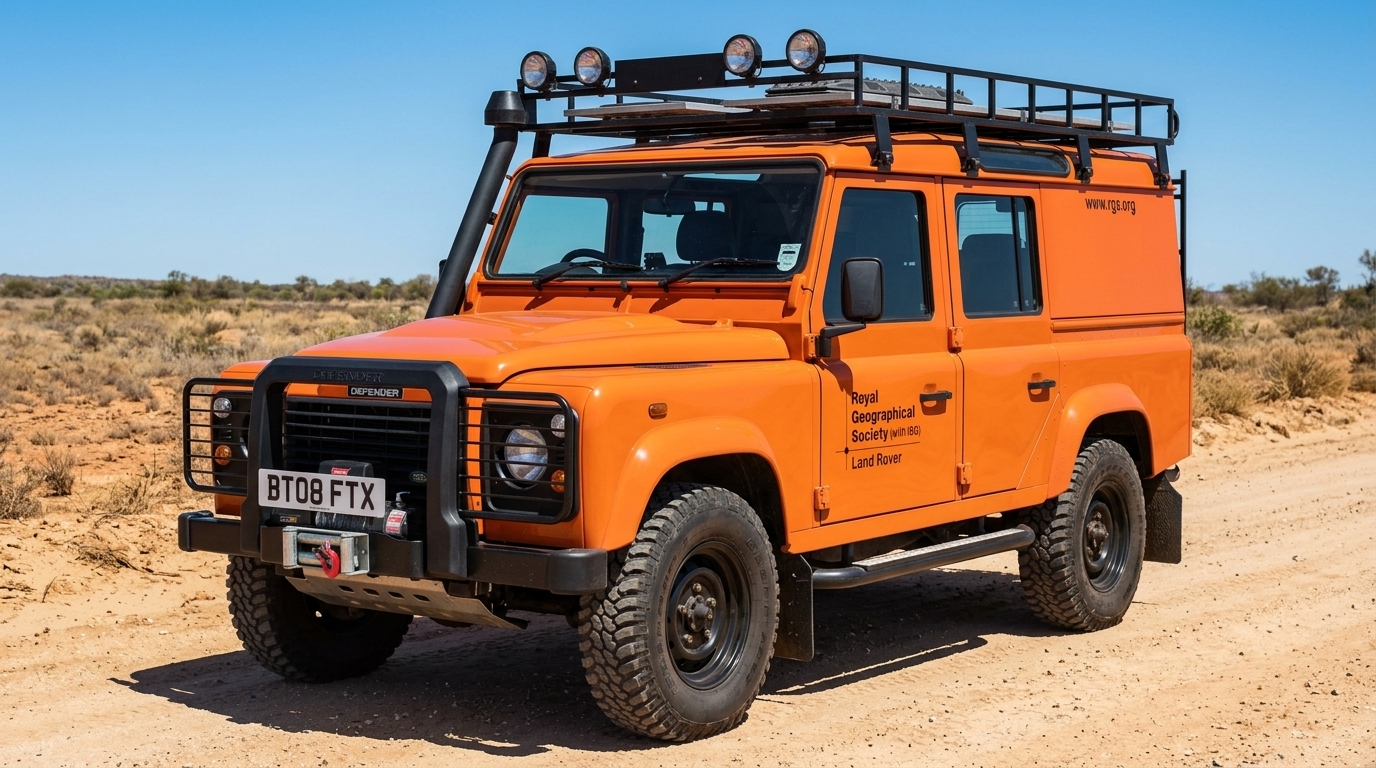
Atlantic Rising began as an idea by three Cambridge graduates with no expedition experience: Tim Bromfield, a geographer who had worked for Accenture and taught in London and Uganda; Will Lorimer, a social anthropologist turned documentary cameraman; and Lynn Morris, a Press Association video journalist with a Cambridge MA in social anthropology. Their plan was to trace the one-metre contour line — the shoreline the Atlantic could have by 2100 if sea levels rose as predicted — all the way round the ocean, and to record with photography, film, sound and writing the places, people and histories that would be lost, while building an educational network among secondary schools in low-lying coastal communities. In January 2009 the Royal Geographical Society (with IBG) gave them the Land Rover 'Go Beyond' bursary, which brought a grant and a Defender 110; they gave up their jobs, registered Atlantic Rising as a charity (no. 1129583) and had the journey's carbon offset through ClimateCare. The car was an orange Defender 110 XS station wagon registered in May 2008, BT08 BTX, which they named Beatrice.

They set out from Britain on 1 September 2009 and spent the first night under canvas near Mont Saint-Michel, where the great tidal range was expected to worsen local sea-level rise and where a scheme to remove the causeway and let the sea flow round the mount again was beginning. By mid-September they were in Morocco, camped on the beach north of Tarfaya watching the Forces Auxiliaires patrol for migrant boats bound for the Canaries, then down through Western Sahara and Mauritania to Senegal in October, where they found a school swallowed by the sea and villagers planting mangroves. November was spent in the Gambia — rebuilt beaches, the slave-trade coast, the national clean-up day — and Guinea-Bissau, and December in Sierra Leone: a flooded slum in Freetown, sand extraction eating the beaches, and a piece from Will Lorimer on why the country would be 'screwed' at the Copenhagen climate conference. January 2010 took them through Liberia and its forests to Ghana, where they visited the unfinished Keta sea defences, the Agbogbloshie electronics dump in Accra and the salt-poisoned wells of the Western Region.

From West Africa the Land Rover crossed the South Atlantic on the container ship MV Safmarine Bayete, from whose deck the team dropped a tracked message-in-a-bottle buoy named Bernie for their schools to follow; it drifted for five weeks around the Equator before washing up near Fortaleza. In Brazil they went up the Amazon to the floodplain, where water buffalo were trampling the várzea and the Belo Monte dam was being planned, then along the Guianas coast to Georgetown, most of which lies below sea level behind Dutch-built dykes, and into Venezuela — the Warao of the Orinoco Delta finding salt in their river, and a climb of Mount Roraima in the July rains. Colombia and Mexico followed, and by September 2010 the team were in the United States: a coastal-communities conference on Nantucket, where Hurricane Earl had just taken a house at Madaket; the nutria-eaten marshes of Louisiana in October; Baltimore and New York in November. On the way home, Bernie the buoy was launched again into the mid-Atlantic from the deck of the MV Taiko, which carried the team and the Defender to Zeebrugge; they took the Eurostar to London on 3 December 2010 in the snow.

Fifteen months, 21 countries and 28,000 miles: Lynn Morris drove Beatrice back to Land Rover at Gaydon on 18 December 2010. The material became a schools resource for 12–15-year-olds on sea-level rise, coastal erosion, rainforests, ocean currents and the global food system, a blog series in The Ecologist, radio pieces for the BBC World Service, and the opening lecture of the RGS Explore weekend on 18 November 2011. The planned route had been more ambitious — 31 countries in ten months, from Tiree to Halifax by way of Central America — and the sources found do not say where in Africa and South America the ship legs began and ended.
The vehicle

Imagery

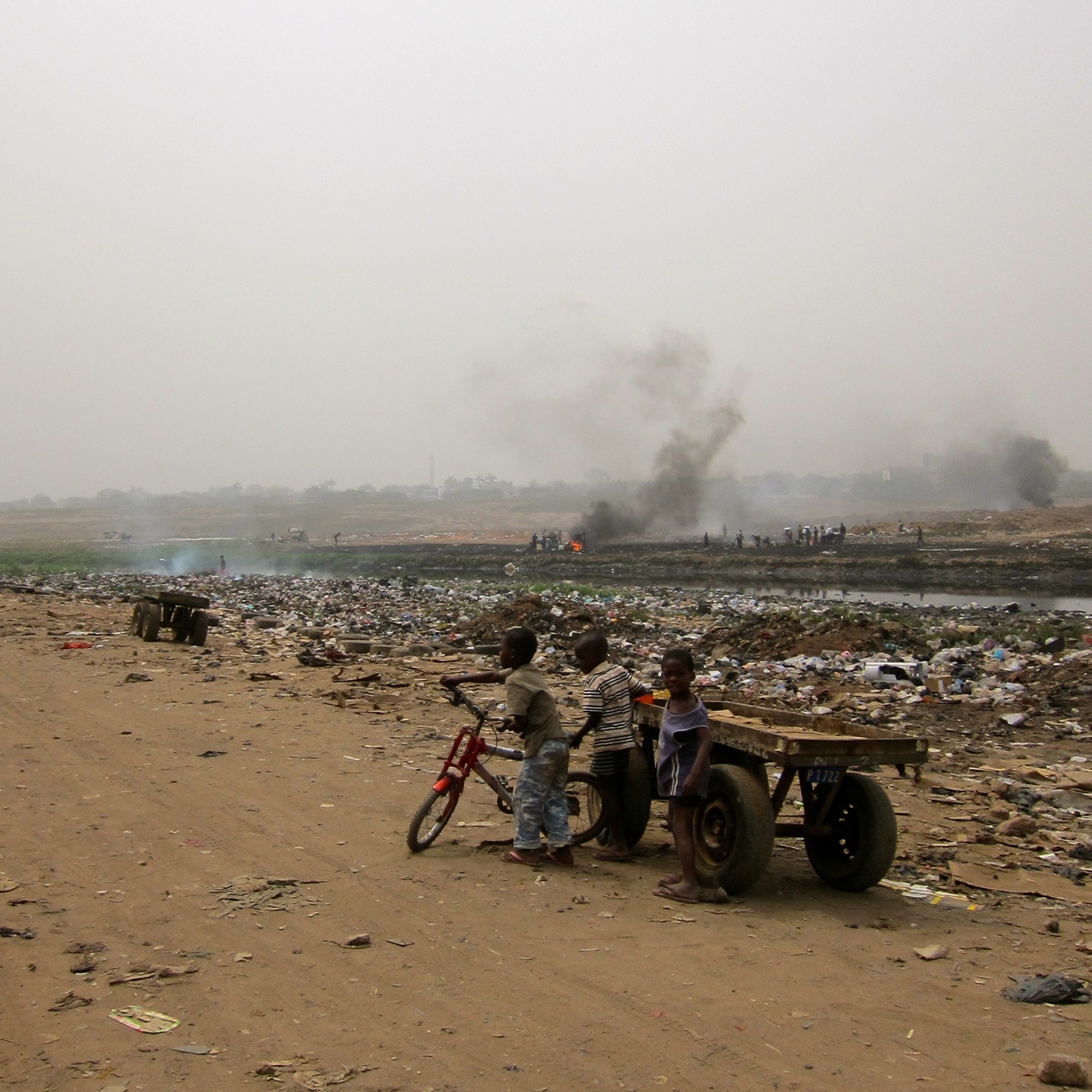
The Agbogbloshie electronics dump beside the Korle Lagoon in Accra, which the team visited in January 2010 — 'the final resting place for many of the white goods that we buy in the developed world'. Photographed in 2012.
LANTUS · CC BY 2.0 ↗
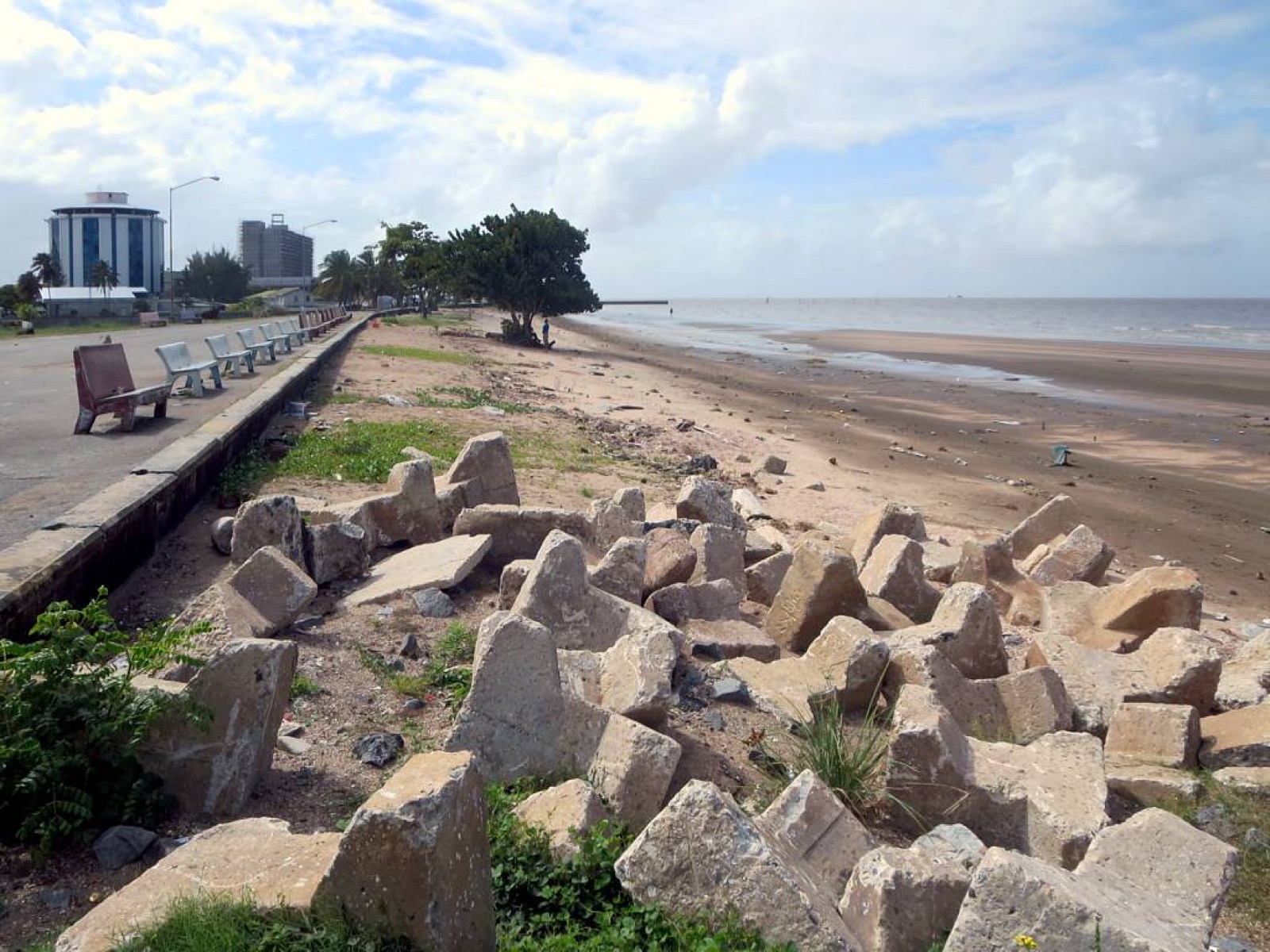
The seawall that keeps the Atlantic out of Georgetown, Guyana, where the team reported in July 2010 on a coast already below sea level. Photographed in 2014.
DAVID STANLEY FROM NANAIMO, CANADA · CC BY 2.0 ↗

The team

Tim BromfieldTeam member; geographer and writer, BBC World Today radio piecesWill LorimerTeam member; cameraman, BBC World Service radio seriesLynn MorrisTeam member; video journalist, writer for The Ecologist and Land Rover Owner International

Organised by Atlantic Rising (UK charity no. 1129583) and Royal Geographical Society (with IBG). Supported by Land Rover 'Go Beyond' Bursary with the Royal Geographical Society (with IBG), 2009 (grant and a Defender 110) and ClimateCare (carbon offset) and Rafi.ki online schools network.

Online

The expedition's own presence on the web, checked when the record was last updated.

Books & films

Atlantic Rising blog series
Tim Bromfield, Will Lorimer and Lynn Morris, The Ecologist · 2010 · 27 August 2009 to 11 October 2010

Atlantic Rising radio series
BBC World Service · 2010

Sources

1Atlantic Rising — expedition website (home, About the Expedition, Meet the Team, Blog) ↗ (accessed 2026-09-16)ATLANTIC RISING (VIA WAYBACK MACHINE, 2011)2Atlantic Rising — blog series index ↗ (accessed 2026-09-16)THE ECOLOGIST3Atlantic Rising: Will migrant-watch become a climate-watch? ↗ (accessed 2026-09-16)THE ECOLOGIST4Atlantic Rising: Living on the edge on Nantucket Island in the US ↗ (accessed 2026-09-16)THE ECOLOGIST5Expedition to link students in support of climate action ↗ (accessed 2026-09-16)GRIST6Updates from Atlantic Rising: Guyana, a Victorian Expedition, and Exploring ↗ (accessed 2026-09-16)WANDERING EDUCATORS7Expedition to spread word of climate change ↗ (accessed 2026-09-16)ONESHIFT8Atlantic Rising — planned route map ↗ (accessed 2026-09-16)ATLANTIC RISING (2009 PLANNING SITE)9Land Rover Bursary ↗ (accessed 2026-09-16)ROYAL GEOGRAPHICAL SOCIETY (WITH IBG)10RGS Bursary — Defender collection (DVLA build and registration data) ↗ (accessed 2026-09-16)LR WORKSHOP
RELATEDExpedition record updated 16 September 2026 · status: researched
EXPEDITION · 2010Fault Line LivingThe 2010 Royal Geographical Society (with IBG) and Land Rover 'Go Beyond' bursary expedition: Serena Davies, Tamsin Davies and Adam Whitaker left Harwich on 1 August 2010 in a Defender 110 they called Lottie, carrying a British Geological Survey seismometer, for a twelve-week, 15,000-mile journey along the world's most active fault lines — Iceland, Italy's L'Aquila, Greece and Turkey's North Anatolian Fault — recording how people live with earthquakes, working with school students and seismologists.EXPEDITION · 2008Latitude — around the world on 50° NorthThe first Land Rover 'Go Beyond' Bursary expedition with the Royal Geographical Society: Peter Lovell, Spike Reid and David Smith drove a Defender 110 they called Roxy around the world along the 50th parallel in 2008 — from Goonhilly on the Lizard through Belgium, Poland, Ukraine, Russia and Kazakhstan to Mongolia, across Siberia to Sakhalin and by ferry to Japan, then shipped to Canada and home — more than 22,000 km in seven months, interviewing farmers and communities about how they adapt to their environments and to a changing climate.EXPEDITION · 2013Pole of Cold ExpeditionFelicity Aston, Gisli Jonsson and Manu Palomeque, winners of the 2013 Land Rover and Royal Geographical Society (with IBG) Bursary, drove a winterised Defender 110 from the RGS in London in November 2013 up the length of Norway to Nordkapp, through Finnish Lapland into Russia and across Siberia to Oymyakon, the Pole of Cold and the coldest inhabited place on earth, where they met the Lord Keeper of the Cold at −54 °C and recorded −59 °C at Tomtor.INDEXAll expeditions57 expeditions, mapped and dated.ATLASOn the atlasThis route among the registry's vehicles, makers and service.