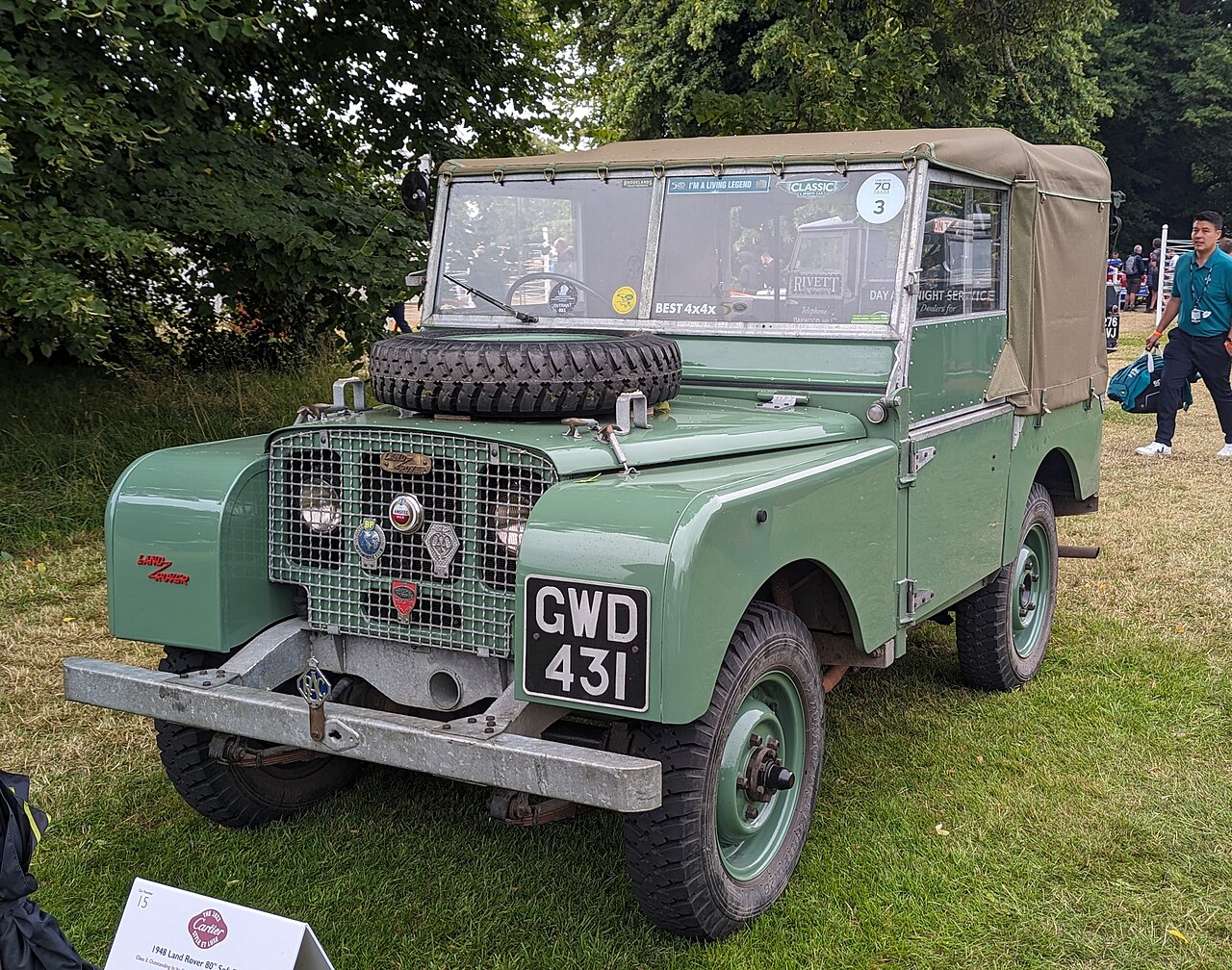
Nobody called it a Series I until April 1958. For ten years it was simply the Land-Rover, the vehicle the Rover Company put on its stand at the Amsterdam Motor Show on 30 April 1948 because the government would not release steel for more than a token run of saloon cars and the Solihull works needed something to build. Maurice Wilks, Rover's chief designer, had been running a war-surplus Jeep on his farm on Anglesey; his brother Spencer was the managing director. The first prototype of 1947 sat on a Jeep chassis shortened to an 80-inch wheelbase. The production car kept that wheelbase, took the 1,595 cc engine and gearbox from the Rover P3 saloon, added a two-speed transfer box with power take-offs, and was panelled in Birmabright aluminium alloy because aluminium was the one metal not rationed. The price was £450.
Rover hoped to sell about 5,000 a year and sold 8,000 in the first full year. Over the following decade the car grew twice — to 86 and 107 inches for 1954, and to 88 and 109 inches in 1956 to make room for a diesel engine — and acquired a coachbuilt station wagon, then a factory one, then fire engines, mobile welders, licence-built copies in Belgium and Germany and a place on almost every expedition of the 1950s. Sports Car Market puts the total at 211,467 including prototypes. The registry's 36 Series I records run from a 1948 80-inch to the 107-inch wagons of the last year, and this page walks through them in order.
Origins and the 1948 launch
4 VEHICLES IN THIS CHAPTERRover's post-war plan had been for 20,000 cars a year; the Ministry of Supply would allocate steel for about 1,100. The Land-Rover was the answer worked out during 1947: an all-purpose vehicle, in the words of the September 1947 board minute, "on the lines of the Willys-Overland post-war Jeep", but built as a power source for the farm with take-offs front, centre and rear. The first prototype had a centre steering position and a 1.4-litre Rover 10 engine; both went before production, the engine replaced by the 1,595 cc inlet-over-exhaust four from the P3, rated at 50 bhp at 4,000 rpm. Drive to the front axle passed through a freewheel, so the car was permanently in four-wheel drive but would not wind up on the road. The 1948 leaflet quoted 22½ cwt and "over 50 m.p.h." Forty-eight pre-production cars were built, chassis R01 to R48 (or L for left-hand drive); HUE 166, the first of them, survives at the British Motor Museum at Gaydon, with the drilled chassis used to check ground clearance. The first production series ran from 860001, and Lloyd Allison's count from the despatch books gives 3,048 vehicles for the 1948 model year and 5,000 for 1949.
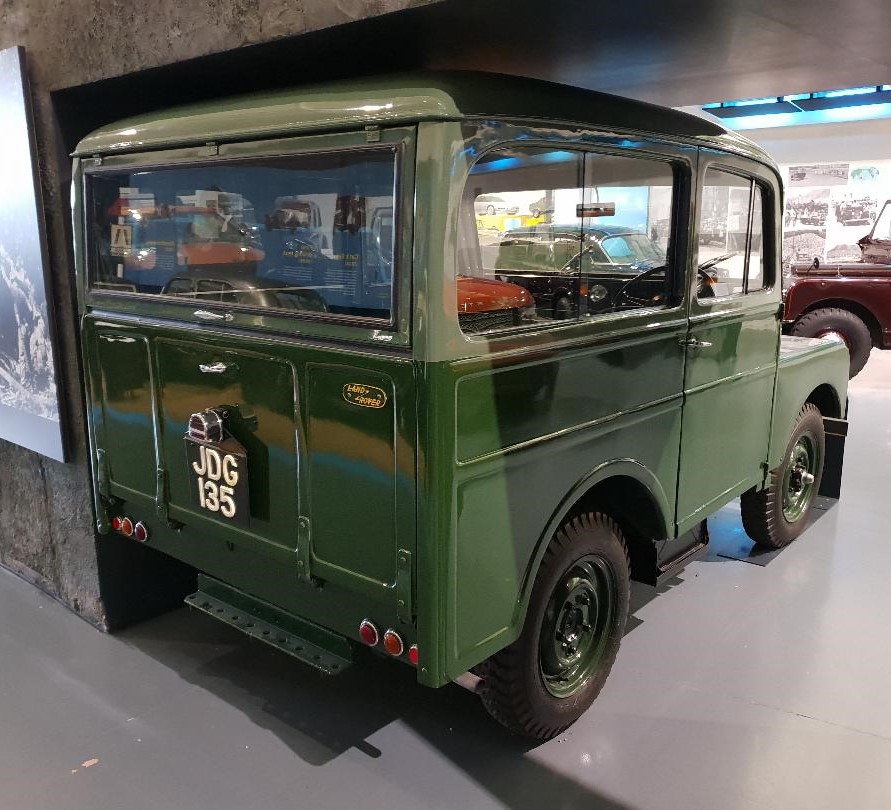
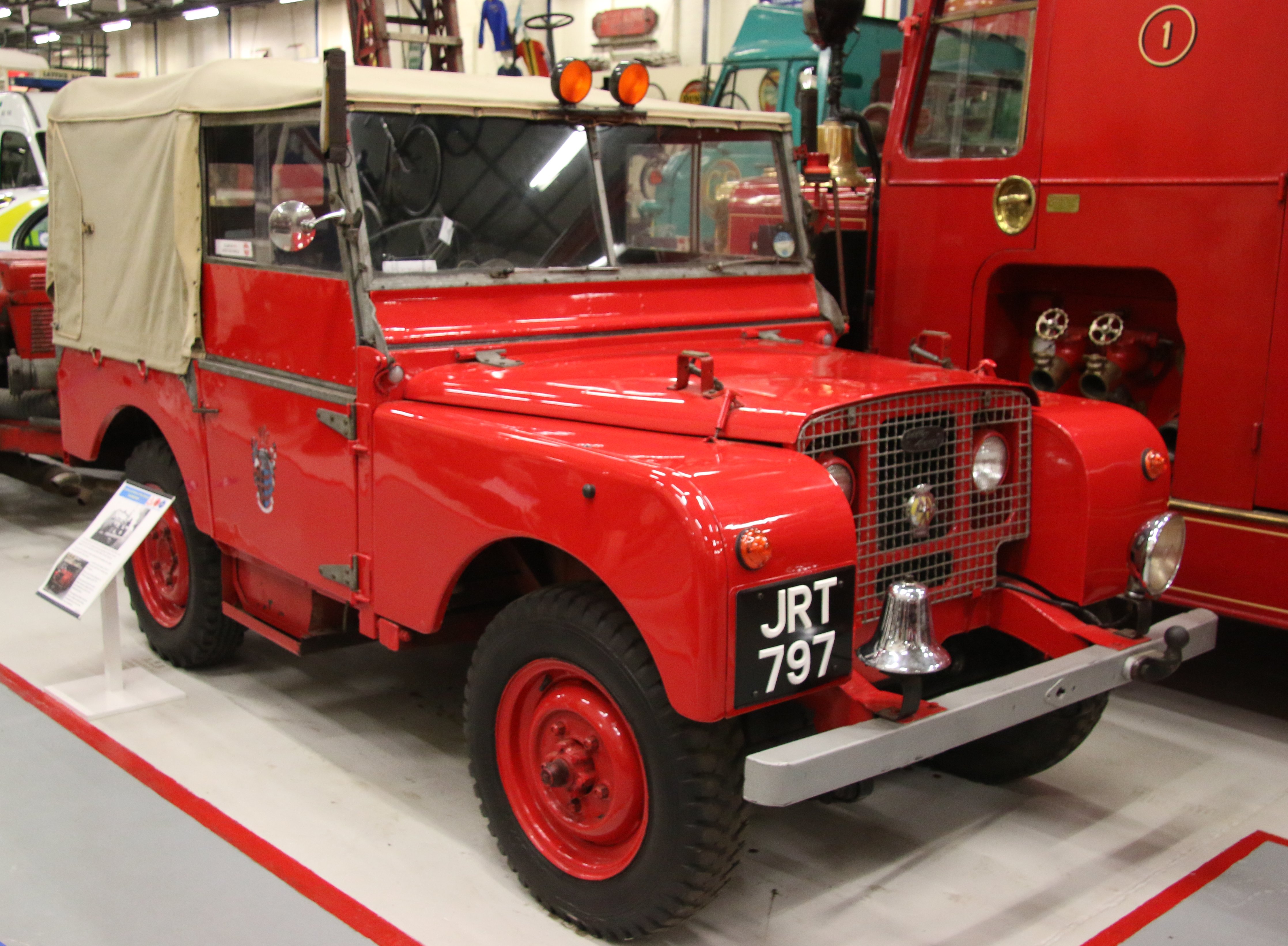
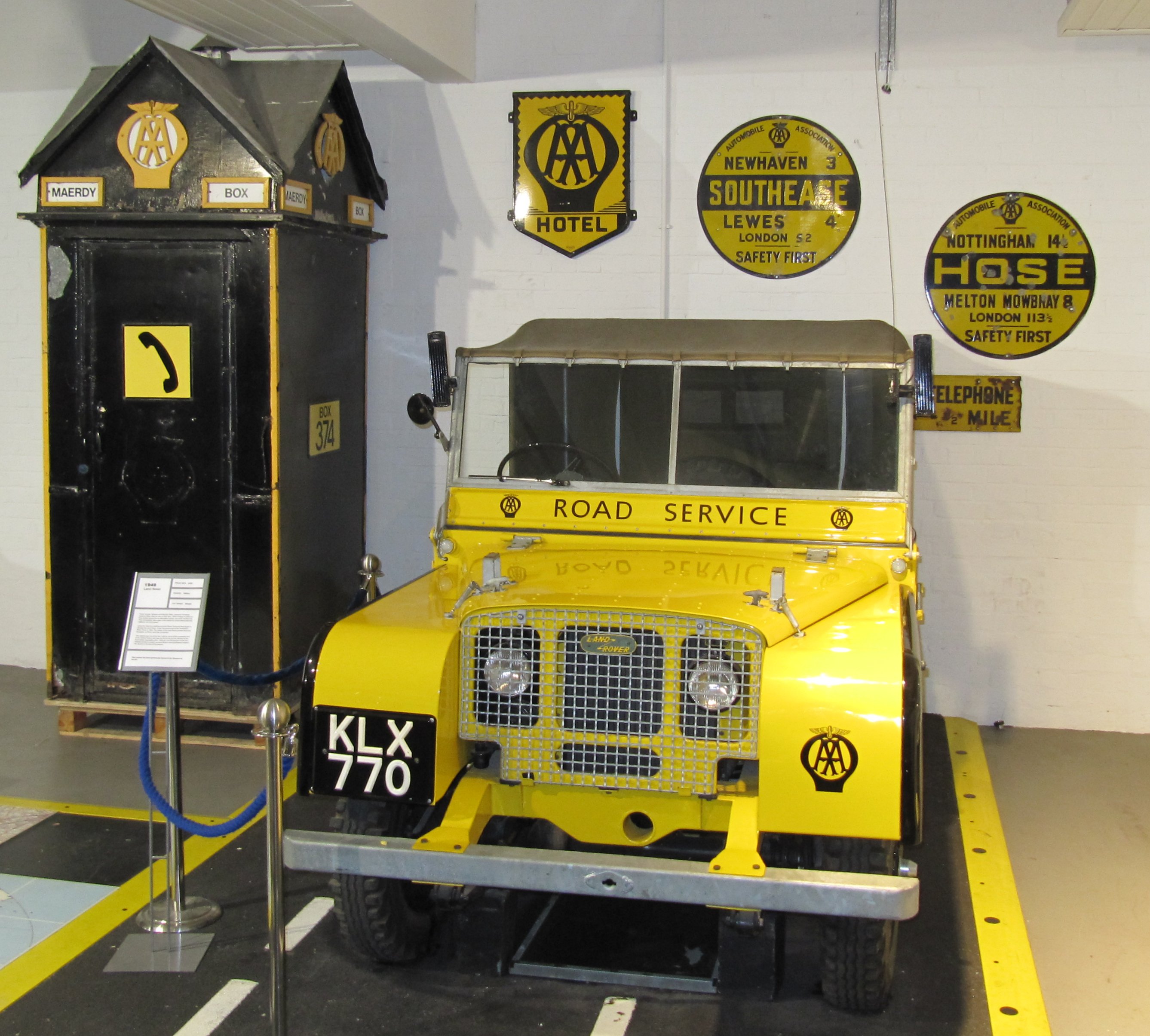
The registry's earliest record is LAND48, Philip Avery's family-owned 1948 80-inch that went round the world fifty years later on the Lucas Trans-Global Expedition. Fleets bought early: the Automobile Association's first Land Rover was KLX 770, a 1949 80-inch soft top for the London night patrols, and the factory fire tender — a power-take-off pump with hose lockers on the standard chassis — was catalogued from 1949 alongside the mobile welder and compressor. The same year Rover offered its first passenger body: a seven-seat, wood-framed estate built by Tickford of Newport Pagnell, with leather seats, a heater and a one-piece screen. Because it was taxed as a private car it attracted purchase tax the utility did not, and fewer than 700 were sold, all but about 50 of them abroad. The station wagon was dropped after 1951, but the idea was not.
.jpg)

80-inch development (1950–1953)
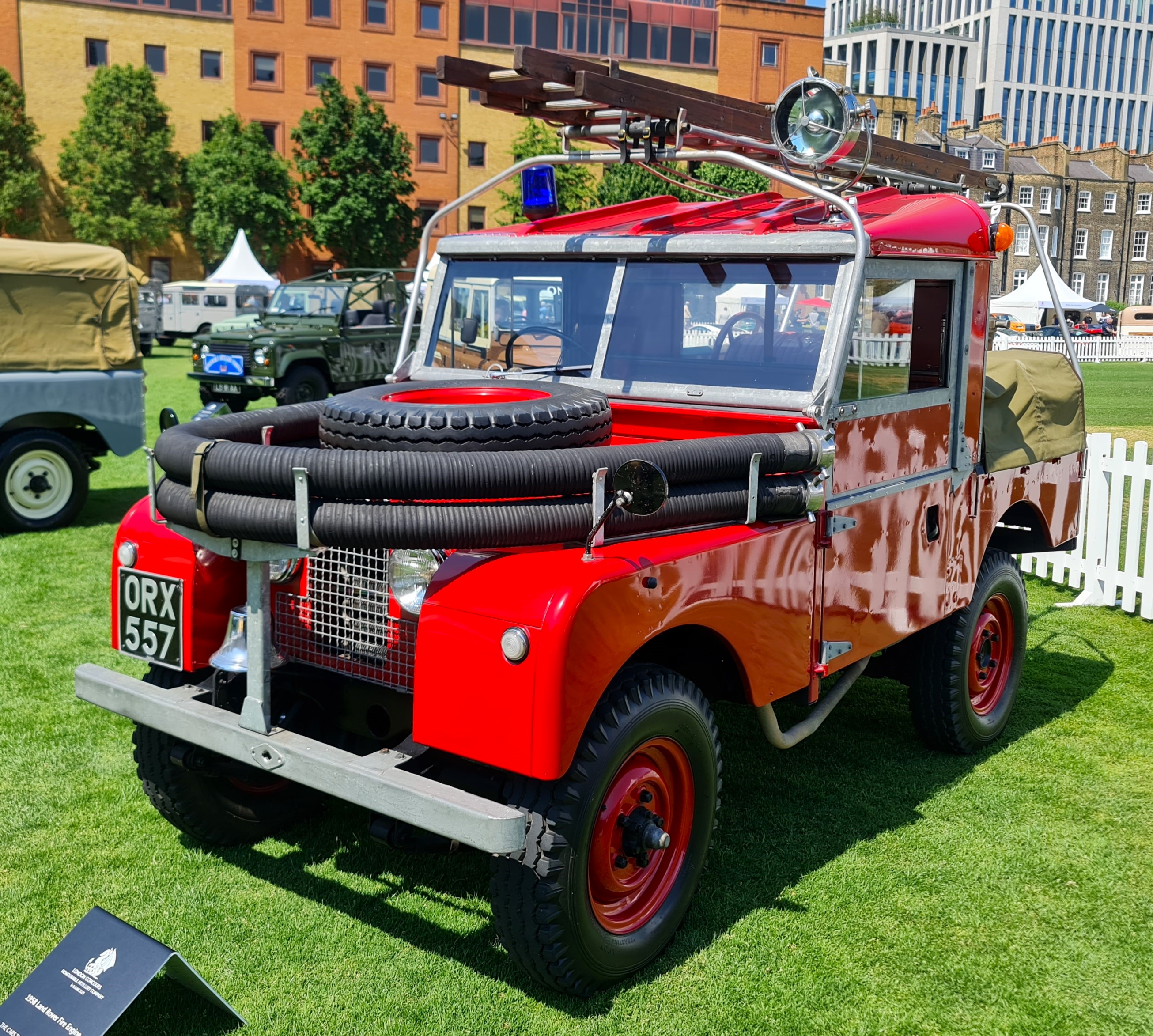
6 VEHICLES IN THIS CHAPTERThe Land Rover Series One Club's change list shows how quickly the car was revised. Girling hydraulic brakes came in during 1949; in May 1950 the 7-inch headlamps moved from behind the grille to protrude through it; the front springs were widened from 1¾ to 2½ inches; and from chassis 16102314 in the 1951 model year the freewheel gave way to a selectable two- or four-wheel-drive transfer box, the arrangement every leaf-sprung Land Rover kept until 1983. Fifty 2-litre prototypes were built in 1950 in their own 07100001 sequence, and the 1,997 cc engine — same 105 mm stroke, bore out to 77.8 mm, cylinders siamesed without water between them — went into production for the 1952 season with 101 lb ft of torque at 1,500 rpm. Production climbed from 16,000 in 1950 to 17,360, 18,715 and 22,272 in the last three 80-inch years, and a Law Lords ruling reclassified the car as a multi-purpose vehicle rather than a commercial, freeing it from the 30 mph limit.
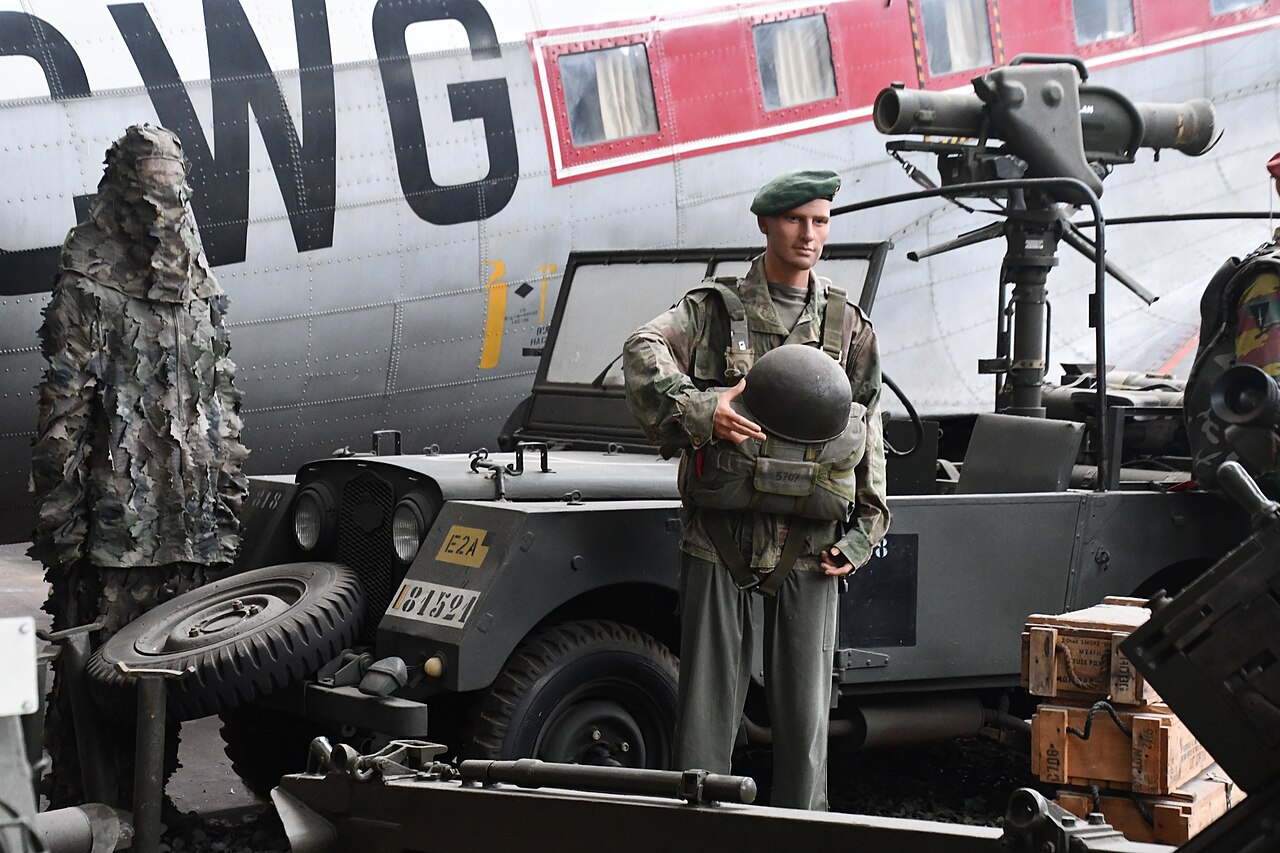
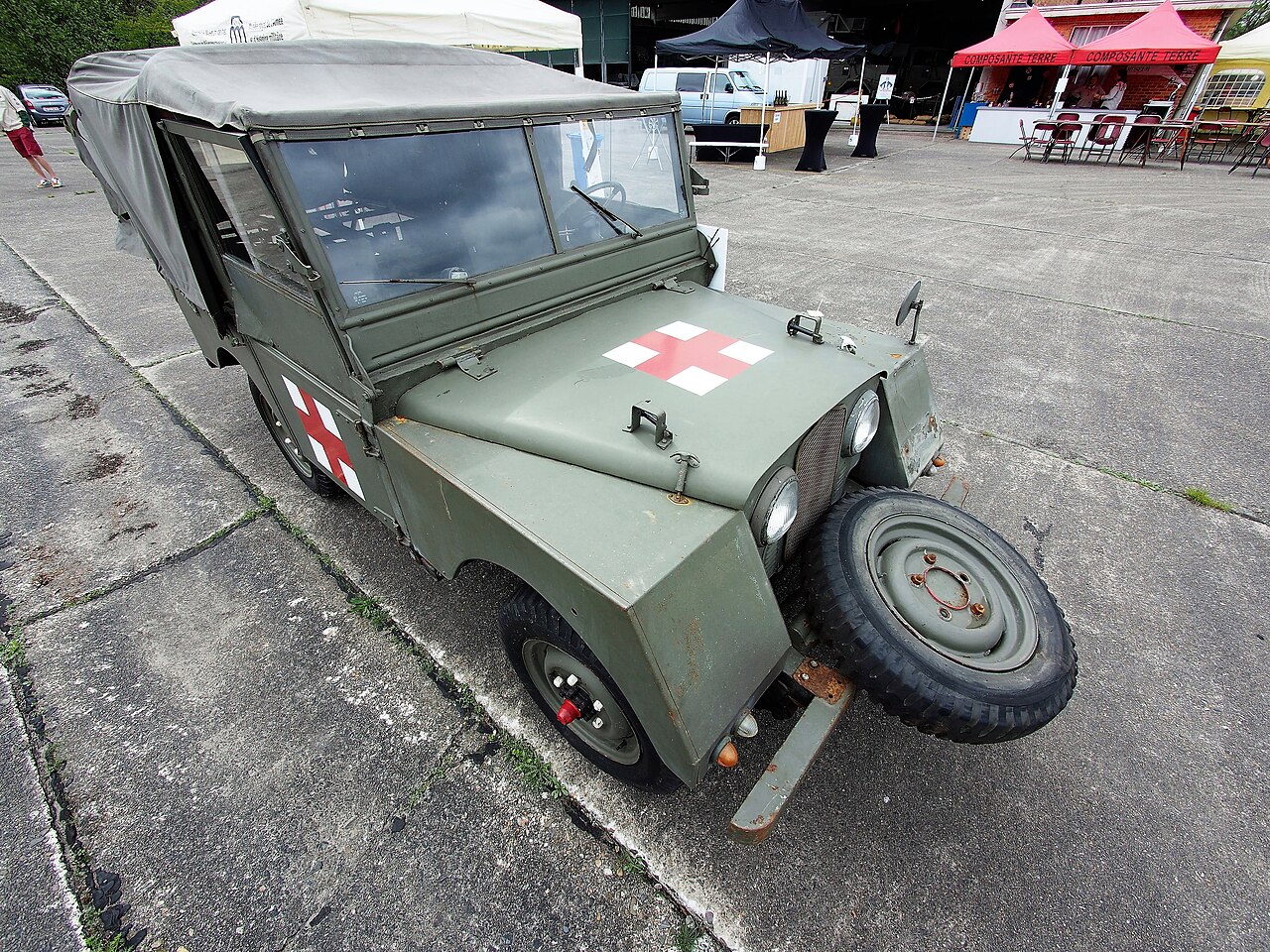
Two licence deals took the car abroad. In October 1951 Rover agreed to supply CKD kits and technical help to the Société Nouvelle Minerva of Mortsel, Antwerp, the contract being signed on 7 May 1952; 8,959 kits were despatched before the agreement was terminated in June 1956, most of them for the Belgian Army, which had ordered 2,500 and then 3,421 more. Minerva built its own steel bodies with flat, sloping front wings because it could not press Rover's curved ones, and about 63 per cent of each vehicle was Belgian. The registry's Minerva Field Ambulance and the armoured Minerva Blindé — two batches of about 30, one of them used for airfield defence in the Congo — both came from this contract, as did the aluminium-winged 80-inch of the Belgian gendarmerie. In Hamburg, Vidal & Sohn's Tempo works bodied imported Land Rover chassis in steel for the Bundesgrenzschutz from 1953 to 1957, on 80 and then 86-inch chassis. The British Army, meanwhile, tried standardising engines: in 1950 Hudson Motors fitted 33 cars with the Rolls-Royce B40 four, moving the rear axle back an inch to make the 81-inch; the trials ran two years and were dropped. A 1952 contract 80-inch, chassis 26104724, was stripped to a bare drivable chassis for the School of Electrical and Mechanical Engineers at Bordon and was still teaching recruits in 2014. Barbara Toy bought a used 1950 80-inch, named it Pollyanna and drove it from Tangier to Baghdad; W. P. Mitchell of The Autocar took one from Calcutta to Calais in 1951. The Post Office's first Land Rover, the Type 1 hard top, was bought from 1950.


86 and 107-inch models (1954–1955)
6 VEHICLES IN THIS CHAPTERThe 1954 model year was the first full redesign. Nine prototype 86-inch cars, P86/1 to P86/9, and three 107-inch, P107/1 to P107/3, were built during 1952 to test a body extended nine inches behind the cab, with new doors and a re-thought interior for a customer who was by now as likely to be a mine, a colonial administration or a county council as a farmer. The 86-inch replaced the 80 outright, its pre-production sequence 47100001 simply carrying on into production, and the 107-inch pickup gave the marque a real load carrier for the first time. Allison's despatch-book totals give 15,080 86-inch and 3,820 107-inch vehicles for 1954; the mid-year "spread-bore" engine, with water between the cylinders at last, arrived from engine 5710xxxx. One of the last 80-inch-based specials belongs here too: the State III Royal Review car, chassis 5710-2615 of 1954, with its smooth-sided open body and chrome grab rails.
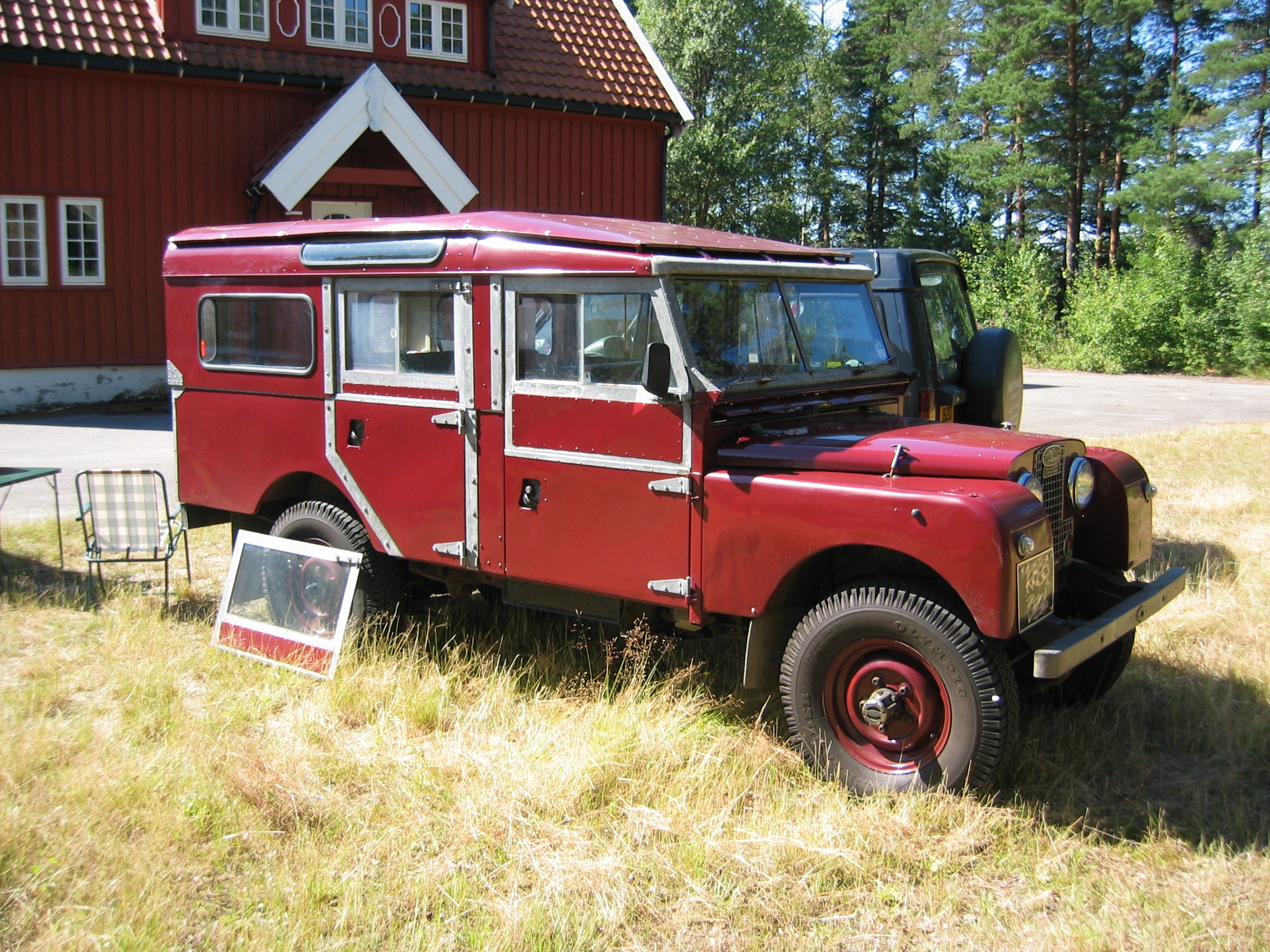
The station wagon returned in September 1955 as a factory product, bolted together from flat aluminium panels rather than Tickford's ash frame: a three-door seven-seater on the 86-inch chassis and, for the first time, a five-door ten-seater on the 107. Both carried a second roof skin on spacers — the Tropical Roof — with vents to keep the interior cool, ran in their own chassis sequences and were sold from separate brochures; the registry's Tropical Roof Station Wagon is a 1955–58 107. It was the 86-inch wagon that made the marque's expedition name. Oxford and Cambridge undergraduates raced two of them to Cape Town and back in 1954 and on 1 September 1955 left Hyde Park Corner in Oxford (SNX 891) and Cambridge (SNX 761) for Singapore, the First Overland. The same year Laurens van der Post's BBC party took canvas-topped Series Is into the Kalahari and Len Beadell began reconnoitring the Gunbarrel Highway in one. At home the 107 went to work: HCL 164 was built as the breakdown truck of Steels of Cheltenham in 1954, and the Dunsfold Collection's 1956 107 wagon UAC 871 carried the Queen through the Duchy of Cornwall before covering 230,000 miles as a Tavistock family car.

88 and 109-inch models and the diesel (1956–1958)
6 VEHICLES IN THIS CHAPTERRover's first diesel would not fit. The Dunsfold Collection's 86-inch test car VAC 265, built on 24 January 1956, shows the problem: the new engine fouled the front differential, so in mid-1956 both wheelbases were stretched two inches ahead of the bulkhead, the front cross-member moved an inch forward, and the 88 and 109-inch Land Rovers were born — dimensions Solihull kept for the next twenty-five years. The 2,052 cc overhead-valve diesel, with Ricardo Comet combustion chambers, wet liners and a 22.5:1 compression ratio, was offered as an option in 1957 at 52 bhp and 87 lb ft; the 1958 catalogue lists it beside the 1,997 cc petrol at 52 bhp and 101 lb ft. The 1957 brochure describes five basic models — the 88-inch Regular and its seven-seat station wagon, the 109-inch Long, the 107 station wagon and the fire engine — on 6.00×16 tyres for the 88 and 7.00×16 for the long models. Chassis numbers went to nine digits: 111 for the 88 petrol, 116 diesel, 121 and 126 for the 109. Total production for 1956 was 23,149, and the ten-seat 107 wagon, never available with the diesel, continued alongside the new cars with 2,420 built in 1957 and 3,315 in 1958.
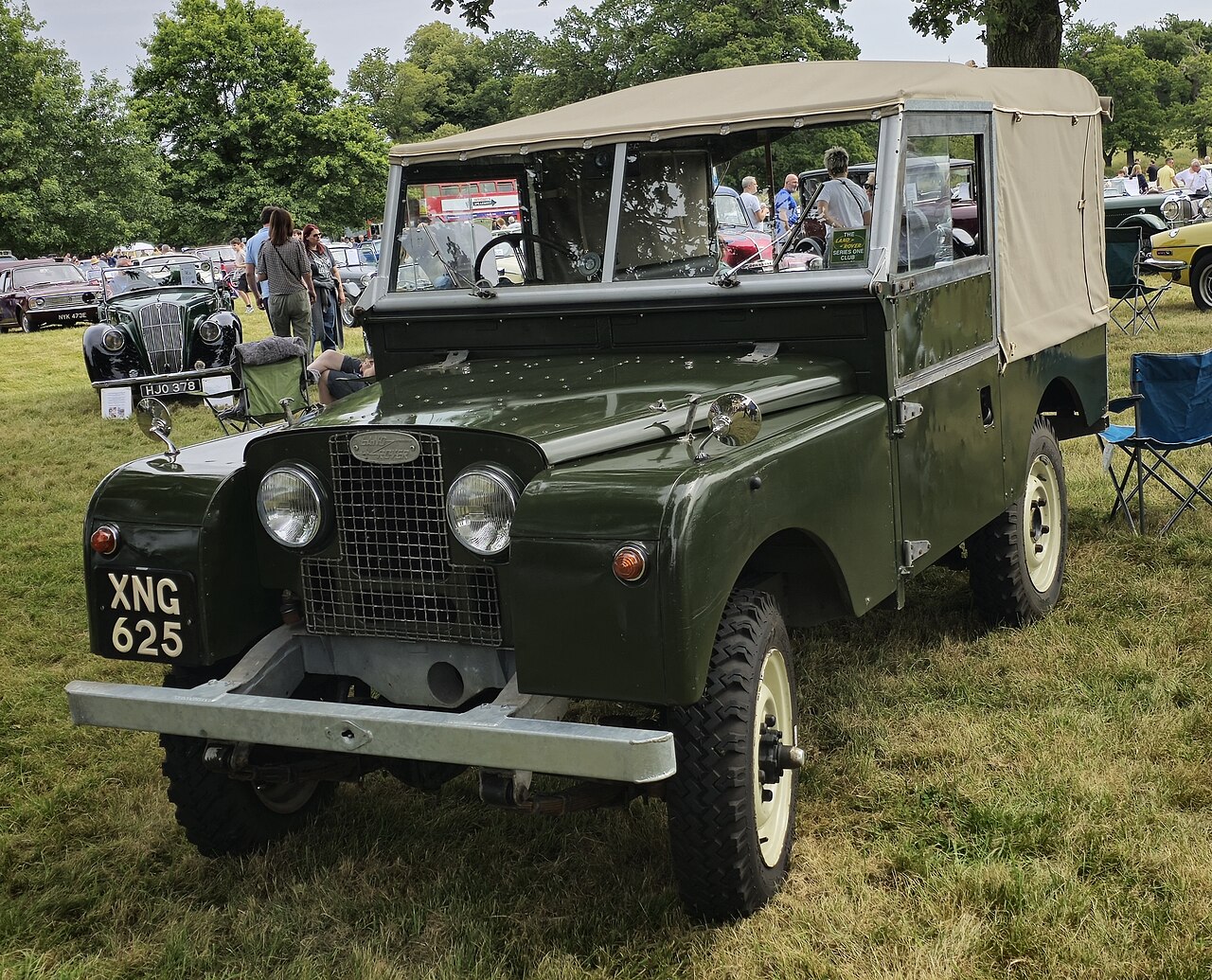
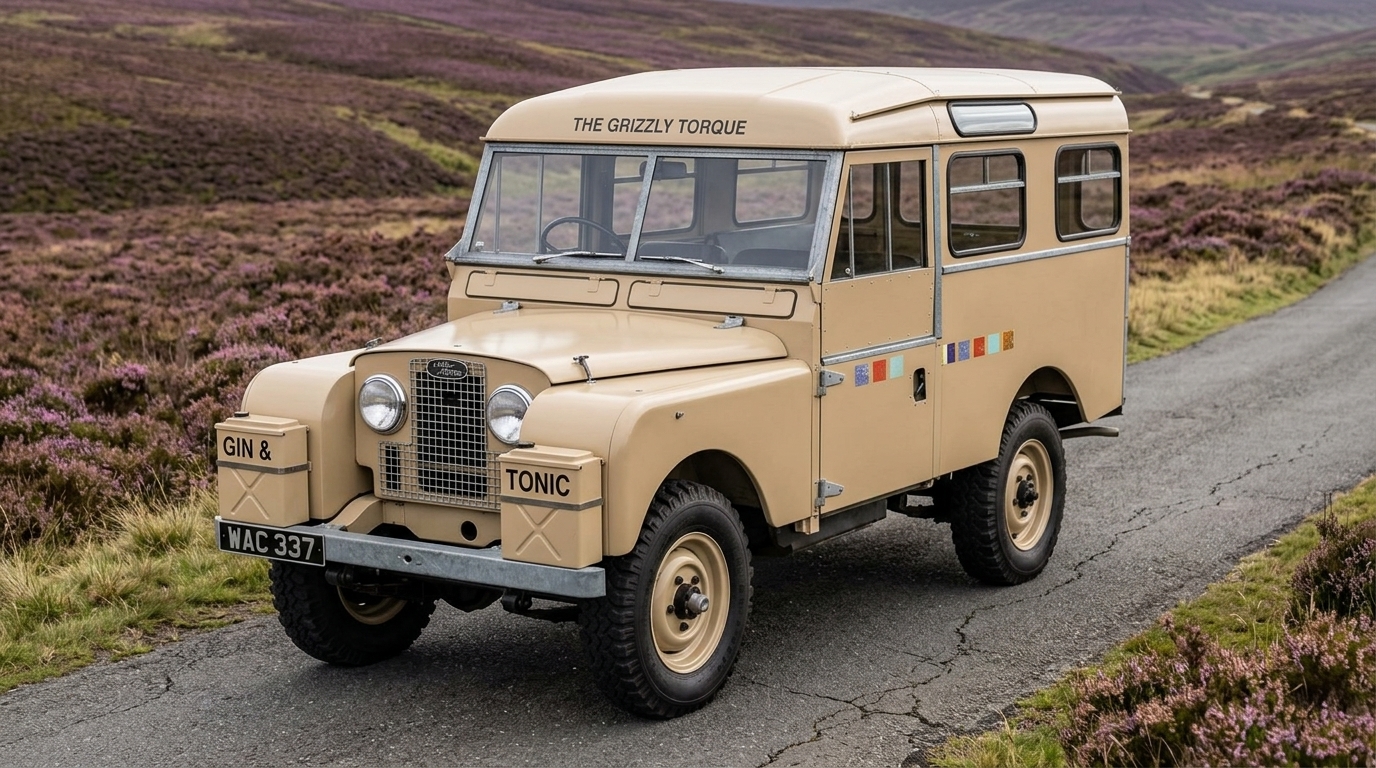
The registry's late Series Is are mostly working cars. The AA ran 88-inch truck cabs on the Scottish Highland patrols and hard tops such as PYU 15 on road service; the RAC used 109-inch truck cabs with canvas tilts; KYL 88D was a 1957 88 released by the Ministry of Defence to HM Coastguard with a capstan winch; the Uskela volunteer fire brigade at Salo in Finland kept a long-wheelbase appliance until the Series II era. A soft-top 88 went into Gaza with the first United Nations Emergency Force in 1957. Travellers preferred the long chassis: Bristol Foster and Robert Bateman had Pilchers of Wimbledon body a 1957 107 as Grizzly Torque for fourteen months round the world; George and Jinx Rodger crossed the Sahara in Mzuri, a 107 wagon; the Rudolphs drove a five-door 107 to Jaipur; the Leyland brothers' red 1956 107 wagon was later stretched and re-engined for their west–east crossing of Australia. Peter Townsend chose the short car, an 88-inch hard top, UWD 435, for the solo journey of Earth, My Friend.


Legacy
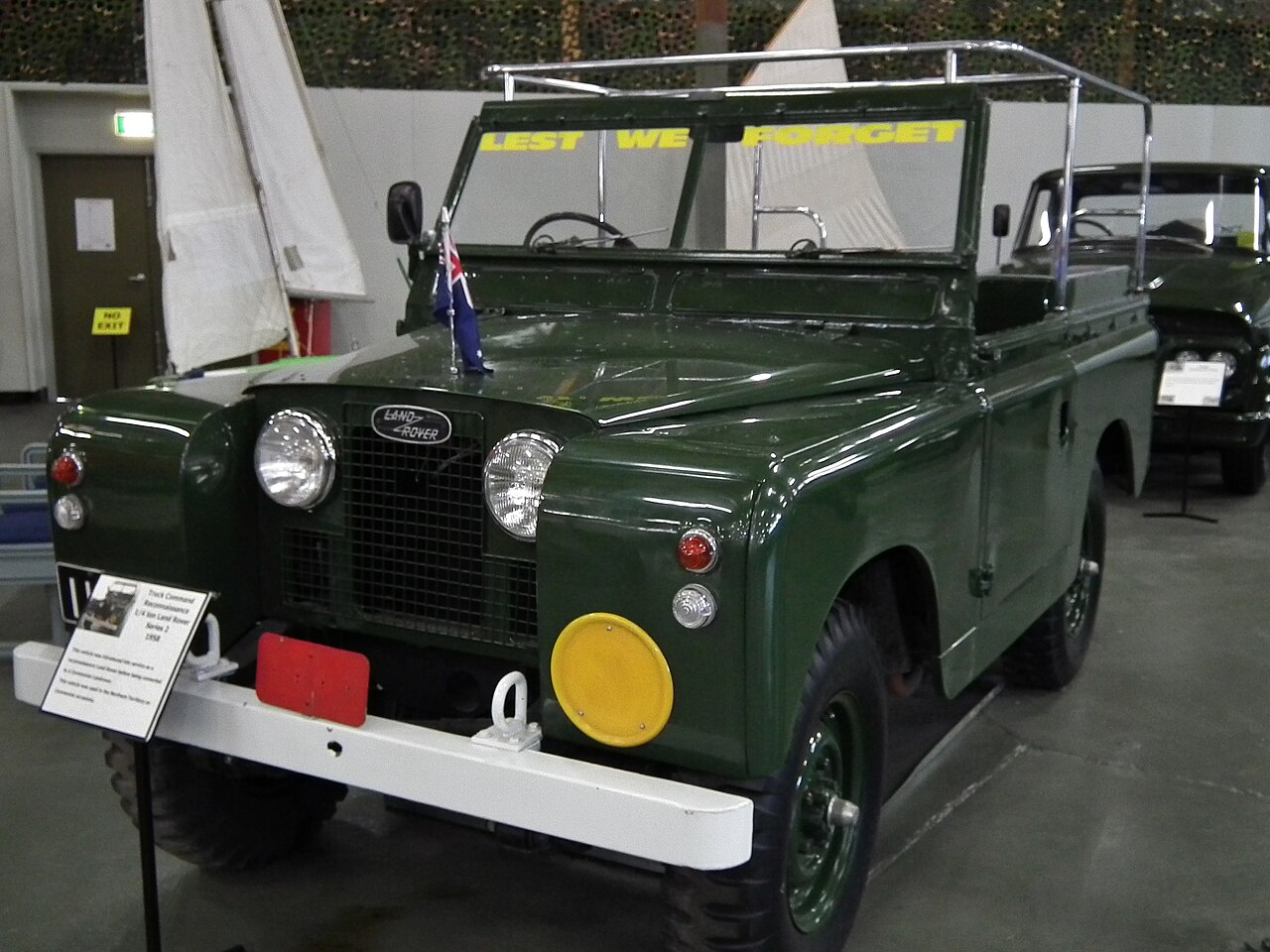
4 VEHICLES IN THIS CHAPTERThe Series II was shown to the press on 16 April 1958, ten years almost to the day after Amsterdam, and from then on everything before it — 80, 86, 88, 107 and 109 — was the Series I. The overlap was untidy: the first 88-inch Series IIs used up stocks of the 1,997 cc engine, and the 107 station wagon stayed in production until late 1959 because export customers still wanted it and the Series II wagon was not ready. By 1958 Solihull was building about 28,000 Land Rovers a year, more than double the total Rover had thought it could sell of the whole idea. The engineering that followed — the 2.25-litre engines, the IIA, the Forward Control — sat on the 88 and 109-inch chassis the Series I had settled in 1956.
The aluminium body is why so many survive. The registry's later Series I entries are cars still in use: Old girl, Jack Oliver Dobson's fully rebuilt 1950 80-inch in Brisbane; the 107 ute rebuilt by Brooklyn Coachworks with the fabricator Timm Cooper; a 1962 Cintec Cineroma mobile cinema on a 109 wagon; LAND48 in its 1998 Lucas Trans-Global livery; and Oxford itself, found on St Helena, restored and driven from Singapore back to London in 2019. Dunsfold keeps KBP 747, an October 1948 80-inch found in a Dartmoor shed in 1988 with 32,000 miles on it; Gaydon keeps HUE 166. The fire, police and military histories follow the Series I into service; the Series II page picks up the story from April 1958.
Registry records · chapter 5
Base models
The structural configurations the registry and the Creator build from; each page carries the researched specification.On expedition
20 documented expeditions driven in this marque · all expeditionsIn service
Where the registry's Series I records worked; each opens the themed history.Manufacturers
Sources
- Land Rover series — Series I and Series II — Wikipedia (Amsterdam launch; 1.6-litre 50 bhp; freewheel then dog-clutch 4WD in 1950; Tickford fewer than 700, all but 50 exported; 1954 86 and 107; spread-bore engine from 5710xxxx; September 1955 station wagons and Tropical Roof; mid-1956 stretch to 88/109 with cross-member moved; 2.0 diesel 52 hp; 107 wagon to late 1959; Series II overlap; Minerva and Tempo licences)
- Land-Rover 80" Series-I (1948-1953) — Lloyd Allison (from the BMIHT despatch books) (Chassis sequences R/L 01–48, 860001 on, 8660001, 061, 161, 261, 361; production 3,048 / 5,000 / 16,000 / 17,360 / 18,715 / 22,272; total 82,395 including Minervas; 50 2-litre prototypes 07100001; station wagon discontinued after 1951; welder, compressor and fire engine models)
- Land-Rover Series I (1948-1958) and 86" pages — Lloyd Allison (Amsterdam 30 April 1948; P3 engine; 2-litre for 1952; 86 and 107 for 1954; P86/1–9 and P107/1–3 prototypes; 47100001 pre-production sequence; 107 wagon never diesel; Series One name applied in 1958)
- How many Land Rover Series 1 Mark III (86″ and 107″) were produced? — John Kong (archived; after 4wdonline) (1954: 15,080 86-inch and 3,820 107-inch; 1956 total 23,149; 107 wagon 1,266 (1956), 2,420 (1957), 3,315 (1958); totals 86-inch 49,351, 107 pickup 20,348, 107 station wagon 7,007; 1956–58 chassis sequences)
- Land-Rover 80 inch Model Changes 1948 to 1953 — Land Rover Series One Club (1,595 cc bore/stroke and 50–55 bhp; 1,997 cc with 101 lb ft; Girling hydraulic brakes 1949; F700 headlamps through the grille 1950; selectable 2/4WD from chassis 16102314; springs widened to 2.5 in; inverted-T grille 1952)
- The Minerva 4×4 story 1951–58 — Land Rover Series One Club (Licence agreed October 1951, signed 7 May 1952; 8,959 CKD vehicles to June 1956; Belgian Army orders 2,500 then 3,421; 63 per cent Belgian content; 1,100 86-inch)
- Minerva (automobile) — Wikipedia (Licence-built 80-inch TT for the Belgian forces; steel bodies; court case ending the licence)
- Tempo (vehicle) — Wikipedia (Tempo-bodied Land Rovers on imported rolling chassis for the Bundesgrenzschutz, 1953–57, 80 and 86-inch)
- Series I — The Dunsfold Collection — The Dunsfold Collection (Vehicle pages fetched: 1948 80-inch KBP 747 (built October 1948, Goodwood tow car); 1950 81-inch Rolls-Royce B40, batch of 33 by Hudson Motors; 1952 driveable training chassis 26104724 at SEME Bordon; 1954 Minerva Blindé (two batches of about 30, airfield defence); 1956 86-inch 2.25 test car VAC 265 built 24 January 1956, diesel fouled the diff; 1956 107 wagon UAC 871 for the Duchy of Cornwall)
- 1948 Land Rover Series I brochure — The Rover Company, via Internet Archive (Period specification: 1,595 cc, 50 bhp, freewheel front drive, two-speed transfer box, 80-inch wheelbase, 22½ cwt, 1,200–1,800 lb drawbar pull, over 50 mph)
- 1957 Land Rover Series I brochure, Publication 521/A — The Rover Company, via Internet Archive (Five basic models; 88 Regular and station wagon, 107 station wagon, 109 Long, fire engine; 52 bhp at 4,000 rpm; tyre sizes; payloads)
- 1958 Land Rover Series II Regular brochure, Publication 552 — The Rover Company, via Internet Archive (Ten years' operation; 1,997 cc petrol 52 bhp and 101 lb ft; 2,052 cc diesel 52 bhp at 3,500 rpm, 87 lb ft, 22.5:1, Ricardo Comet chambers)
- 1951 Land Rover Series I profile — Sports Car Market (Series I production 211,467 including prototypes; 48 pilot-build cars in 1948; 28,000 a year by 1958; £450)
- 1948's game changers: Land-Rover — Classic & Sports Car (Wilks brothers and the Anglesey Jeep; 1947 prototype on a shortened Jeep chassis with Rover 10 engine; Amsterdam 30 April 1948; 50 bhp at 4,000 rpm; some 40,000 built by 1951; HUE 166 at Gaydon with its drilled chassis)
- History of the Defender — One Life — Land Rover UK (30 April 1948, £450, 1,595 cc 50 bhp from the P3; 8,000 in the first year; May 1950 headlamp facelift; 88/109 with the 52 bhp 2,052 cc diesel)
- The Land Rover History: Series I — Winwaed (Rover's steel allocation of 1,100 cars; September 1947 board description; Rover 10 engine in prototypes; 8,000 sold against a 5,000 target; outselling Rover cars two to one by 1951)
- Model History — Land Rover Series 2 Club (Series II released to the press on 16 April 1958; 88-inch kept the 1,997 cc engine until September 1958)
- Land Rover FAQ: Series chassis numbers by type — lrfaq.org (Series I prefixes 111/116 (88 petrol/diesel) and 121/126 (109) for 1956–58)
Series I records in the registry
42 records, oldest first. LAND48 — Lucas Trans-Global Expedition1948
 Series I 80″1948–53 · United KingdomTickford Station Wagon1948–51 · United Kingdom
 AA Night Patrol Series I 801949 · United KingdomRAF Crash Rescue Series I1949 · United KingdomSeries I Fire Tender1949–58 · United Kingdom81-inch Rolls-Royce B40 trial1950 · United KingdomGPO Type 1 · Phase 11950–57 · United KingdomOld girl1950 · United Kingdom
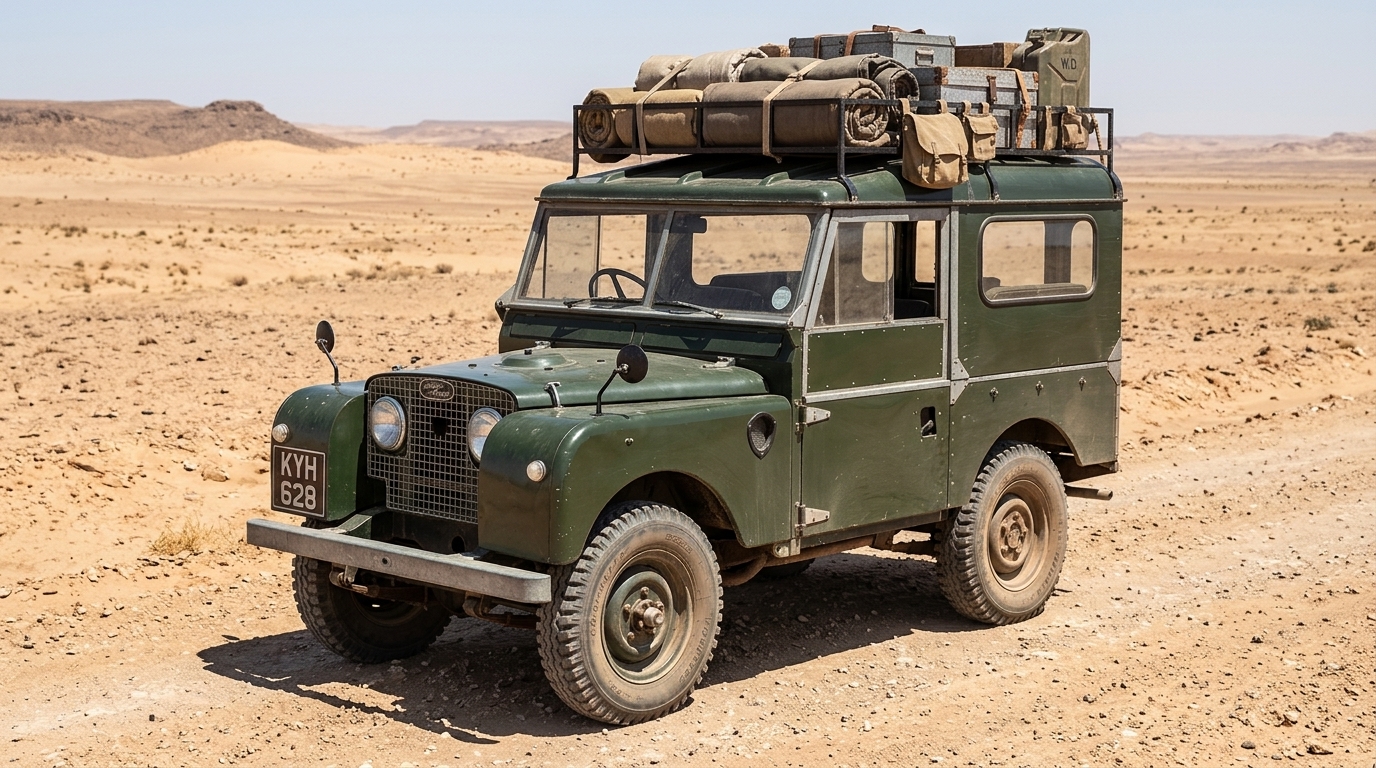 Pollyanna — Barbara Toy's Series I1950 · United KingdomRAC Road Service Series I 80 Hard Top1950–53 · United KingdomAutocar Calcutta to Calais — Series I 801951 · United KingdomGendarmerie Belge 801951–53 · United KingdomDrivable training chassis1952 · United Kingdom
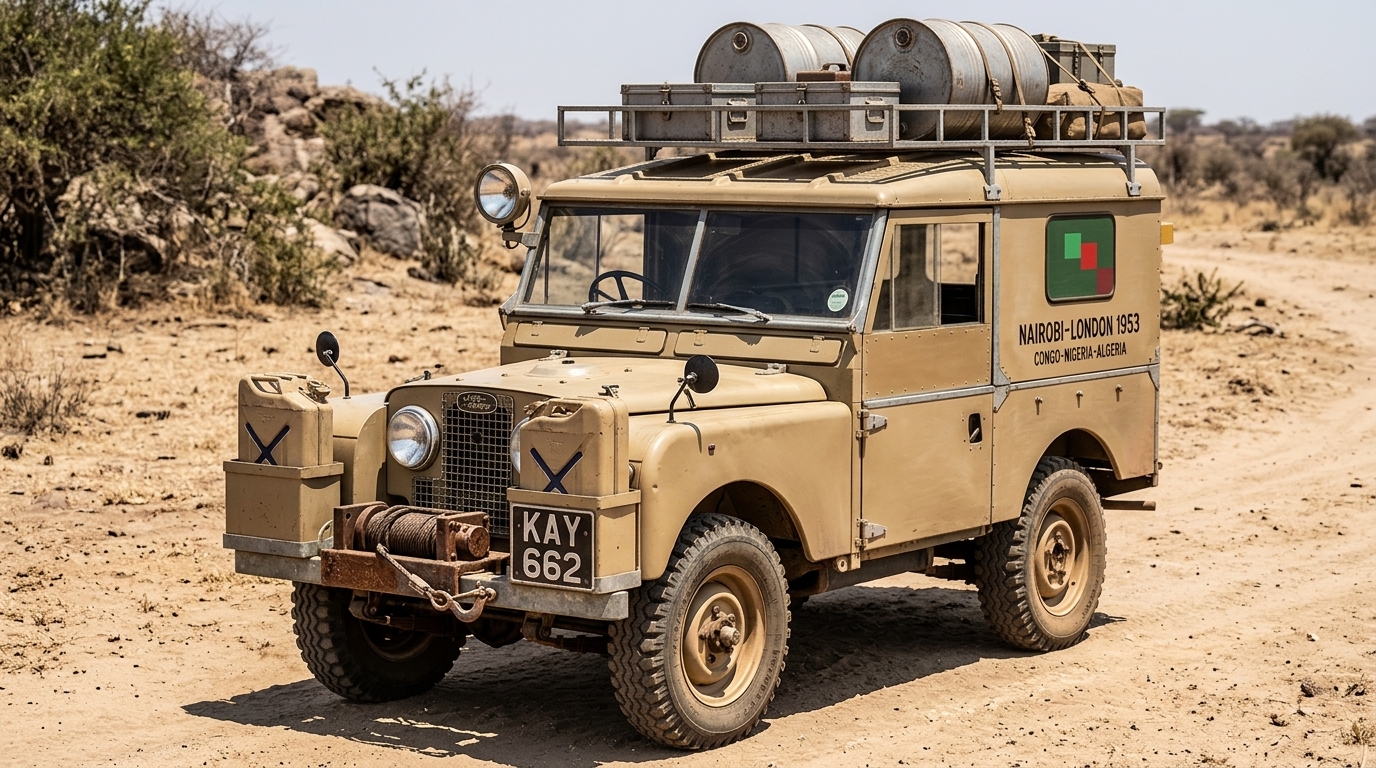 George Adamson Nairobi to London Series I1952 · United KingdomImperial College Africa and Americas — Series I 801952 · United KingdomMinerva Field Ambulance1952–56 · BelgiumAA Road Service Series I 88 Hard Top1954–58 · United KingdomBrooklyn Coachworks1954 · United Kingdom / United StatesState III Royal Review Land Rover1954 · United KingdomSteels of Cheltenham Series I 107 Breakdown Truck1954 · United KingdomUNEF Series I 88 (Gaza 1957)1954–57 · United Kingdom
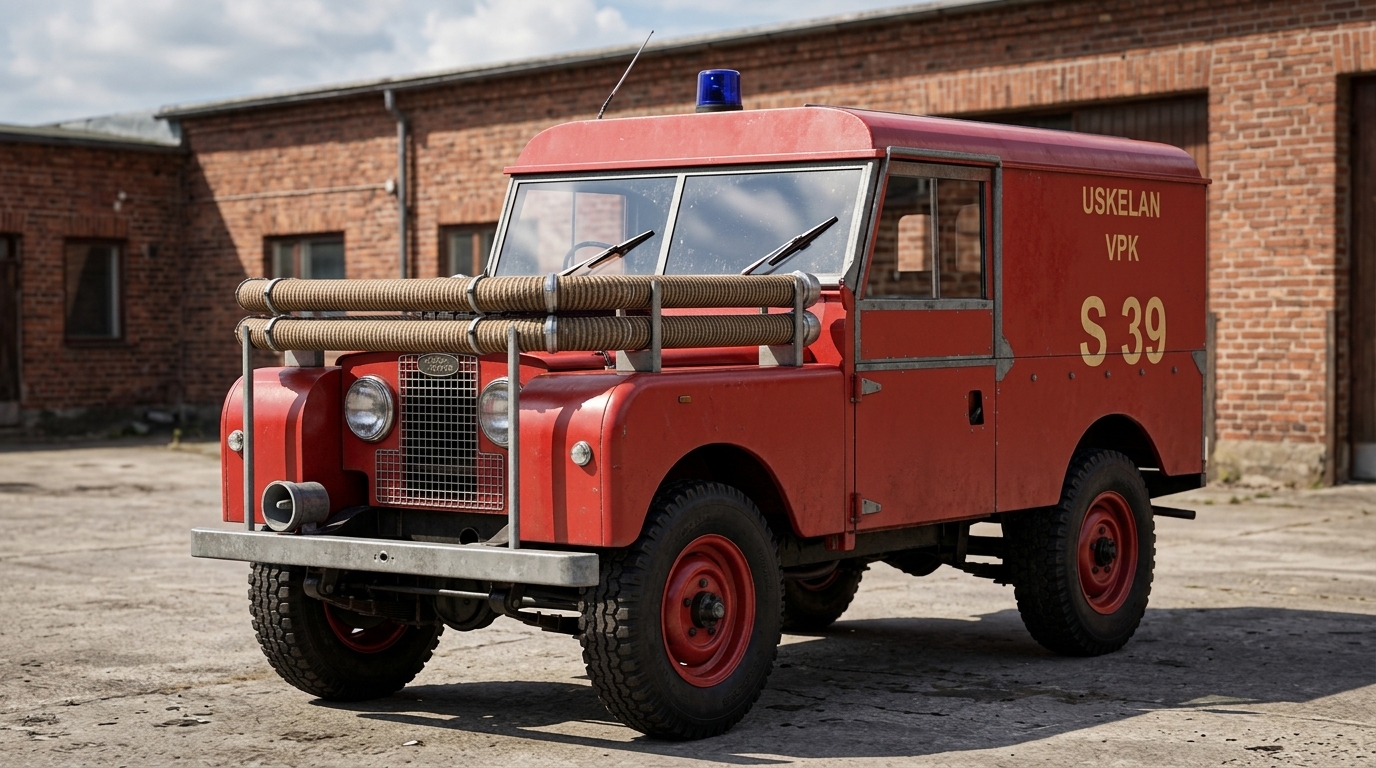 Uskelan VPK1954–58 · United Kingdom
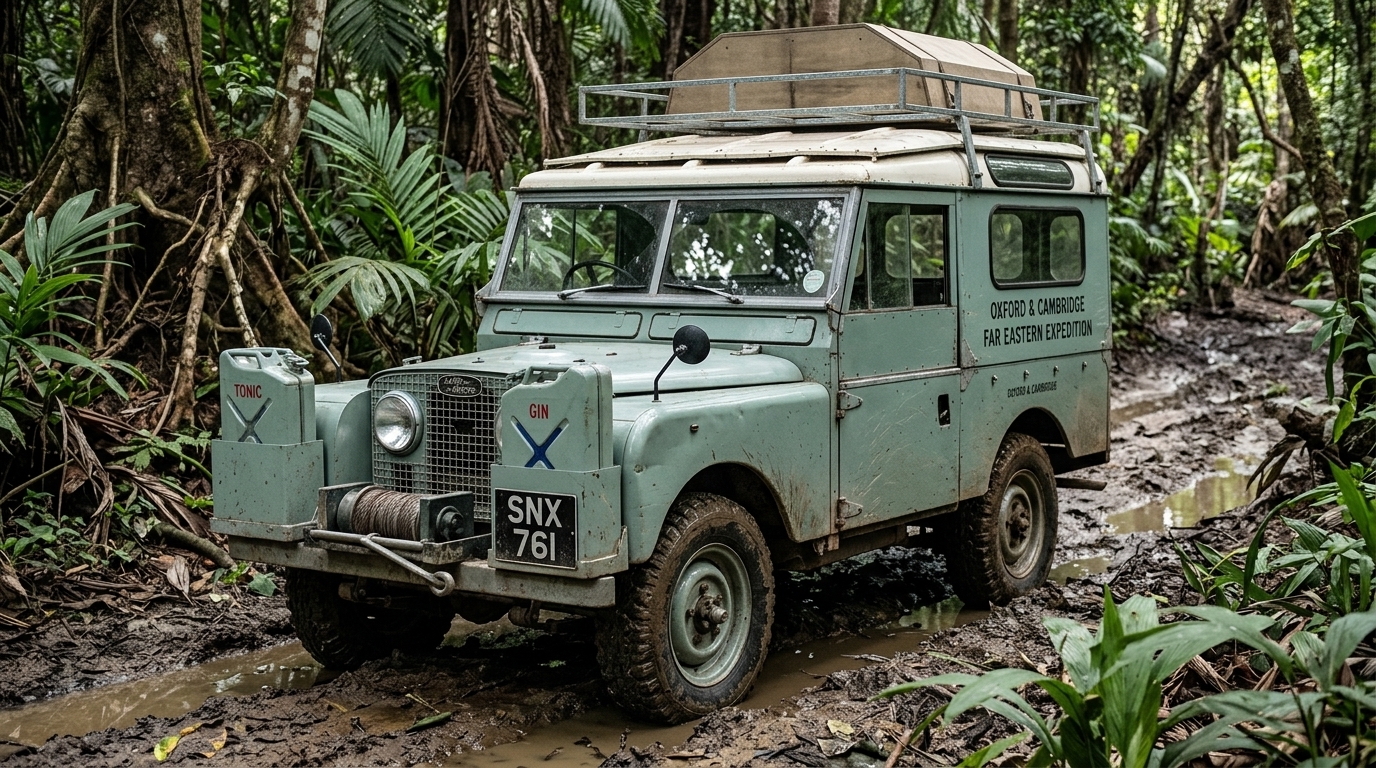 Cambridge1955 · United KingdomMinerva Blindé1955 · Belgium
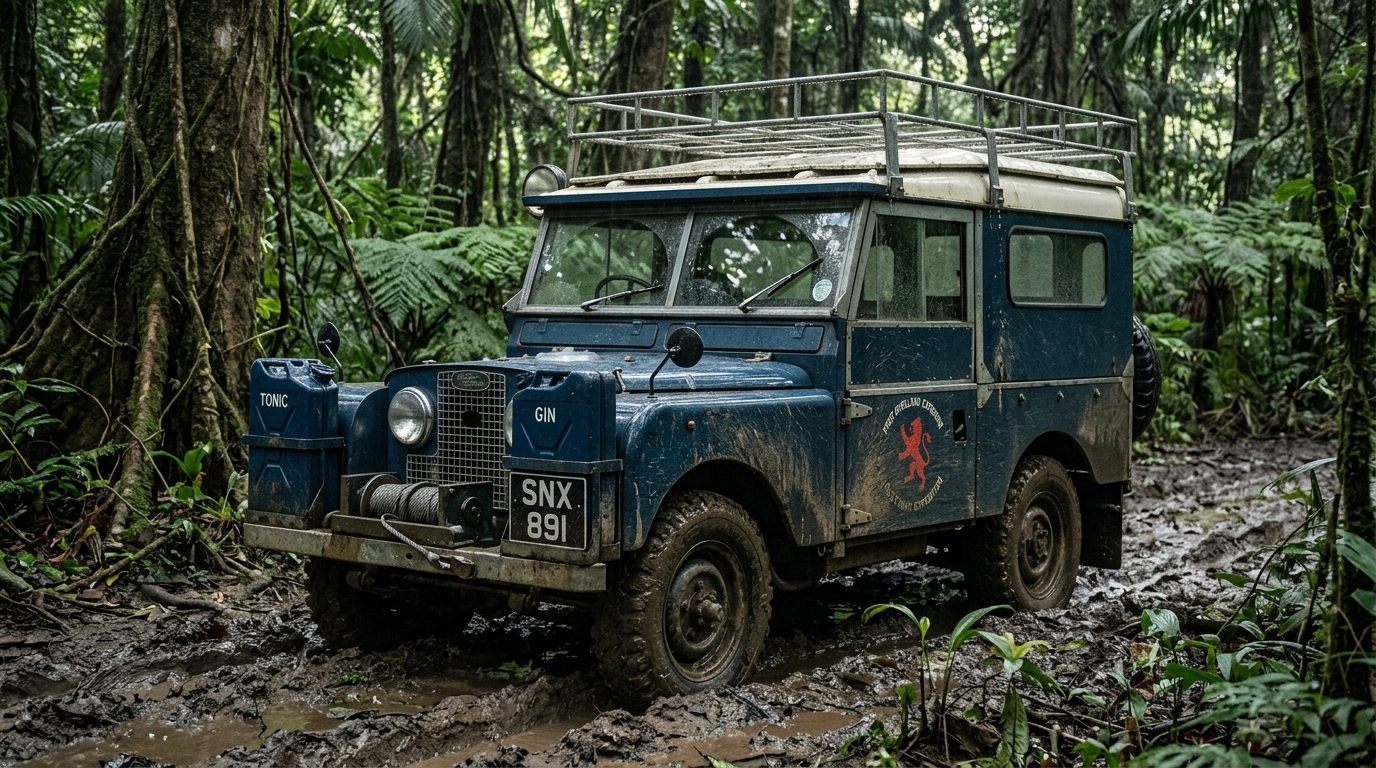 Oxford1955 · United Kingdom
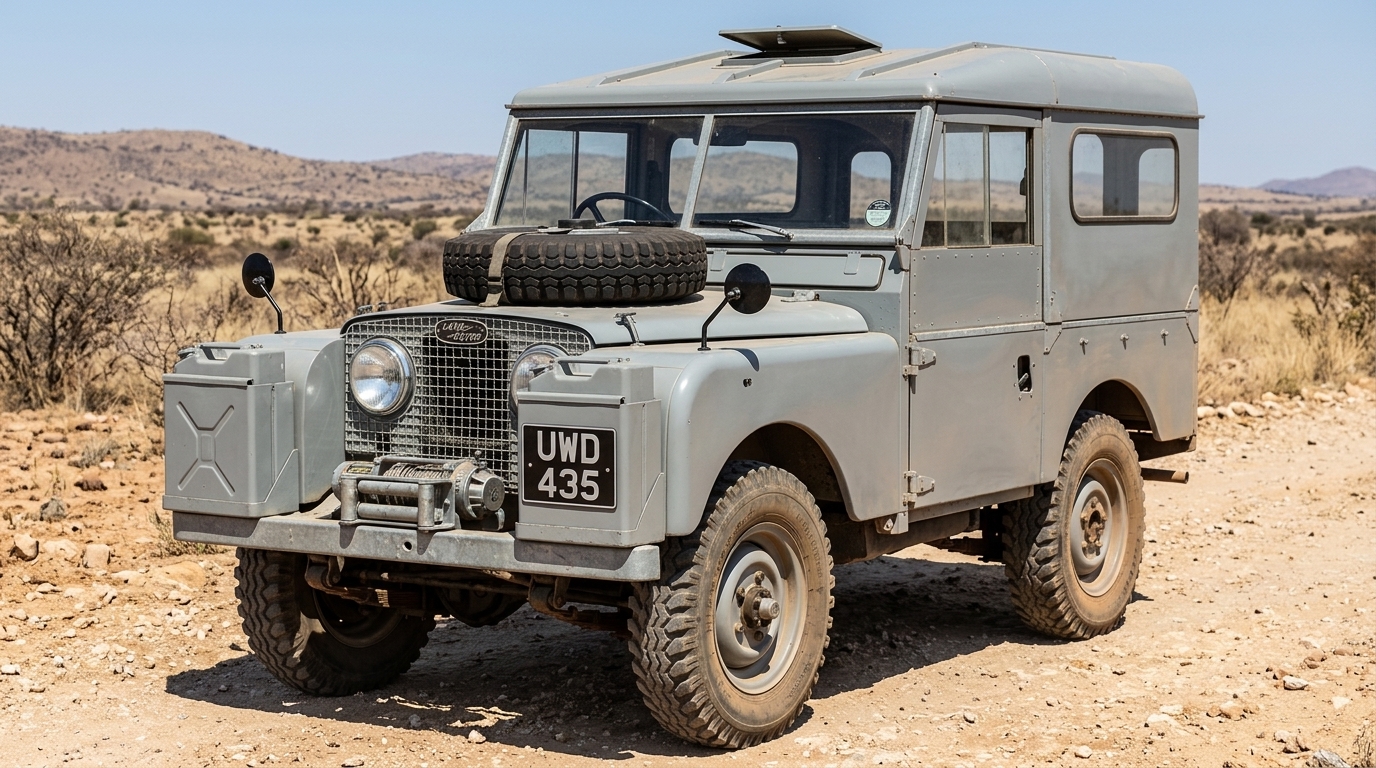 Peter Townsend — Earth, My Friend1955Tropical Roof Station Wagon1955–58 · United KingdomVan der Post Kalahari Expedition1955AA Highland Patrol Series I 881956–58 · United Kingdom
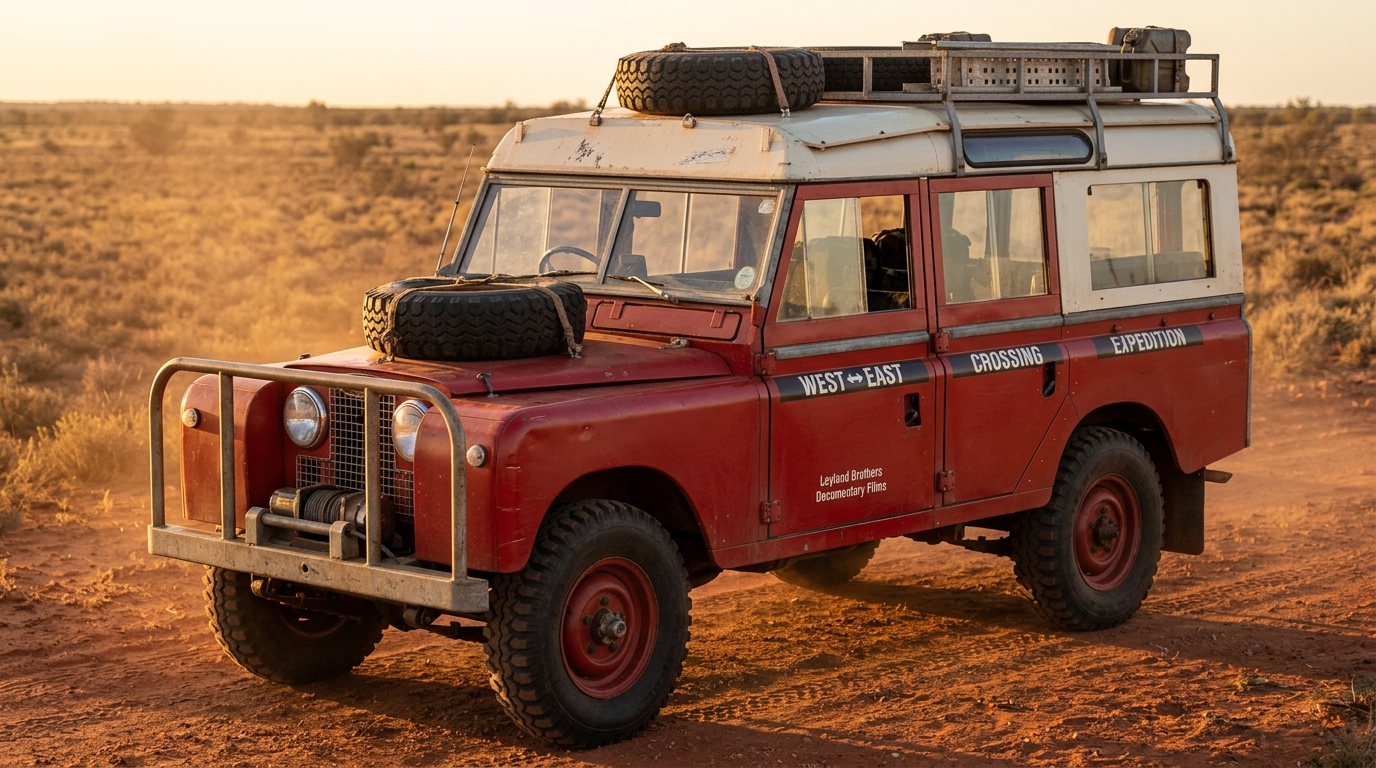 Leyland Brothers’ Series I1956 · AustraliaRAC Series I 109 Canvas Road Service1956–58 · United KingdomRudolphs’ London to India — Series I 1071956 · United Kingdom
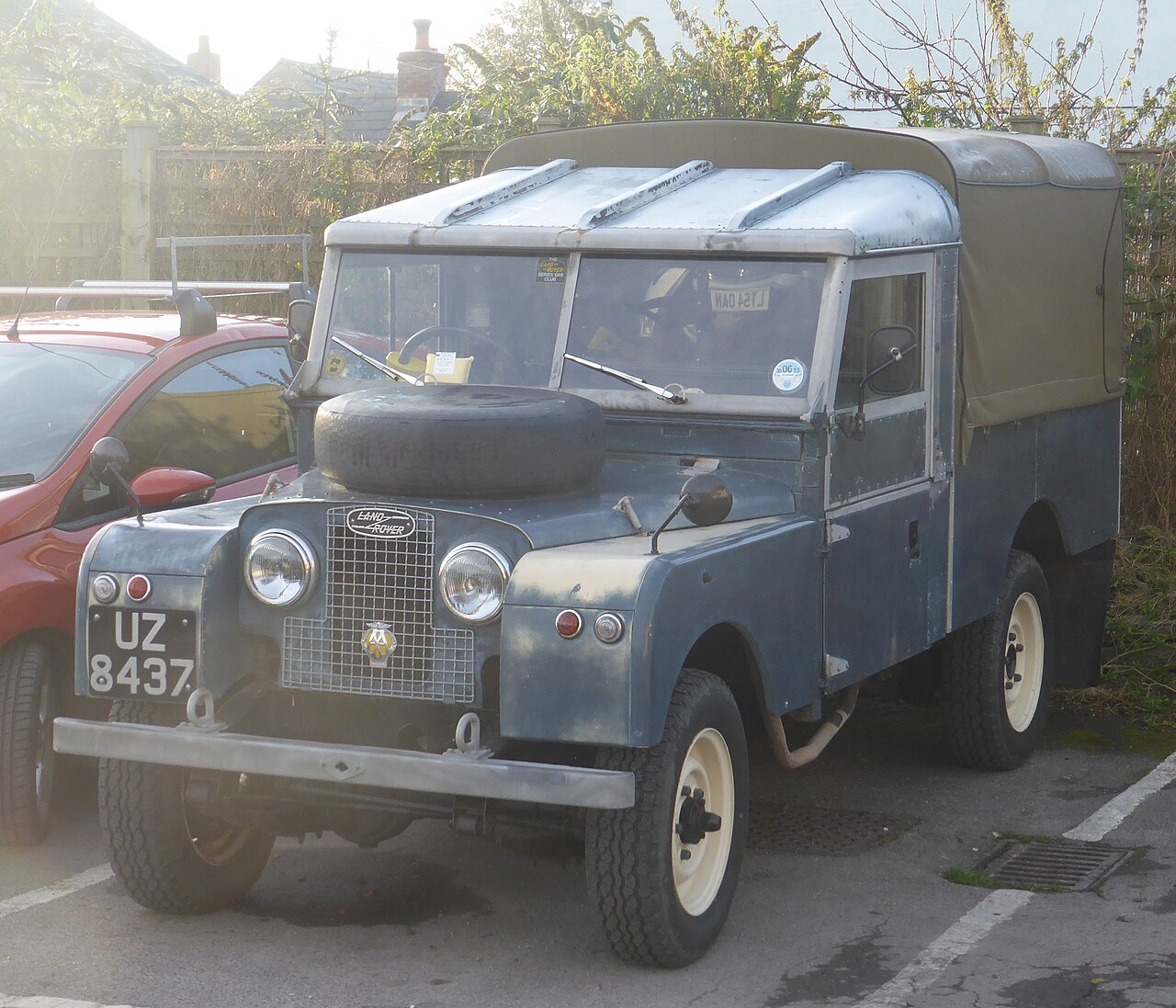 Series I 109″1956–58 · United Kingdom
 Series I 88″1956–58 · United Kingdom
 Grizzly Torque1957 · United KingdomHM Coastguard Series I 88 Capstan Winch1957 · United KingdomMzuri — George and Jinx Rodger’s Series I 1071957 · United Kingdom
 Queen’s Australian Series II1958 · United Kingdom / Australia
 Women’s Overland Himalayan Expedition — Series I 1091958 · United KingdomCintec Cineroma Series I 109″1962 · United Kingdom
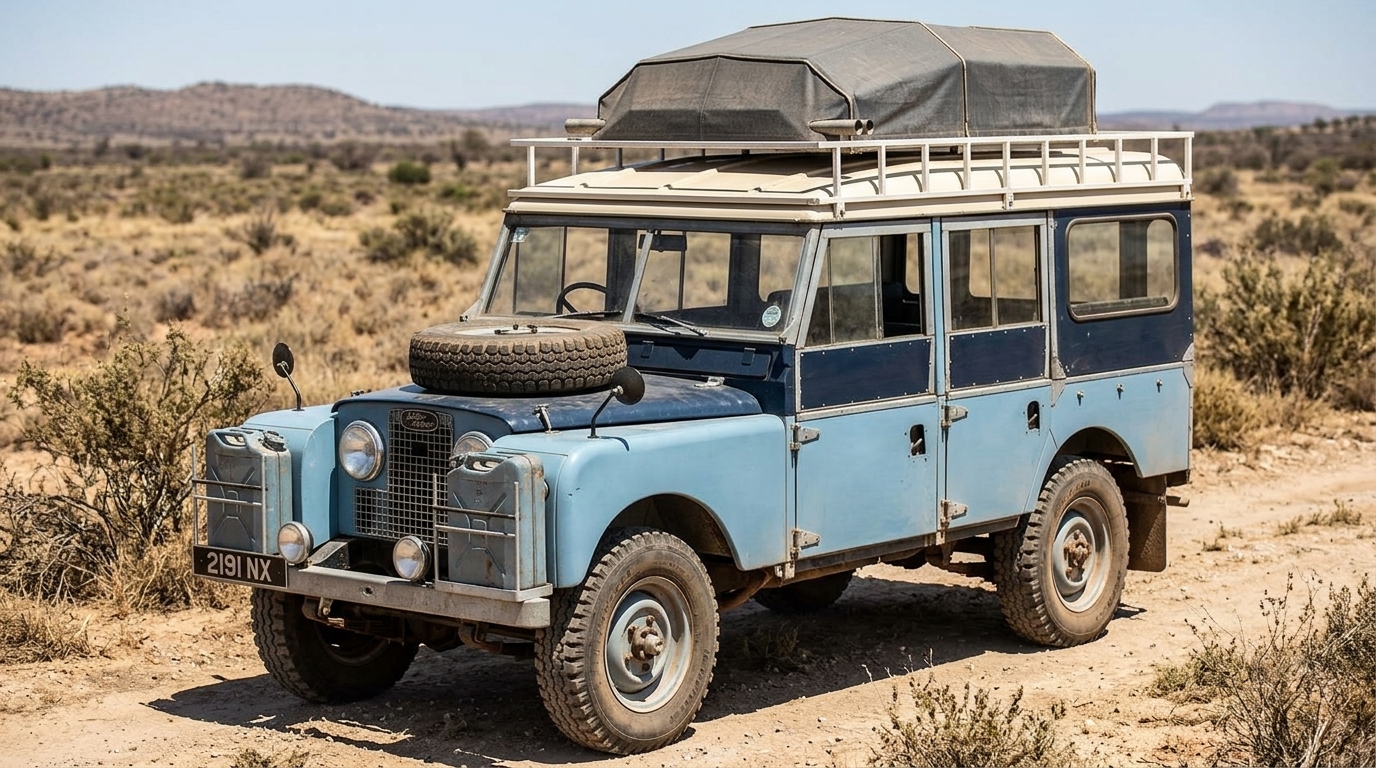 Encounter Overland — 2191 NXUnited Kingdom