The Series IIA replaced the Series II in September 1961, and the change was so slight that the two are hard to tell apart from the kerb. What justified the new suffix was under the bonnet: the 2,052 cc diesel of the Series I and II was redesigned to the petrol engine's 2,286 cc, so that both four-cylinder engines now shared bore and stroke. The body, the 88- and 109-inch leaf-sprung chassis, the David Bache barrel-sided panels and the gearbox with synchromesh only on third and fourth all carried over. The first production chassis, 24400001, a Bronze Green export 88, went down the line on 7 September 1961 and was delivered to Rover's own engineering department four days later.
Over the next ten years the IIA became the Land Rover most people picture: the vehicle of Born Free and a decade of African documentaries, the Army's Pink Panther and Lightweight, the GPO's red hard tops and the farm truck of most of the Commonwealth. It was also the best-selling. Rover's twentieth anniversary in February 1968 found total Land Rover production just short of 600,000, more than 70 per cent of it exported, and utility sales peaked in 1969–70 at over 60,000 a year — a level the Defender never approached. This page follows the marque through the registry's 52 Series IIA records, from Barbara Toy's Dormobile to the last suffix-H station wagons of 1971.
Launch and the 2.25-litre diesel (1961–1964)
6 VEHICLES IN THIS CHAPTERThe Series IIA arrived in September 1961 with one substantial change — the 2.25-litre diesel — and a new numbering system. Chassis carried a three-digit prefix for model, market and steering position (241 for a right-hand-drive 88, 244 for an export left-hand-drive 88, 251 and 254 for the 109s) followed by a five-digit serial and a suffix letter that Rover advanced whenever chassis, engine, gearbox or axle changed; the suffix letters, lower-case at first and capitals from March 1963, ran from A to H over the decade and are the surest way to date a IIA. March 1963 also brought redesigned headlamps, a combined stop, tail and number-plate lamp, larger propeller-shaft universal joints and a lower steering ratio. In 1962 the 109 gained a twelve-seat station wagon: twelve seats made it a bus for tax purposes, exempt from purchase tax, and the cheaper twelve-seater finished off the old ten-seat 107. The same year the 109 chassis went under a cab-over body as the Series IIA Forward Control.
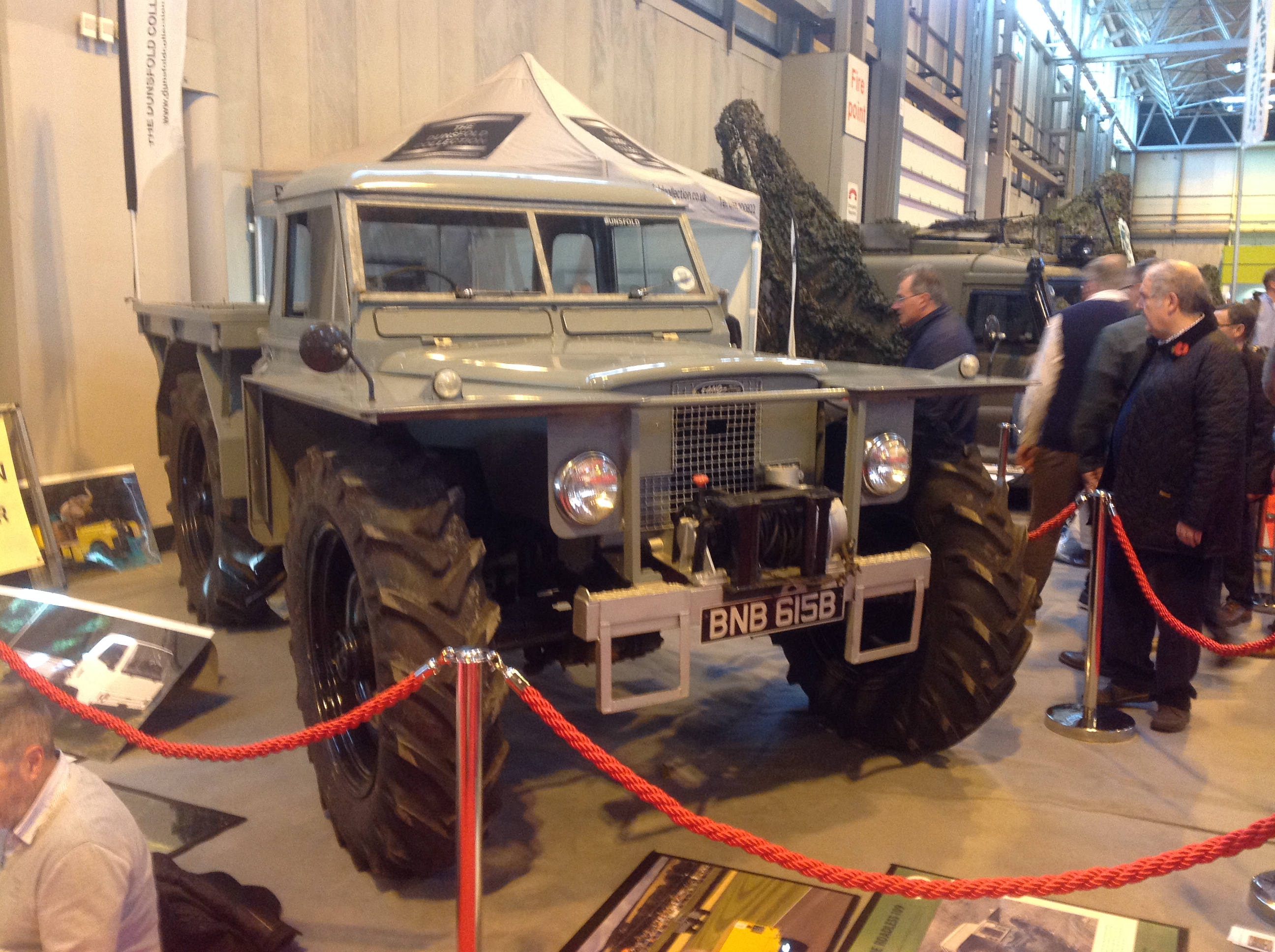
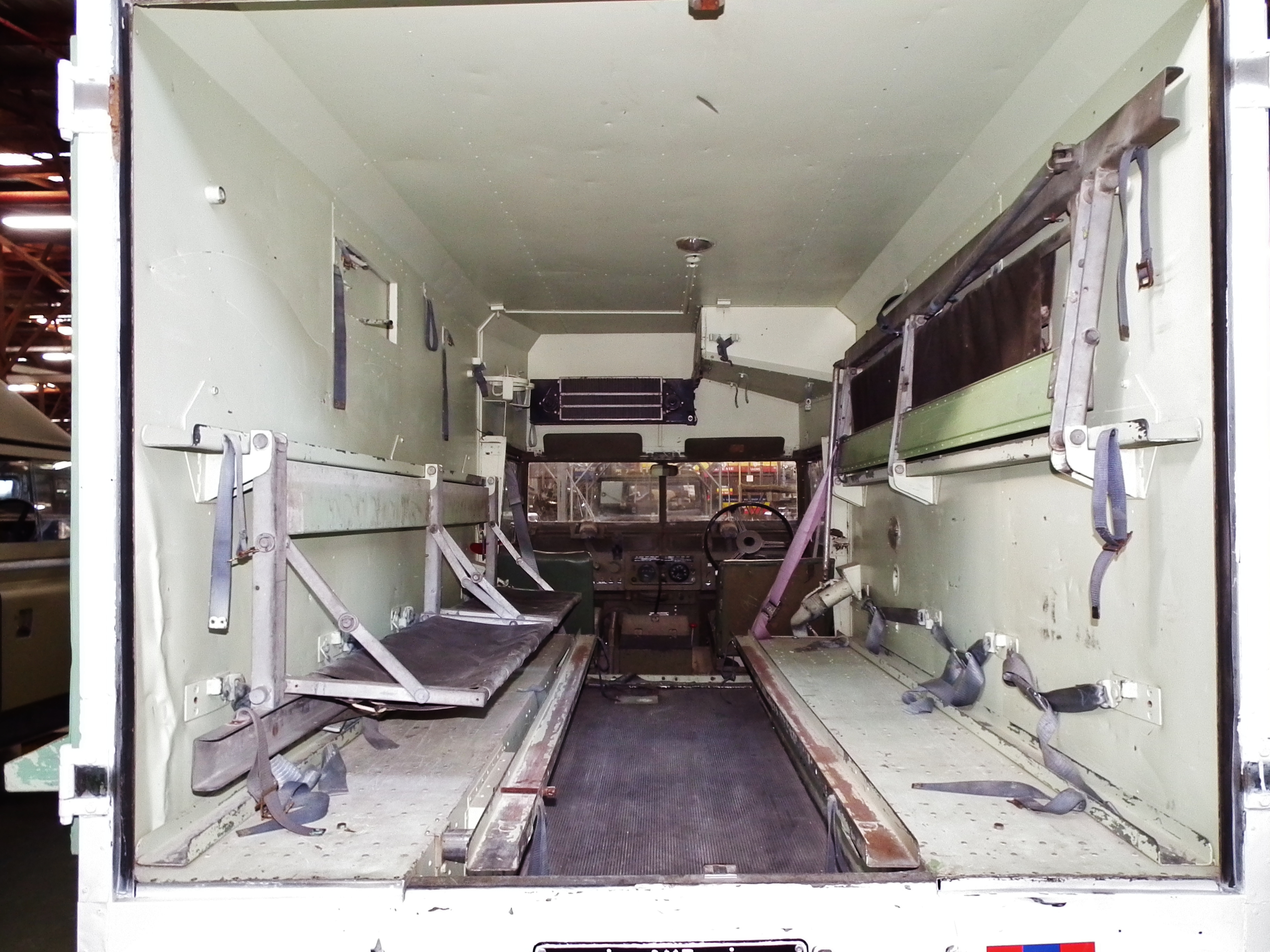
Special bodies followed immediately. The playwright Barbara Toy, who had driven a Series I round the world, ordered a three-door 109 with a Martin Walter Dormobile elevating roof — 5751 WD, the car of her 1961 Sahara journey — and Roadless Traction of Hounslow built the Forest Rover, a 109 on tractor wheels to straddle plantation rows, from 1961 to 1966; the Dunsfold Collection's 1964 example is the registry's photographic reference. Vickers-Armstrongs put a hovercraft skirt under one in 1962, and in 1963–64 the Army trialled the amphibious, air-portable APGP with a foam-filled chassis. In Australia, where Pressed Metal Corporation had been assembling Land Rovers at Enfield since the mid-1950s, the Army took the Series 2A into service in 1963 and put the locally built four-stretcher 'Bloodbox' ambulance body on it; and a red 1963 88 hard top would carry the Leyland brothers across the continent from west to east in 1966. Ordinary fleet users bought the IIA by the thousand: British Railways' goods-yard runabout at Stewarts Lane, BBH 942B, was a 1964 109 hard top.
.jpg)
The half-millionth Land Rover and the six-cylinder 109 (1965–1967)
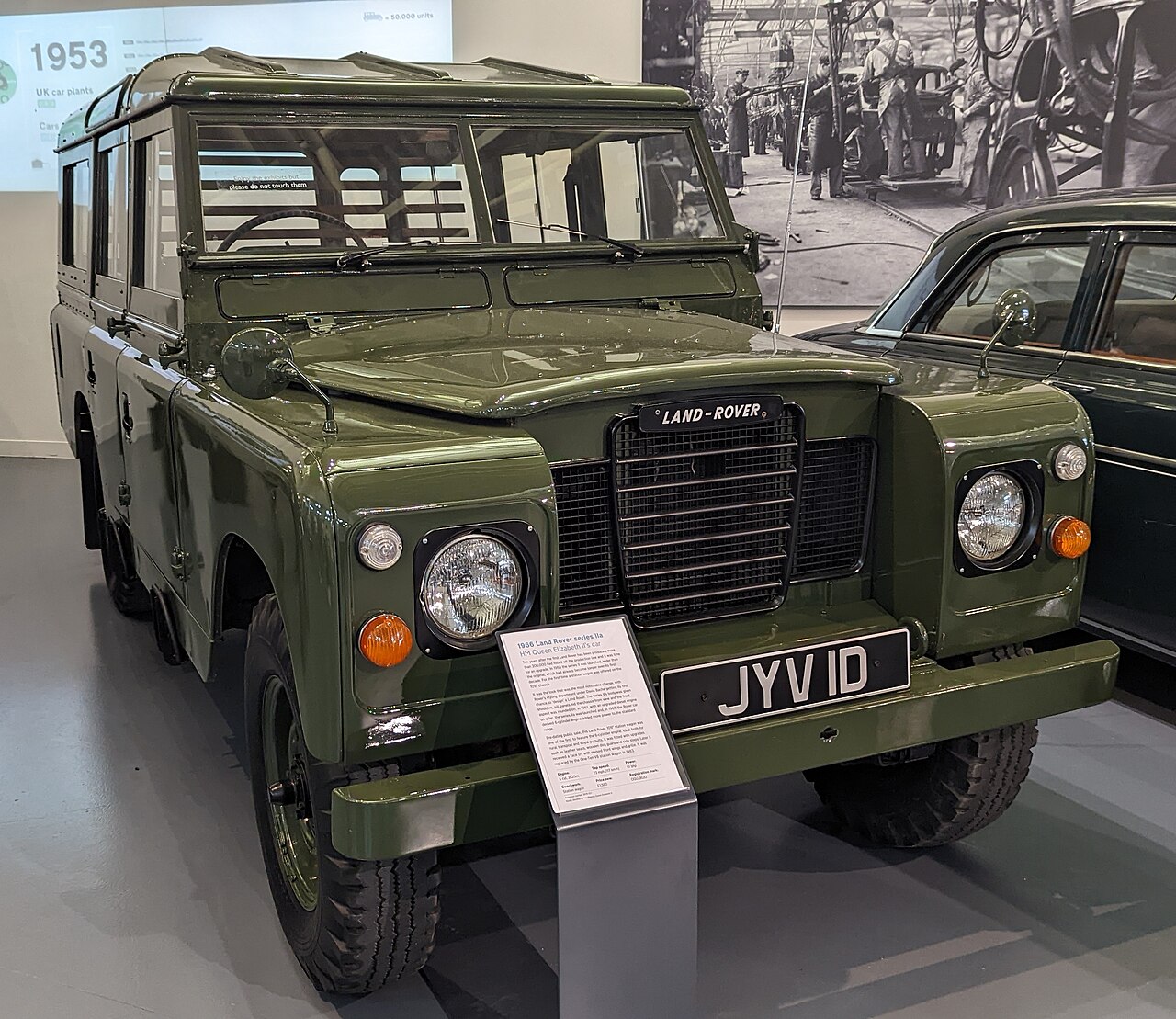
6 VEHICLES IN THIS CHAPTERThe 500,000th Land Rover was built in 1966, and the marque's engineering priorities in the middle of the decade were power and weight. Rover's answer to complaints about the 2.25 in a fully laden 109 was the 2.6-litre inlet-over-exhaust six from the P4 and P5 saloons, first used in the export Forward Control and offered on the 109 from May 1967, with servo-assisted brakes; 811 six-cylinder 109s were built as NADA (North American Dollar Area) trucks, the only long-wheelbase Land Rovers sold in the United States and Canada. Queen Elizabeth II's own 1966 109 station wagon, JYV 1D, now at the British Motor Museum, is described in the registry as among the first with the six. A new dashboard with a single concealed wiper motor came in 1967. Behind the scenes Solihull went further: three IIAs were converted to the new 3.5-litre Rover V8 in 1966–67, found the standard transmission not up to it, and became mileage test cars for the Range Rover project — BXC 975G at Dunsfold is the survivor.
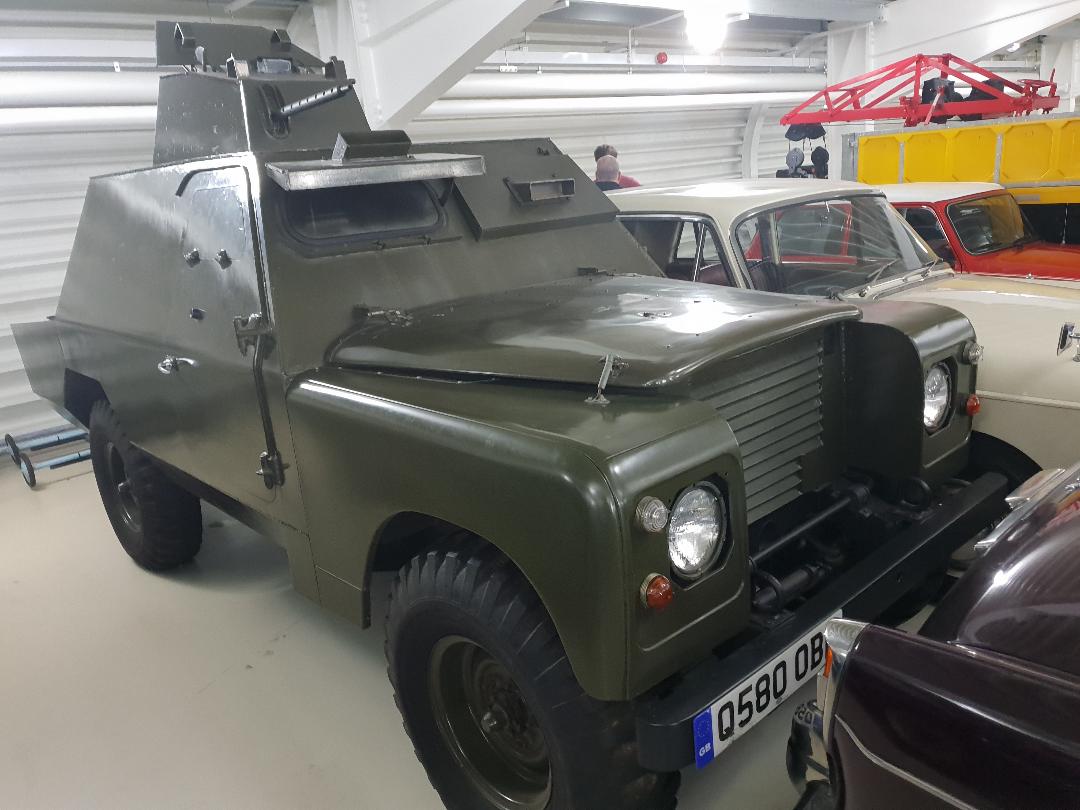
The coachbuilders were busy. Herbert Lomas of Handforth fitted its rounded, fully integrated ambulance body to the 109; the registry holds a 1965 civilian example and a 1967 one in service green. Short Brothers & Harland of Belfast put 7.25 mm armour and a Ferret turret on the 109 military chassis to make the Shorland Mk 1 of 1965–68, the start of a line that runs through the registry's police history. Harvey Frost built HFW 370D, a 1966 109 recovery truck, and HCB-Angus bodied HUF 999E, Brighton Fire Brigade's 1967 restricted-access appliance. Rover's own experimental department produced the 1965 OTAL, a one-ton amphibious 109 with watertight hull compartments. The GPO bought the IIA in quantity — the 1967 Station Wagon Type 3, an 88 Safari with a 2,500 lb cabling winch, and red 88 hard tops for Royal Mail deliveries in the remoter parts of the country — and the first Encounter Overland party drove a long-wheelbase Safari to Kathmandu.

.jpg)
Leyland ownership, wing-mounted headlamps and the Lightweight (1968–1969)
6 VEHICLES IN THIS CHAPTERRover lost its independence in 1967, absorbed under government pressure into the Leyland Motor Corporation, and the Land Rover celebrated its twentieth birthday in February 1968 as a Leyland product. The most visible change of the IIA's life came the same spring, when export models appeared with their headlamps moved out of the radiator panel into the wings, to satisfy lighting regulations in Australia, the United States and the Netherlands; home-market vehicles followed in 1969 (February by Wikipedia's account, May by the Series 2 Club's), the sills were made shallower a few months afterwards and the rear wheelarch profile was later changed to clear the 9.00×16 tyres of the 1-Ton. That model, introduced in late 1968, looked like any other 109 but carried the Forward Control's ENV axles and low-ratio transfer box under a unique drop-shackle chassis, with the 2.6 six as standard; only 170 Series IIA and 238 Series III 1-Tons were built for the home market, and 22 IIA 1-Tons with the 2.25 petrol became the RAF's TACR1 airfield crash tenders. Heavily loaded six-cylinder 109s were breaking half-shafts, and from 1969 the stronger Salisbury rear axle went onto long-wheelbase vehicles.
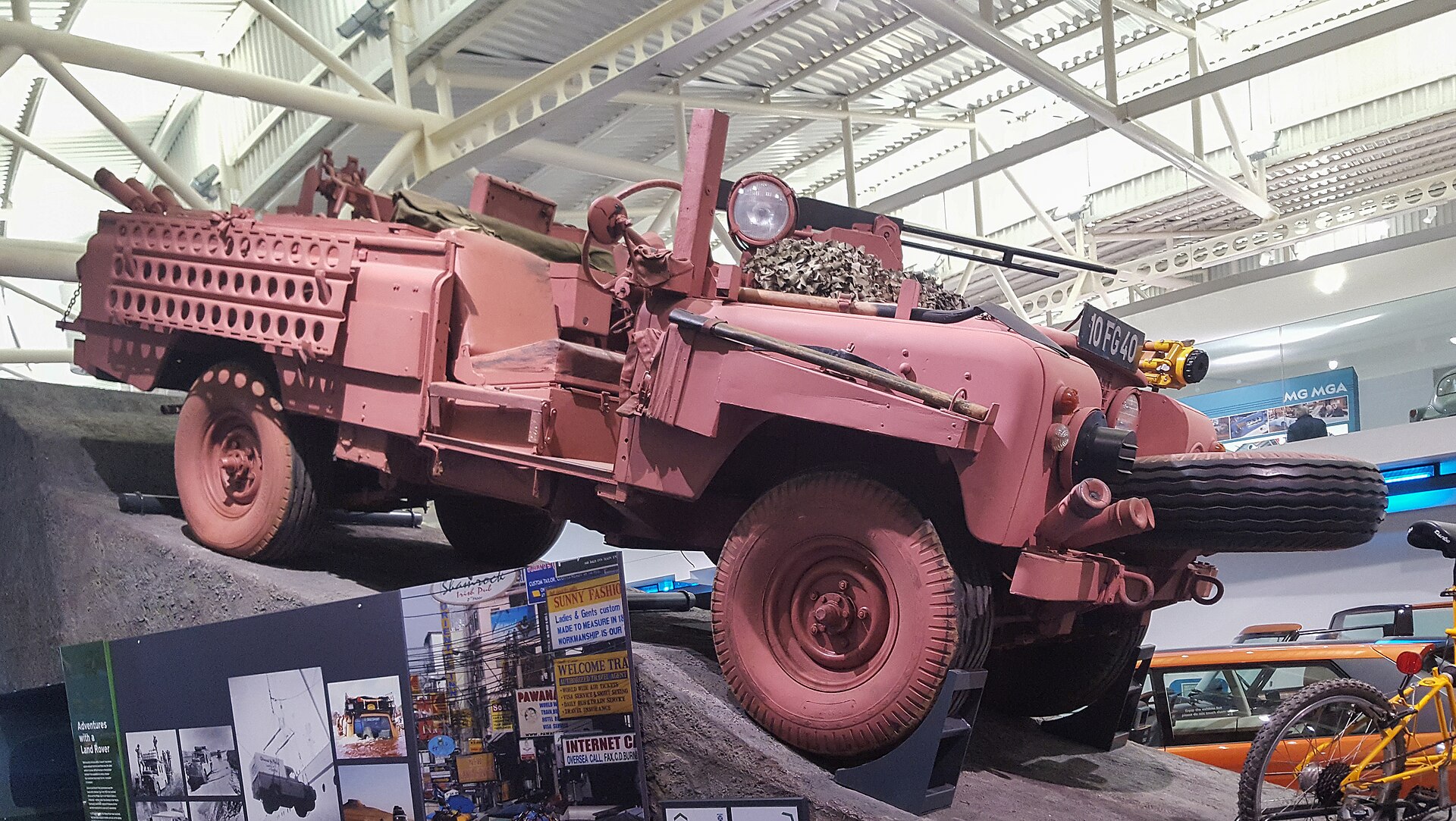
The Army's IIA was the Lightweight. Developed from 1965 to fit under a Westland Wessex helicopter's 2,500 lb sling load, it used narrowed axles and shorter half-shafts to lose four inches of width, and shed its tilt, sticks, doors, windscreen and upper body for the flight: 2,808 lb stripped, though a fully equipped 24-volt FFR car weighed 3,329 lb. The first production Lightweights were completed on 11 November 1968, with the headlamps still inboard in the radiator panel, and IIA-based production ran until 1972 before the Series III version took over; 37,897 were built in all. The SAS's long-range desert patrol vehicle of the same year was the Pink Panther, 72 109s stripped of doors and windscreens by Marshall of Cambridge and given grenade launchers, a machine-gun ring and long-range fuel and water tanks, while Marshall also bodied the RAF's 1969 crash-rescue ambulance TRP 291G. A military-specification 88 of 1968, 30 XC 27, was issued to the British Army of the Rhine, rebuilt black by the Army's own workshops in Germany as a ceremonial and security car with VW Beetle hub caps and mirrors, and carried the Queen's escort on visits into the 1980s. At the other end of the spectrum 1968 brought R. J. Searle's Carawagon range of camper and estate conversions of the late IIA, Clacy & Sons' 109 recovery truck VPB 28F, and a 17th/21st Lancers crew in the London–Sydney Marathon.

Peak production and the final suffix (1969–1971)
6 VEHICLES IN THIS CHAPTERSales of utility Land Rovers peaked while the IIA was in production, at more than 60,000 a year in 1969–70, and in Australia in the 1960s the marque held 90 per cent of the four-wheel-drive market — a share repeated in much of Africa and the Middle East. The lrfaq.org production tables put the 1969 production year at 50,561 vehicles and 1971 at 56,663, the highest annual figure in those tables, with 109s outnumbering 88s every year. The registry's late IIAs show who was buying: Mr McGregor's pastel-green 1969 88 truck cab from the film Peter Rabbit was one of a pair supplied by Action 99 Cars; a 1969 109 pickup went to the New South Wales Bush Fire Brigade; East Sussex Fire Brigade's 1970 HCB-Angus rescue tender UPM 349H worked out of Haywards Heath; the Post Office painted 88 hard top XAH 758H red as a recovery vehicle in 1969–70; the Danish Army fitted a 1970 109 out as a Tactical Air Control Party truck cab; and Air-Drive Ltd of 1970–71 bolted a McConnel backhoe to a strengthened 109 as the Harrier. Hemsby's ice-cream vans FVG 31J and AVG 31J are 1971 109s with tall box bodies.
The Series III was already being prepared. From February 1971 the last 109 station wagons, chassis suffix H, were fitted with the all-synchromesh gearbox that would be standard on the new model, and some late 109s had the Salisbury axle too. The IIA ended in September 1971 with the arrival of the Series III, which kept its body, engines and both wheelbases and changed the face — a plastic grille, wing-mounted headlamps as on the late IIA — and the dashboard. Searle carried its Carawagon, Mini-Carawagon and estate-wagon conversions straight across to the new chassis. Enough IIAs were built that they went on working for decades: a Series IIA 88 accompanied the 1948 80-inch on the Lucas Trans-Global Expedition of 1998–99.
Overseas production and assembly
6 VEHICLES IN THIS CHAPTERThe IIA was assembled from CKD kits wherever Solihull had a partner. In Spain, Metalúrgica de Santa Ana of Linares had agreed a licence with Rover in 1956 and begun building from Solihull kits in 1958; Spanish-made content grew from 1960 until, by 1968, the vehicles were entirely locally produced, and from that year Santana began developing its own versions of the Series models, engines included. In Australia the kits went to Pressed Metal Corporation at Enfield in Sydney's western suburbs, which Leyland Australia bought outright in 1968; supply never kept up with demand, and the long waiting list was one of the openings the Japanese makers would exploit in the following decade. New Zealand's army bought a small batch of Australian-made IIAs in 1965–67 and more second-hand from the ANZUK pool in Singapore in 1971–72.
The Australian Army's IIA fleet, all on the Series 2A 109 General Service truck, is the registry's largest single group of the marque. Stripped of doors, roof, windscreen and tailgate it became the Long Range Patrol Vehicle; given stretcher rails it was the 'Fitted With Stretcher Frames' casualty truck rather than a true ambulance; with a tub-mounted cable drum it was 'Fitted For Line'; with the Bloodbox ambulance body it served as an Emergency Repair Vehicle, and as the 'pie cart' workshop and telecommunication repair shop of census code 6040A. One of those workshops, ARN 113852 of 1966, went to Namibia in United Nations white with the UNTAG force in 1989, twenty-three years after it was built. Civilian Australia used the same vehicle: North Wollongong Surf Life Saving Club bought its 88 hard top new in March 1963, and in 1968 short-wheelbase Land Rovers made the first vehicle traverse of the Canning Stock Route, while the British Museum's Harold Hall expeditions of 1962–68 collected birds across the continent in long-wheelbase Land Rovers with Dormobile roofs.
.jpg)
On expedition
8 documented expeditions driven in this marque · all expeditionsIn service
Where the registry's Series IIA records worked; each opens the themed history.Manufacturers
Sources
- Land Rover series — Series IIA, One-ton 109 inch, Australia, Military, Santana — Wikipedia (2.25 diesel; 2.6 six for LWB after 1967 with servo brakes; 811 NADA trucks; headlamps to wings from February 1969 (home market); sills and wheelarch changes; Leyland takeover and 600,000 total by February 1968 with 70% exported; 60,000-a-year peak 1969–70; 90% of the Australian 4×4 market; 1-Ton 109 late 1968–1977, 170 IIA and 238 SIII home-market cars, 22 IIA TACR1s; Pink Panther by Marshall; NZ purchases; Santana CKD from 1958)
- Model History — The Land Rover Series 2 Club (Series IIA introduced September 1961; diesel redesigned from 2,052 cc to 2,286 cc; six-cylinder from May 1967; headlamps to wings on export models spring 1968 and home market May 1969; suffix-H 109 station wagons with all-synchromesh gearbox from February 1971; replaced by the Series III September 1971)
- Land Rover Production by Year — Land Rover FAQ (Benjamin Smith, Ottawa Valley Land Rovers), from James Taylor's figures in Land Rover Owner and Land Rover World (Reported annual totals 1962–1971 summing to 451,624; per-model totals for 88, 109, FC, six-cylinder 109, 1-Ton and Lightweight; September–August production years; 1969 and 1971 annual figures)
- Chassis Numbering Suffixes (Series IIA) and Production Data, serial prefix 244 — Land Rover FAQ (Suffix letters A–H and the Service Newsletter changes behind them, lower case to upper case March 1963, March 1963 lighting and steering changes; prefixes 241/244/251/254; chassis 24400001 built 7 September 1961, Bronze Green, delivered to Rover Engineering Dept 11 September 1961 (https://www.lrfaq.org/Series/FAQ.S.chassis_numbering.244.html))
- Land-Rover Series IIA 1961-1971 — allisons.org (Year-by-year changes: 12-seater and FC 1962; 500,000th Land-Rover 1966; new dashboard and single wiper motor 1967; export headlamps and Lightweight 1968; Salisbury rear axle on LWB 1969 after half-shaft failures on six-cylinder 109s; twelve seats as purchase-tax avoidance)
- The Land Rover History: Series II and IIA Land Rovers — Winwaed (Richard Marsden) (Diesel bored to 2.286 l in 1961; 12-seater 1962 kills off the 107 station wagon; 2.625 l six from the P4/P5 introduced for the Forward Control and the 109 in 1967; 1-Ton of 1968 with Forward Control transmission and lower ratios)
- Land Rover 1/2 ton Lightweight — Wikipedia (Development from 1965 for the Wessex's 2,500 lb sling load; four inches narrower; 2,808 lb stripped, 3,329 lb as a 24-volt FFR; first production vehicles 11 November 1968; IIA to 1972 then Series III to 1984; 37,897 built; Dutch and Danish diesel users)
- 1967 Series IIa 88-inch V8 Prototype (BXC 975G) — The Dunsfold Collection (Three IIAs converted to the 3.5 V8 in 1966–67; transmission not up to it; became mileage test vehicles for the Range Rover project; sole survivor)
- 1968 Land Rover Series IIA 88" Ceremonial Vehicle (30 XC 27) — The Dunsfold Collection (Military-specification 88 of 1968 issued to BAOR, rebuilt black by Army workshops in Germany with VW Beetle hub caps and mirrors, used on royal visits in the 1970s and 1980s, demobbed 1993)
- 1964 Series IIa Forest Rover by Roadless Traction, Hounslow — The Dunsfold Collection (Forestry Commission concept, Roadless Traction build)
- Pressed Metal Corporation — Wikipedia (Enfield, Sydney plant assembling Land Rovers by 1956; bought by Leyland Australia in 1968; Land Rovers still assembled there from 1975)
- Santana Motor — Wikipedia (Licence agreed 1956, production 1958 from CKD kits, Spanish content from 1960–61 and 100% local by 1968, own Series developments from 1968)
- Land Rover Series IIA and II History — Caerbont Automotive Instruments (Smiths) (Uncited claim of approximately 640,000 Series IIAs and just over 42,000 Series IIs, recorded here as the high end of the range)
Series IIA records in the registry
51 records, oldest first. Carawagon Mobile Clinic1960 · United KingdomCarawagon Mobile Education Unit1960 · United KingdomSchreider Great Rift — Series IIA 881960 · United KingdomScottorn Bushmaster Fire Tractor1960 · United KingdomBarbara Toy’s Dormobile1961
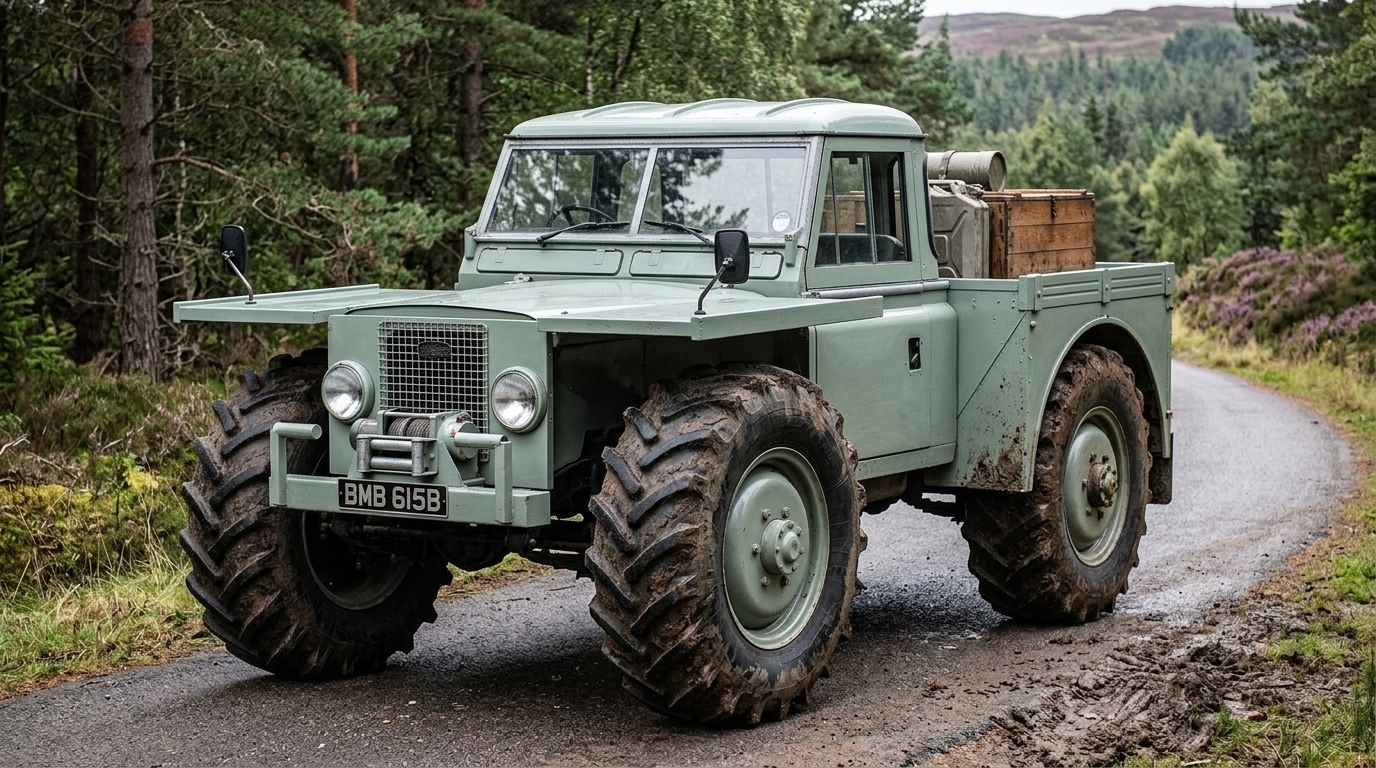 Forest Rover1961–66 · United Kingdom
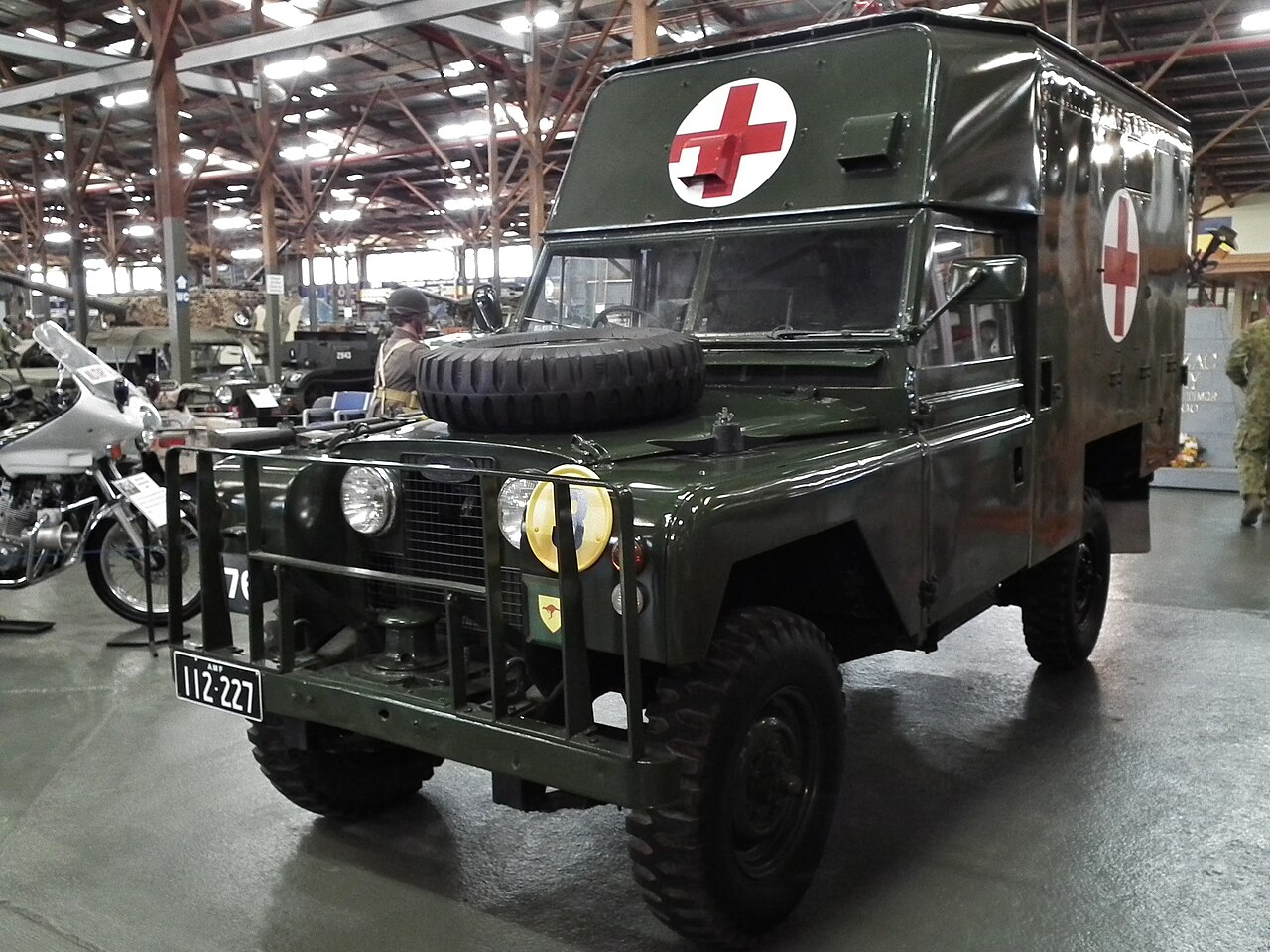 FWSF1961–72 · United Kingdom
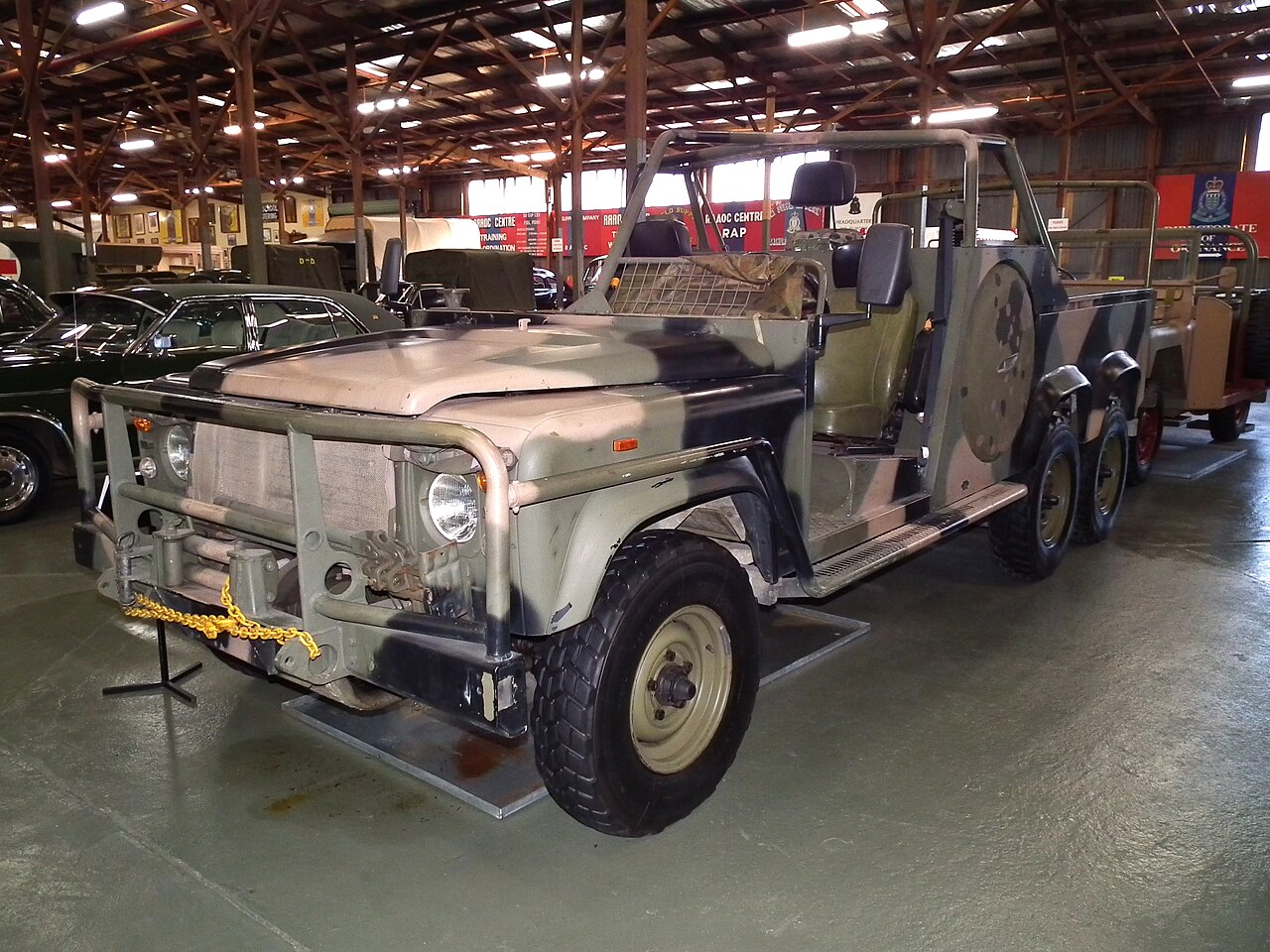 Series IIA LRPV1961–72 · Australia / United KingdomVickers Hover Rover1962 · United Kingdom
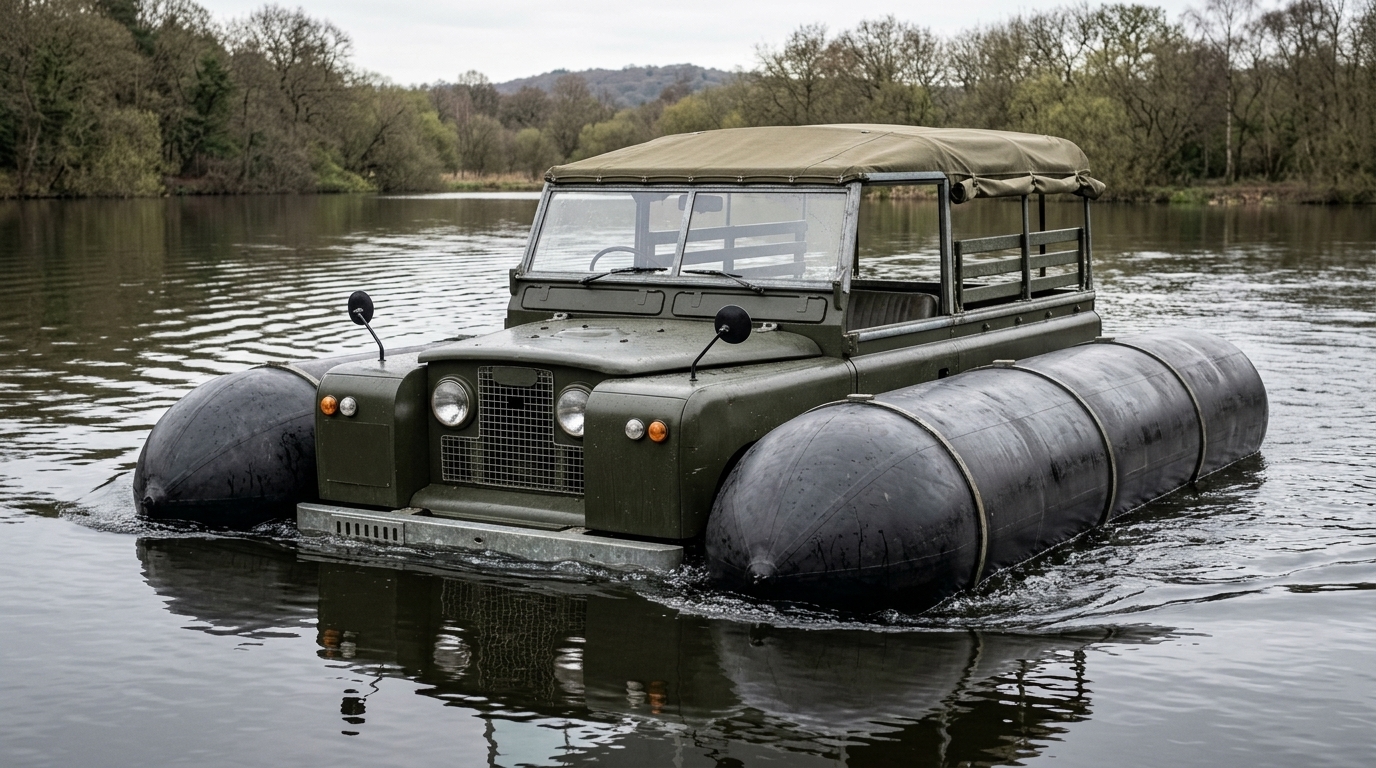 1963 APGP1963–64 · United KingdomBandiana UN Series 2A Ambulance1963 · AustraliaLeyland Brothers’ Series IIA1963 · United KingdomNorth Wollongong SLSC Series IIA 881963 · United KingdomRUC Shenzi Armoured Land Rover1963–85 · United KingdomSeries 2A Ambulance-bodied ERV1963–75 · AustraliaBritish Railways Yard Runabout1964 · United KingdomSeries IIA Fitted For Line1964 · United Kingdom / AustraliaTelecommunication Repair Shop1964–71 · United Kingdom / AustraliaLomas 109 Ambulance1965 · United KingdomOTAL amphibious Land Rover1965 · United Kingdom
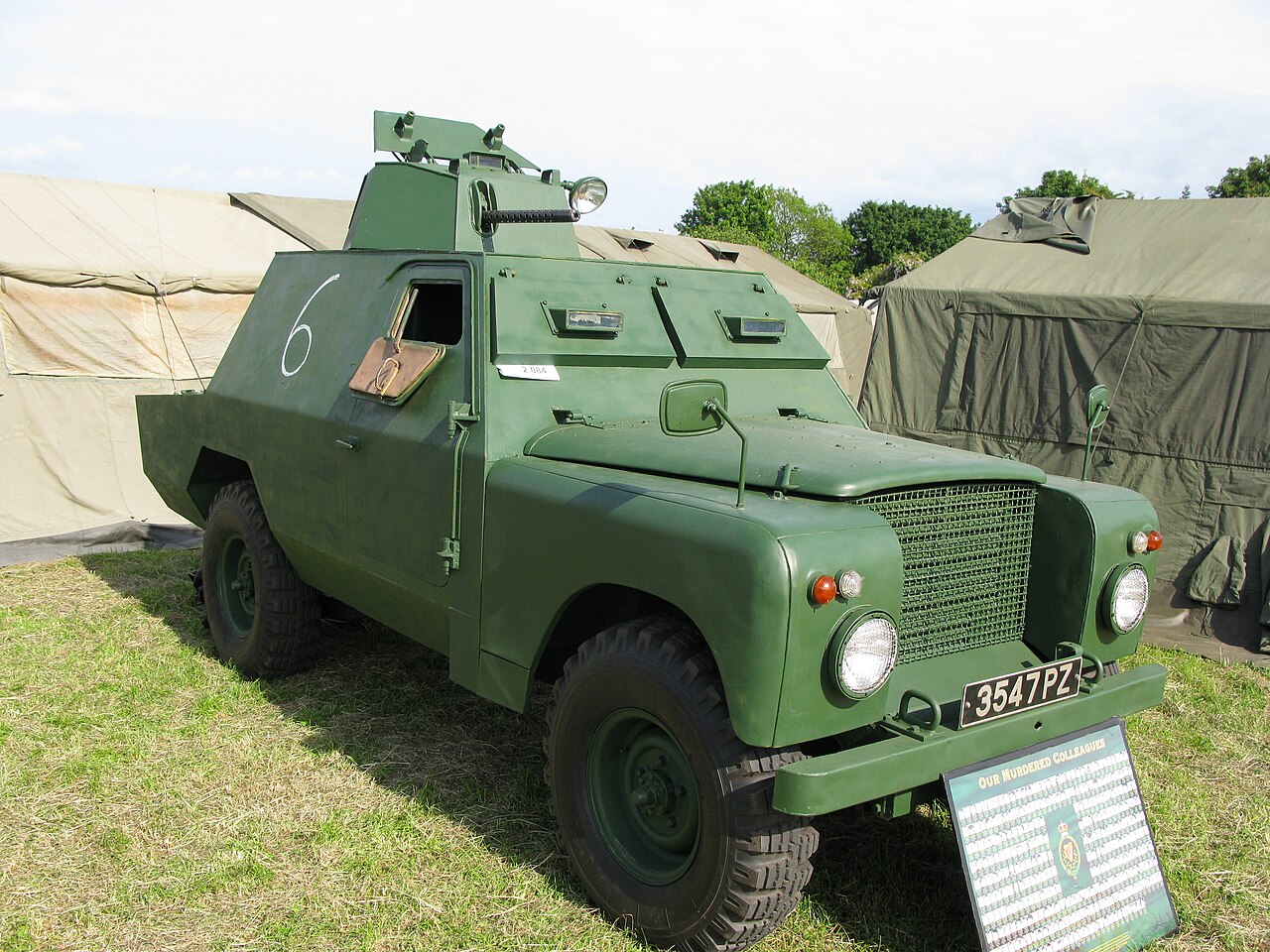 Shorland Mk 1 APC1965–68 · United KingdomHarvey Frost Series IIA 109 Recovery Truck1966 · United KingdomQueen Elizabeth II's Series IIA 109 SW1966 · United KingdomUNTAG Workshop Land Rover (Namibia 1989)1966 · AustraliaBrighton Fire Brigade HCB-Angus 1091967 · United KingdomGPO Station Wagon Type 31967 · United KingdomLomas 109 Ambulance1967 · United Kingdom
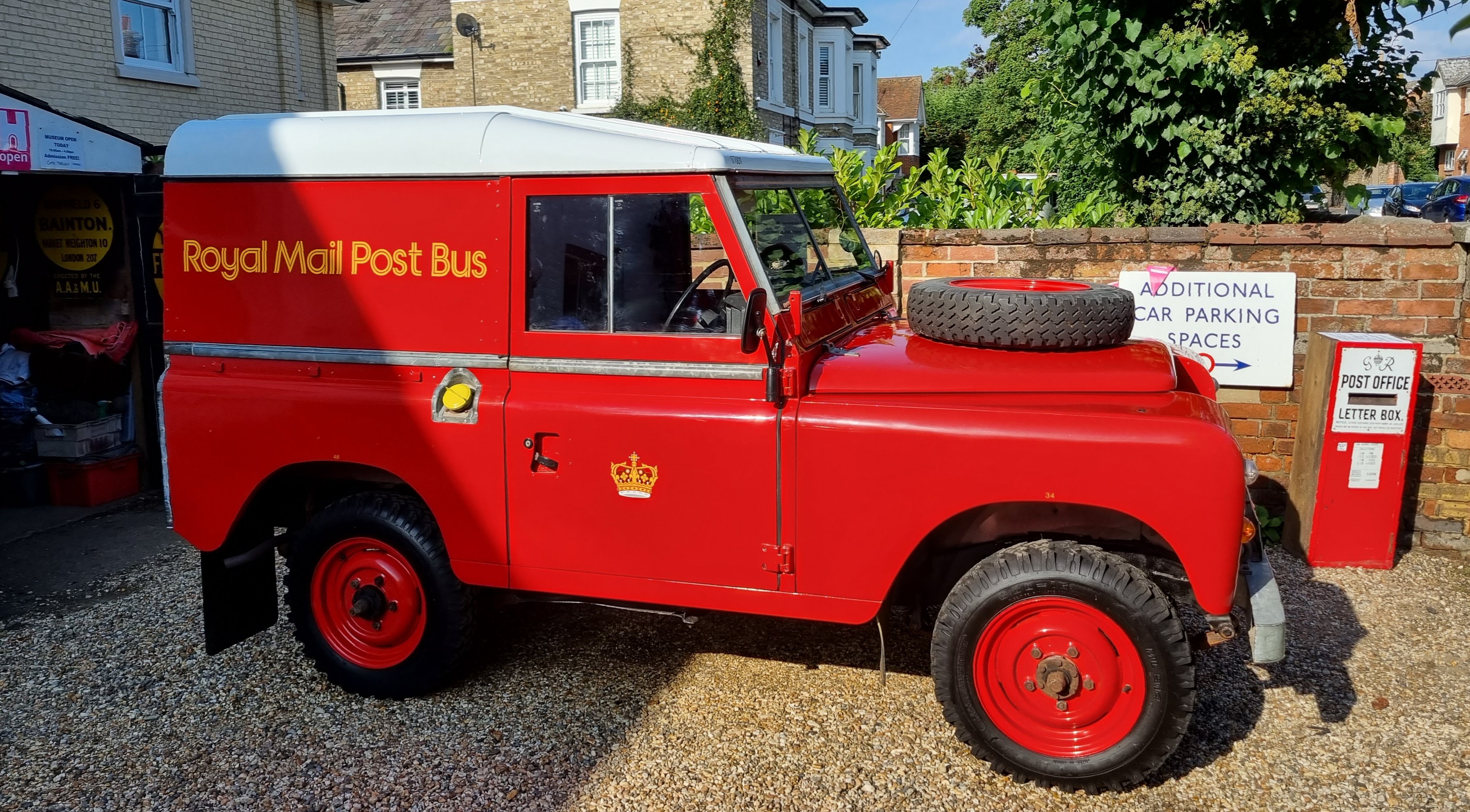 Royal Mail Series IIA 88 hardtop1967 · United Kingdom
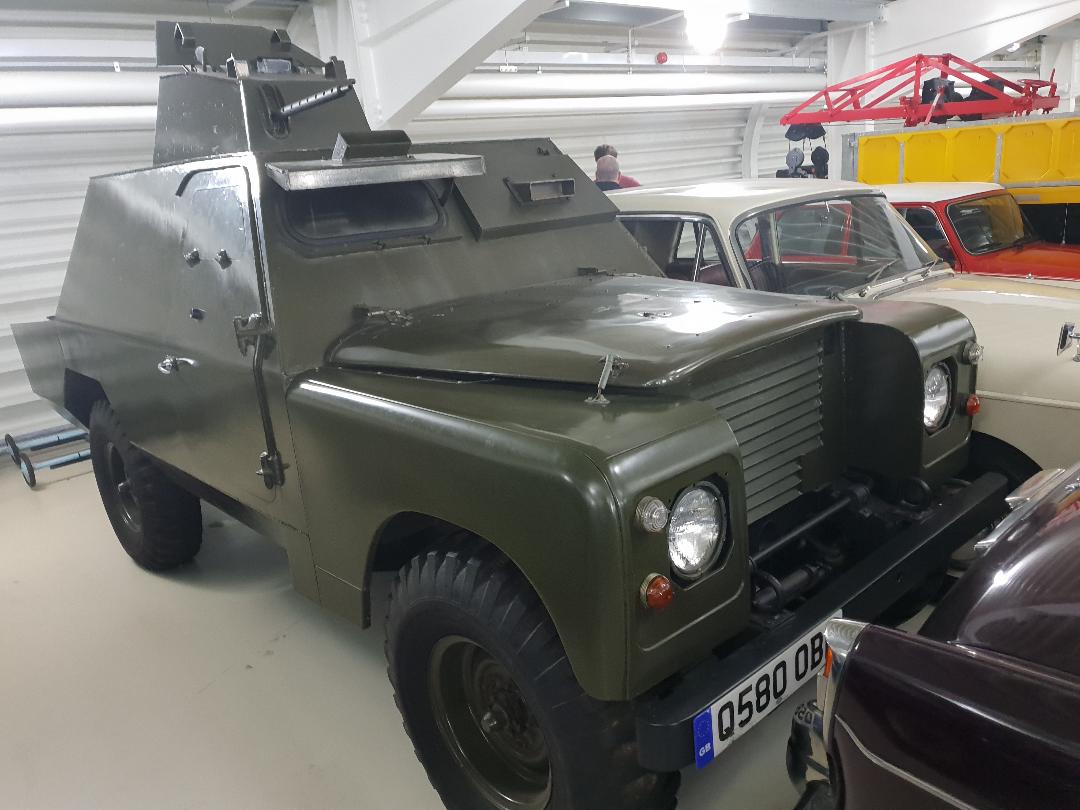 Shorland Mk 2 APC1967–72 · United Kingdom
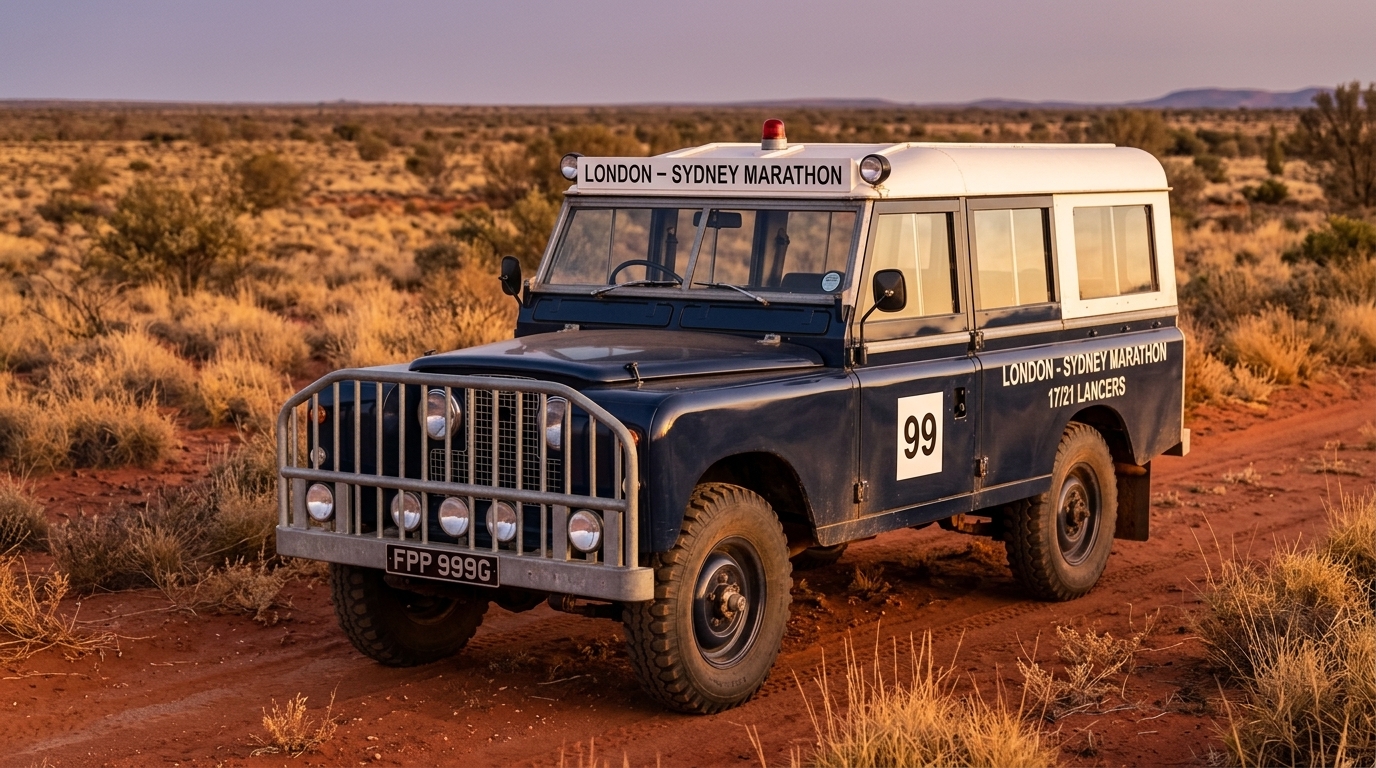 17th/21st Lancers London–Sydney Marathon Land Rover1968 · United KingdomBAOR ceremonial / security 881968 · United Kingdom / GermanyCarawagon de Luxe1968–71 · United KingdomCarawagon Safari1968–71 · United KingdomCarawagon Ultimate1968–71 · United KingdomClacy & Sons Series IIA 109 Recovery Truck1968 · United KingdomHarvey Frost recovery Land Rover1968 · United Kingdom
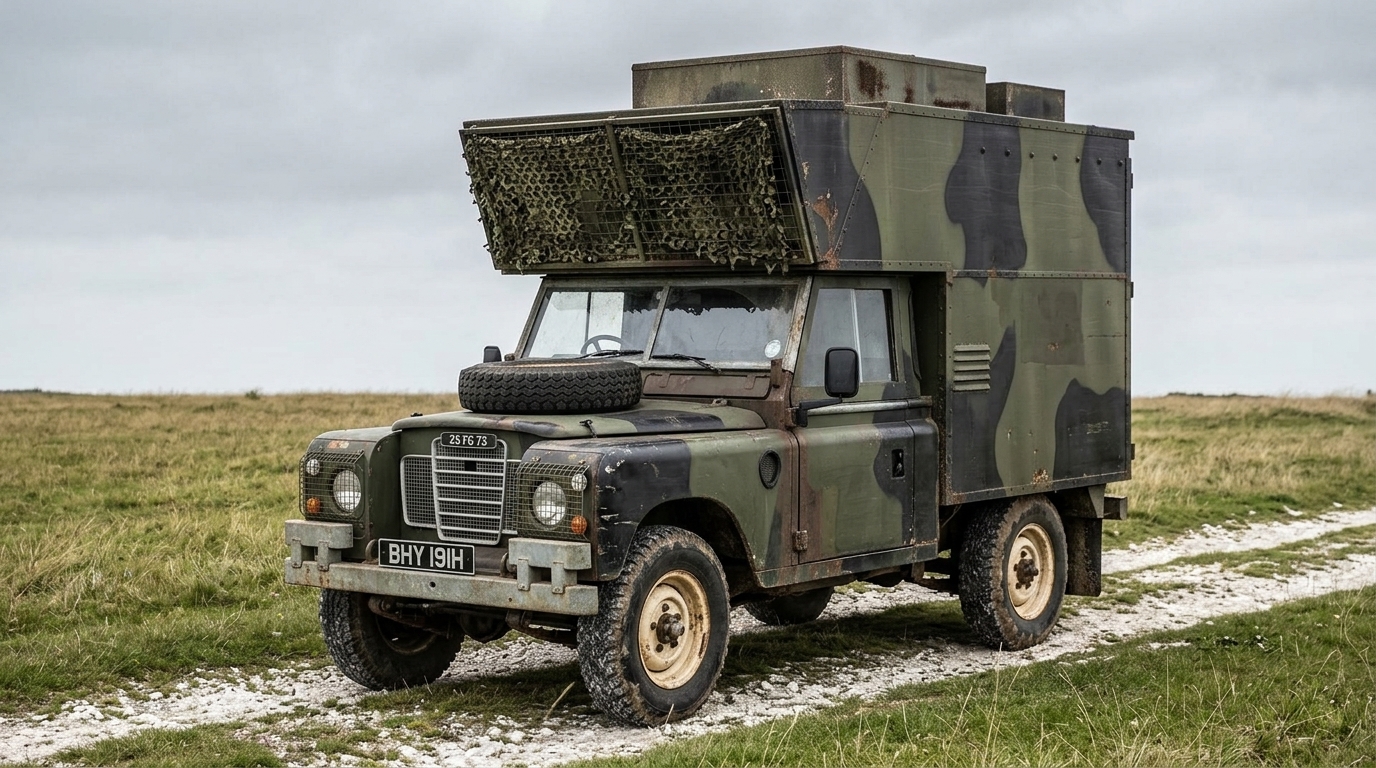 Royal Artillery PPIF Drone Section Land Rover1968–75 · United KingdomSAS Series IIA Pink Panther1968 · United KingdomSearle Estate Wagon1968–71 · United KingdomSearle Mini-Carawagon1968–71 · United Kingdom
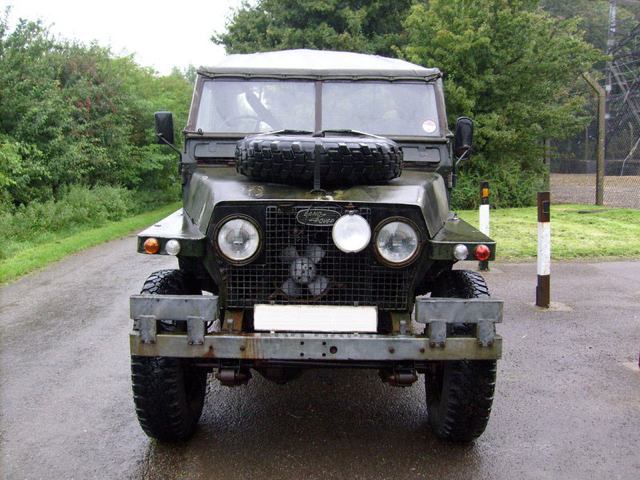 Series IIA Lightweight1968–72 · United KingdomShorland Prototype APV1968–73 · United KingdomEast Sussex Haywards Heath Light Rescue Tender1969–70 · United Kingdom
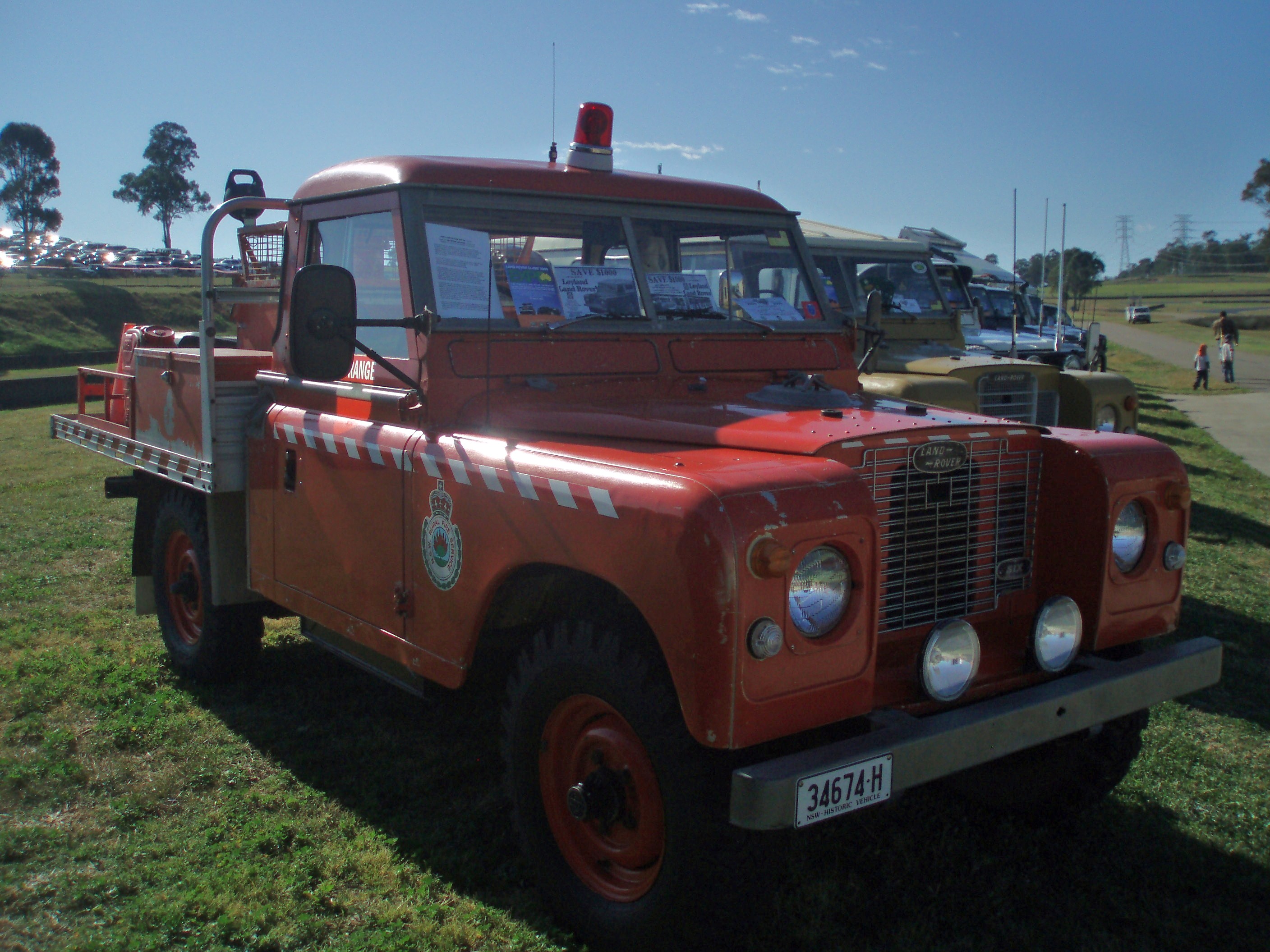 NSW Bush Fire Brigade Tanker1969 · United Kingdom / AustraliaPeter Rabbit Series IIA1969 · United KingdomPost Office Recovery1969–70 · United Kingdom
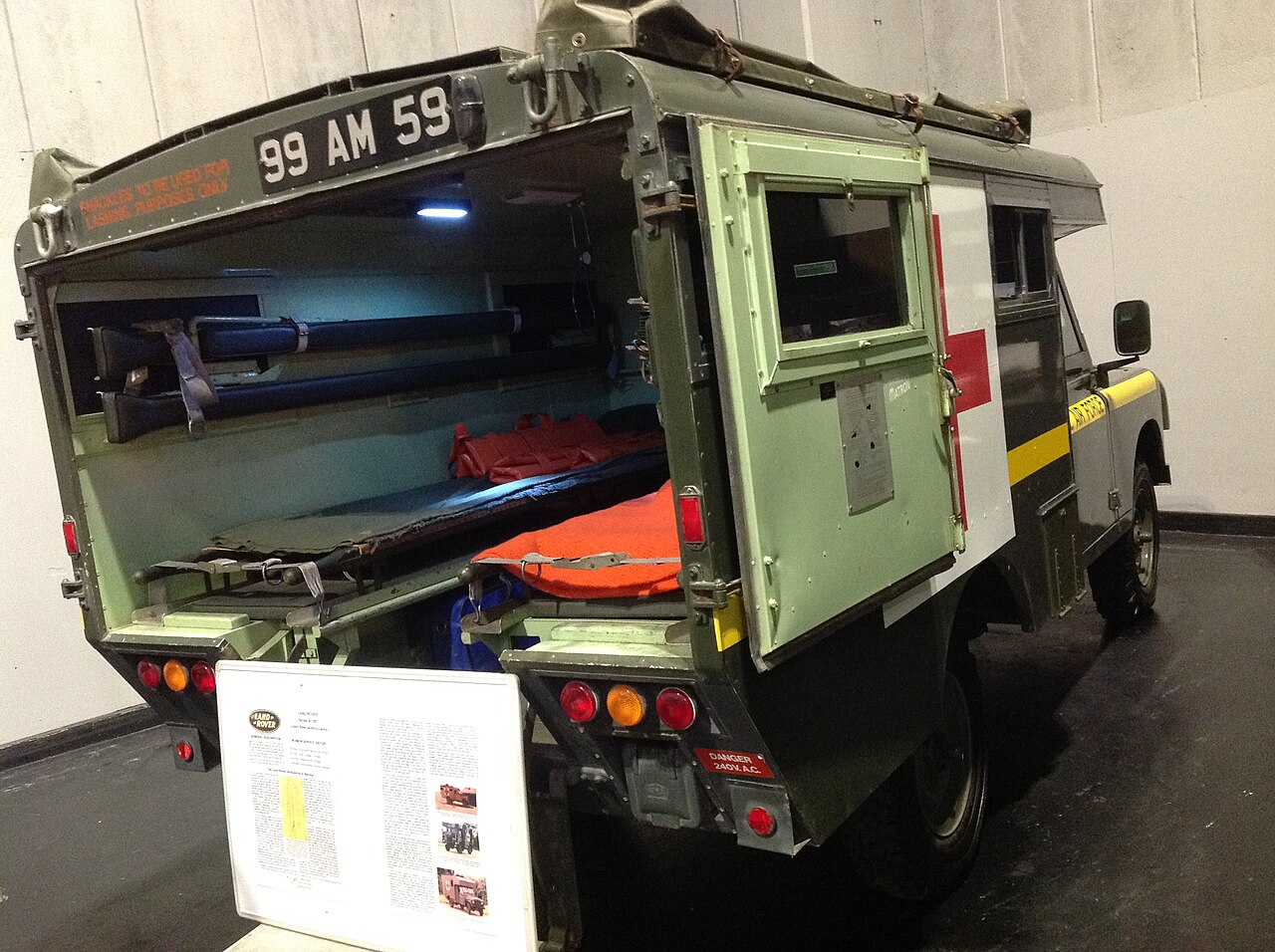 RAF Crash Rescue Marshall Ambulance1969 · United Kingdom
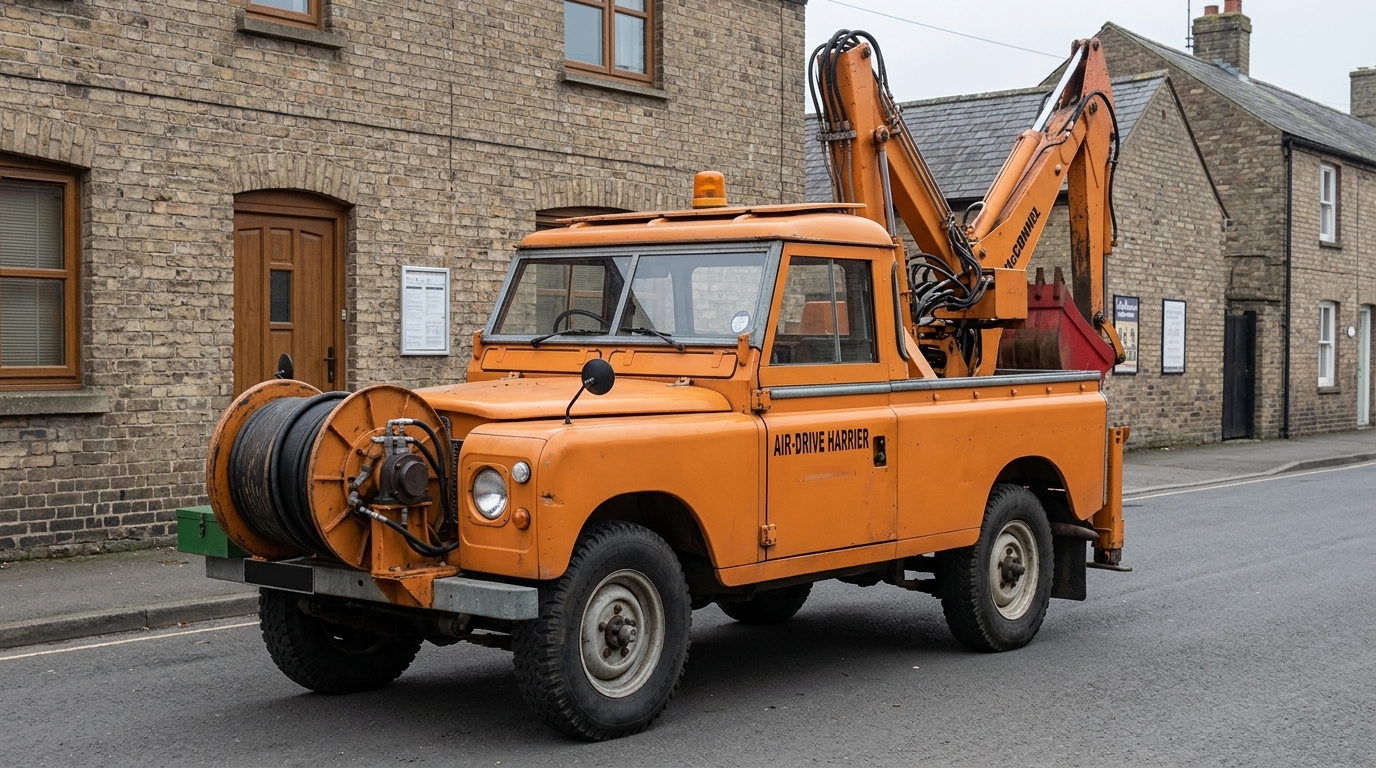 Air-Drive Harrier backhoe1970–71 · United KingdomDanish Army 109 TACP1970 · United KingdomHemsby Beach Ice Cream Van FVG 31J1971 · United KingdomRossi Ice Cream Land Rover AVG 31J1971 · United Kingdom