The Land Rover was two years old when Barbara Toy bought a used 80-inch, named it Pollyanna and drove it alone from Tangier to Baghdad. Nobody at Rover had planned for that. The car had been designed as a farm tool that could stand in for a tractor, but it turned out to be exactly what a private traveller needed: simple enough to mend in a village forge, light enough to dig out of sand by hand, and able to carry fuel and water for a thousand miles between pumps. Within a decade university clubs, magazine writers, service teams, zoologists and honeymooners were pointing Series Is at places the map still left blank.
This chapter follows those journeys through the vehicles that made them, from the two 86-inch station wagons of the First Overland to the bursary Defenders of the Royal Geographical Society. The registry's expeditions section holds the full record of each one — route, dates, crew, sources — and the atlas draws them on one map.
Early private expeditions (1950–1955)
3 VEHICLES IN THIS CHAPTERThe first Land Rover expeditions were private, cheap and improvised. Barbara Toy, an Australian-born playwright, took a wager in a London pub, bought a 1950 80-inch second-hand, and drove Pollyanna alone along the North African coast and through the Levant to Baghdad in the winter of 1950–51. She went back to the car five more times: six months in Libya in 1952, with Pollyanna rebodied as a station wagon and its roof painted white against the sun, and in 1953 a crossing of Saudi Arabia from Kuwait to Jeddah on the personal permission of King Abdulaziz. In the same season W. P. Mitchell of The Autocar borrowed a Series I from a Calcutta garage and drove it home to Calais in 26 days, one puncture in 8,825 miles, which told the trade something about the car it had not quite believed.
The universities arrived in 1954. Three Oxford and three Cambridge undergraduates, each team in its own Series I 86-inch station wagon, raced London to Cape Town and back across the Sahara and through the Belgian Congo — the “Boat Race on wheels”, and the rehearsal for what came next. In the Bechuanaland Protectorate the same year Laurens van der Post's BBC party drove Series Is through the Okavango and the Tsodilo Hills in search of the Kalahari Bushmen; in Australia the surveyor Len Beadell began the Gunbarrel Highway, the first road across the centre of the continent, reconnoitring in a Series I ahead of his grader.
Registry records · chapter 1
First Overland and the round-the-world drives (1955–1961)
5 VEHICLES IN THIS CHAPTEROn 1 September 1955 two new Series I 86-inch station wagons, Oxford and Cambridge, left Hyde Park Corner for Singapore. Six students, a BBC film camera, the Stilwell Road through Burma: the First Overland reached Singapore on 6 March 1956, and Tim Slessor's book kept it in print for sixty years. Oxford itself survived on St Helena, was restored, and in 2019 drove the whole route in reverse. Its light-blue companion Cambridge was lost in the Sahara in 1957, on the same team's next expedition.
Everyone with a Series I and a reason seemed to follow. Peter Townsend, the Battle of Britain pilot whose engagement to Princess Margaret had just been broken off, drove alone out of Brussels in October 1956 and came home eighteen months and 57,000 miles later. Barbara Toy took Pollyanna round the world the same year — the first Land Rover circumnavigation — while two Harvard PhDs drove a new 107-inch station wagon to Jaipur to begin a lifetime's study of India. In 1957 the Magnum photographer George Rodger and his wife crossed the Sahara in the 107 Mzuri, and two Canadians, the biologist Bristol Foster and the painter Robert Bateman, set off round the world in the Pilchers-bodied Grizzly Torque. Three service wives, told they would be left at home while their husbands climbed, drove a half-price Rover-supplied 109 pick-up from Ullswater to Zanskar in 1958.
The decade closed with the harder crossings. In 1959–60 an 88-inch station wagon called La Cucaracha Cariñosa was winched, rafted and cut through the Darién Gap — the first motor vehicle to do it — while the truck maker Berliet used Series IIs as pathfinders for its Ténéré and Tibesti convoys across the Sahara. Four Cambridge graduates took a single Series II from Ushuaia to Fairbanks; three Imperial College postgraduates took a worn 1952 80-inch round Africa and up the Americas on a 31,000-mile survey of bush flying; and Barbara Toy, now in the long-wheelbase Series II Rover had pressed on her, went in search of Sheba across Central Africa to Ethiopia, then in 1961 north from Timbuktu along the way of the chariots in a 109 Dormobile.
Scientific and survey expeditions (1961–1975)
3 VEHICLES IN THIS CHAPTERBy the 1960s the Land Rover was the standard field vehicle of British science, and the expeditions read like a university prospectus. Eight Cambridge undergraduates drove two 109s overland and over the Babusar Pass to survey a Karakoram glacier in 1961. The British Museum's Bird Room ran five collecting expeditions across Australia in three London-fitted long-wheelbase cars between 1962 and 1968. Gerald Durrell took two Land Rovers and a BBC crew into Sierra Leone in 1965 to stock his Jersey zoo; Helen and Frank Schreider followed the Great Rift Valley for National Geographic; and four Imperial College students bought a 109 twelve-seater for £550 and drove it to a ghost town at 15,000 feet in Bolivia. Mark and Delia Owens' third-hand Land Rover carried them into the Central Kalahari in 1974 for seven years that became Cry of the Kalahari.
Australia produced its own school. Tony Jones and Harry Marsh's first Encounter Overland trip of 1964 — eight people in one 109 painted Oxford and Cambridge blue — founded the overland-tour industry. Mike and Mal Leyland made the first west–east crossing of the continent in 1966 in a six-cylinder Series I 107 and an 88 hard top, and three surveyors on annual leave drove two short-wheelbase Land Rovers down the whole Canning Stock Route in 1968, the first vehicles ever to do so. An army crew from the 17th/21st Lancers even entered a Land Rover in the London–Sydney Marathon that year and finished 49th of 56.
The services' great desert expedition came in 1975. Squadron Leader Tom Sheppard's Joint Services West–East Sahara Expedition took four pre-production 101 Forward Controls, three towing Rubery Owen powered-axle trailers, from the Atlantic to the Red Sea — the first crossing of the Sahara by that line, and the reason a 101 sits in the registry with sand in its treads.
Registry records · chapter 3
Camel Trophy, records and challenge events (1979–2006)
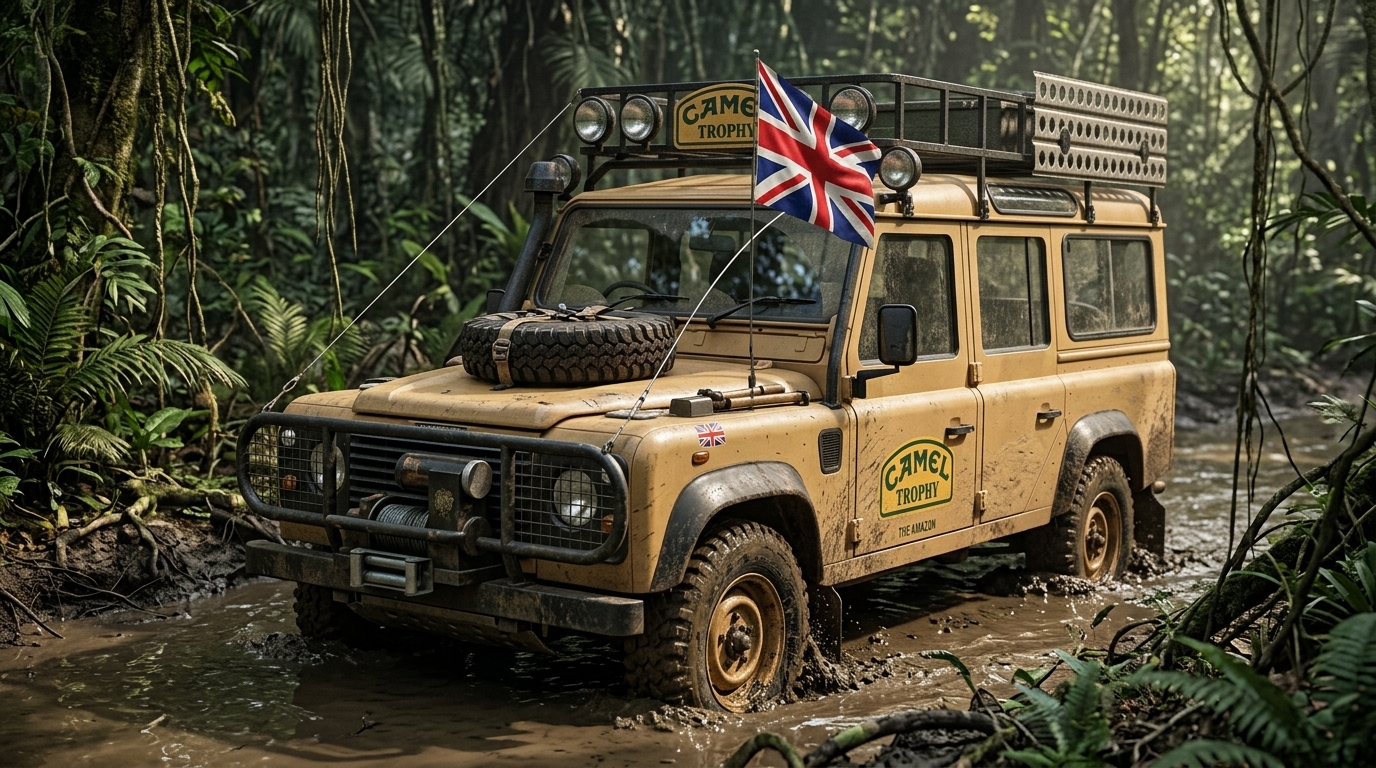
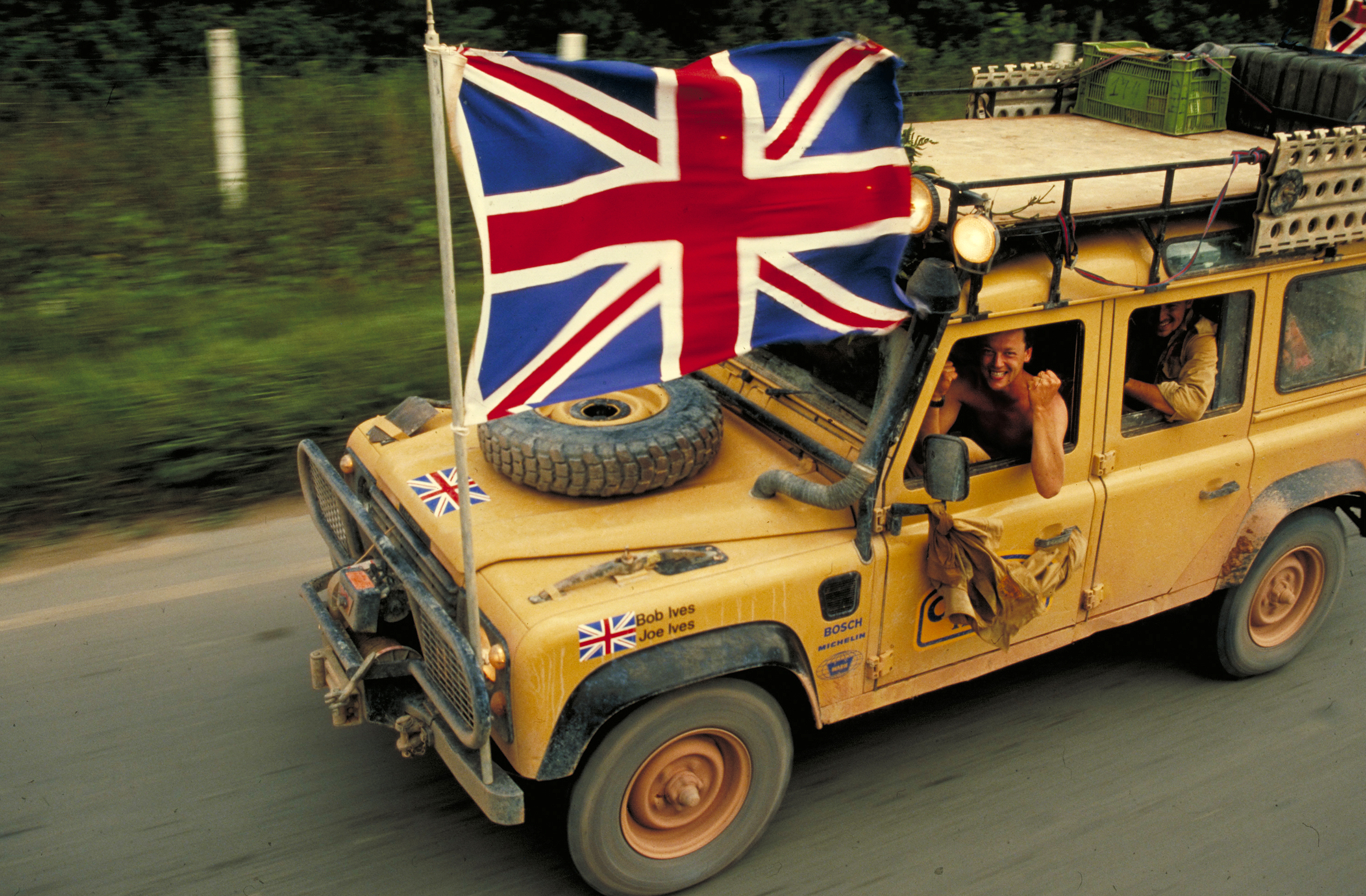
2 VEHICLES IN THIS CHAPTERSir Ranulph Fiennes opened the Transglobe Expedition, the first surface circumnavigation through both Poles, with a Land Rover crossing of the Sahara in 1979; the Royal Geographical Society's 150th-anniversary International Karakoram Project ran a fleet of Stage 1 V8s out of Aliabad the following summer. But the image of the Land Rover expedition for a generation was painted sandglow. The Camel Trophy came to Land Rover in 1981 and to the Series III 88 in Zaire in 1983; the new One Ten was blooded on the Transamazônica in 1984, the Ninety in Borneo and across the wet-season north of Australia, and the turbo-diesel One Ten in Sulawesi and, in the rainy season on purpose, the Amazon in 1989. The registry's Camel Trophy 110 stands for the type; the Ives brothers' winning 1989 car survives at Beaulieu.
The records followed. In 1997 a Moscow team winched and hauled a Mantec-prepared Defender 90 to the eastern summit of Elbrus, 5,621 metres, for a Guinness record; the car was lost on the way down. Three Aosta Valley Defender 90s took the European altitude record at Gobba di Rollin in 2000. For Land Rover's fiftieth year a New Zealander drove his family's 1948 80-inch, LAND48, round the world; Kingsley Holgate's family followed the Tropic of Capricorn in Defenders. Land Rover replaced the Camel Trophy with its own G4 Challenge in 2003 and 2006, with Defender 110s doing the competitors' work in South Africa and the support everywhere else.
Registry records · chapter 4
Bursary expeditions and modern crossings (2007–present)
5 VEHICLES IN THIS CHAPTERThe Holgates went round the whole outline of Africa in 2007–08, 448 days behind a record convoy of 347 Land Rovers. In 2008 a Yorkshire beef farmer, Steve Burgess, drove a new Defender 110 that Dan Evans had made amphibious across Siberia in winter and then swam it over the Bering Strait — the first road vehicle to cross under its own power. The car is in the registry as the Cape-to-Cape Defender, and the idea has not gone away: two amphibious 110s are still trying to drive from London to New York.
From 2008 the Royal Geographical Society's Land Rover Bursary put a Defender 110 under a research expedition every year, and the registry follows them one by one: Roxy round the world on the 50th parallel; Beatrice round the rim of the Atlantic on the one-metre contour; Lottie along the earthquake belt to Turkey with a seismometer in the back; the winterised Pole of Cold car to Oymyakon at minus fifty-nine; the Grand Alpine Tour of the glaciers; the same car rebuilt by Special Vehicle Operations as the Trail by Fire volcano observatory for the Andes; and the SVO-converted Transcaucasian Expedition Defender that surveyed a hiking trail across Armenia and Georgia. Both of those last two cars are in the registry.
And in 2019 the story closed its circle. Oxford, the 1955 Series I, rescued from St Helena and restored, left Singapore on 25 August and came into Folkestone on 14 December — The Last Overland, with Tim Slessor's grandson in the seat Slessor's health kept him from, and Slessor himself on the quay to meet the car.
Manufacturers
Expeditions vehicles in the registry
56 records, oldest first. LAND48 — Lucas Trans-Global Expedition1948
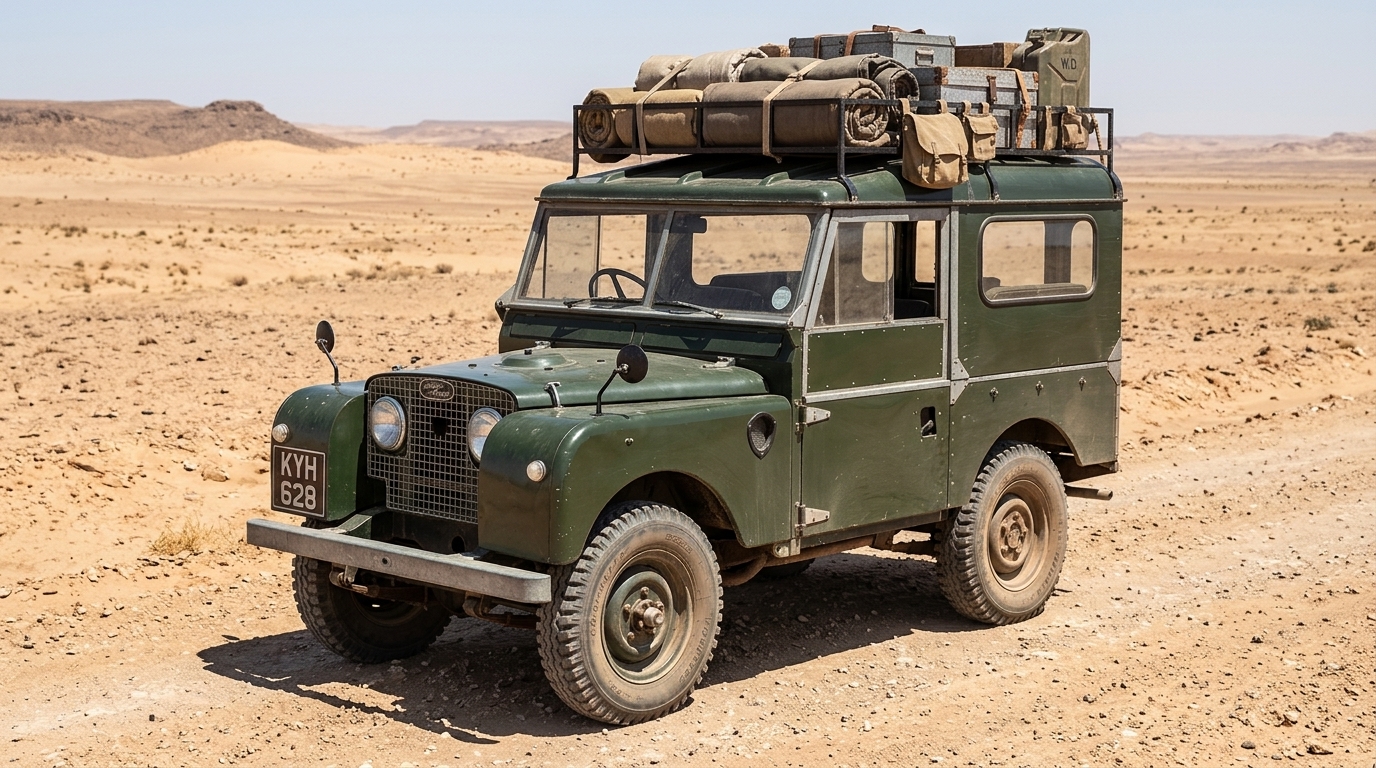 Pollyanna — Barbara Toy's Series I1950 · United KingdomAutocar Calcutta to Calais — Series I 801951 · United Kingdom
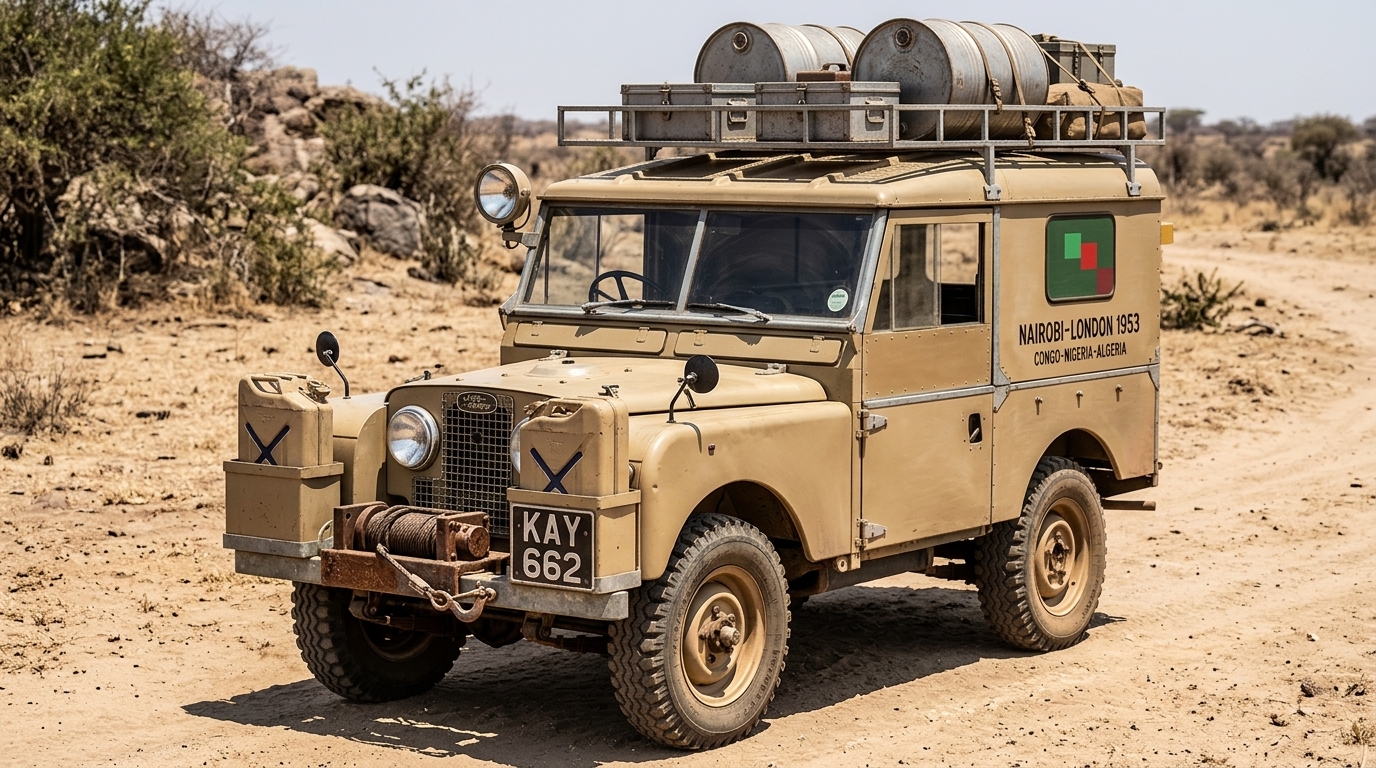 George Adamson Nairobi to London Series I1952 · United KingdomImperial College Africa and Americas — Series I 801952 · United Kingdom
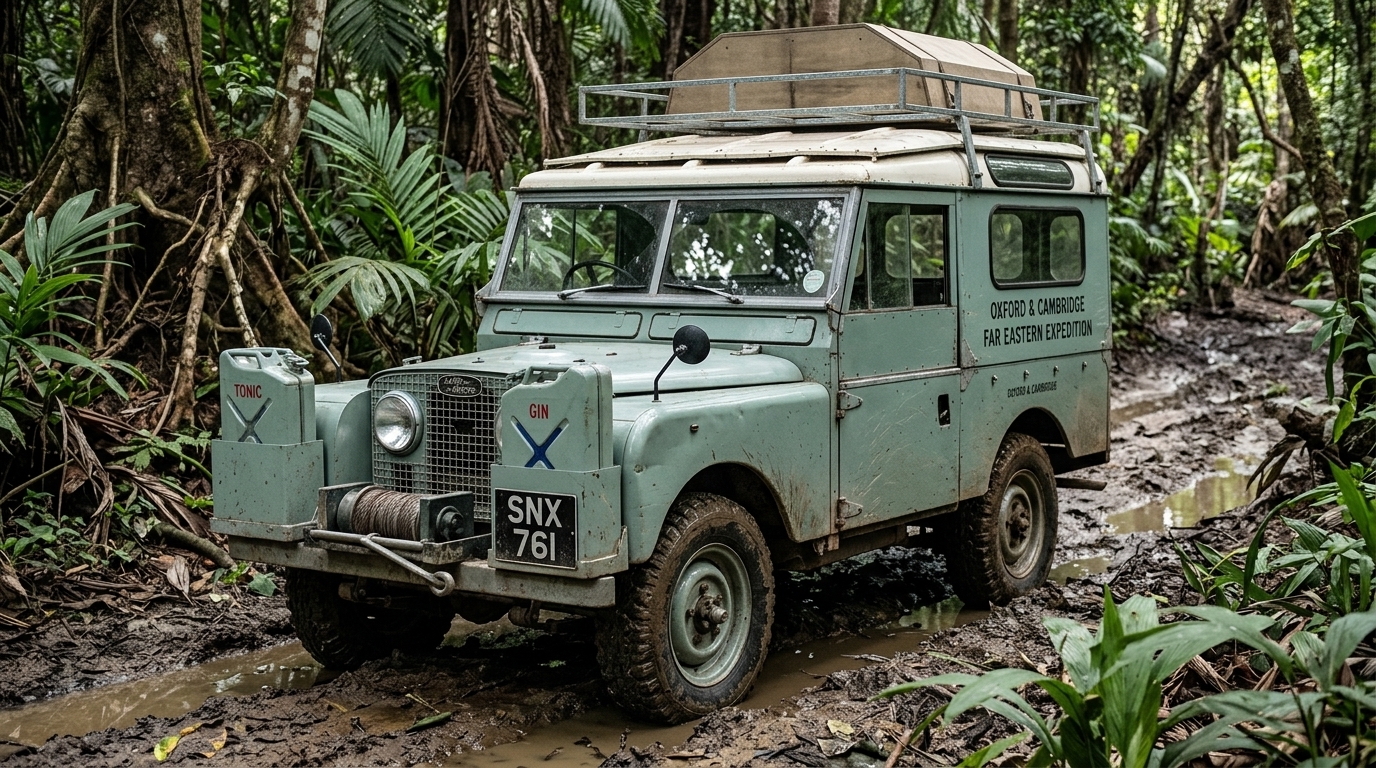 Cambridge1955 · United Kingdom
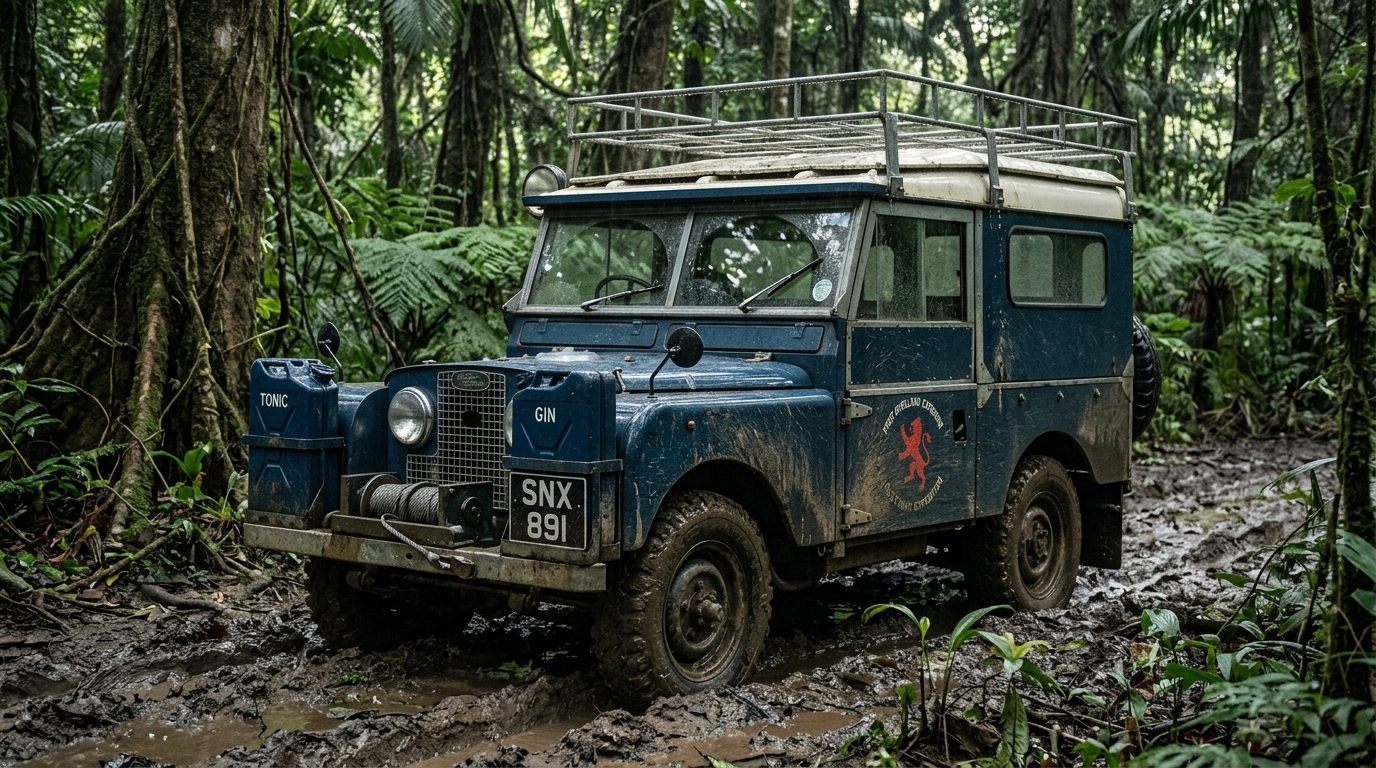 Oxford1955 · United Kingdom
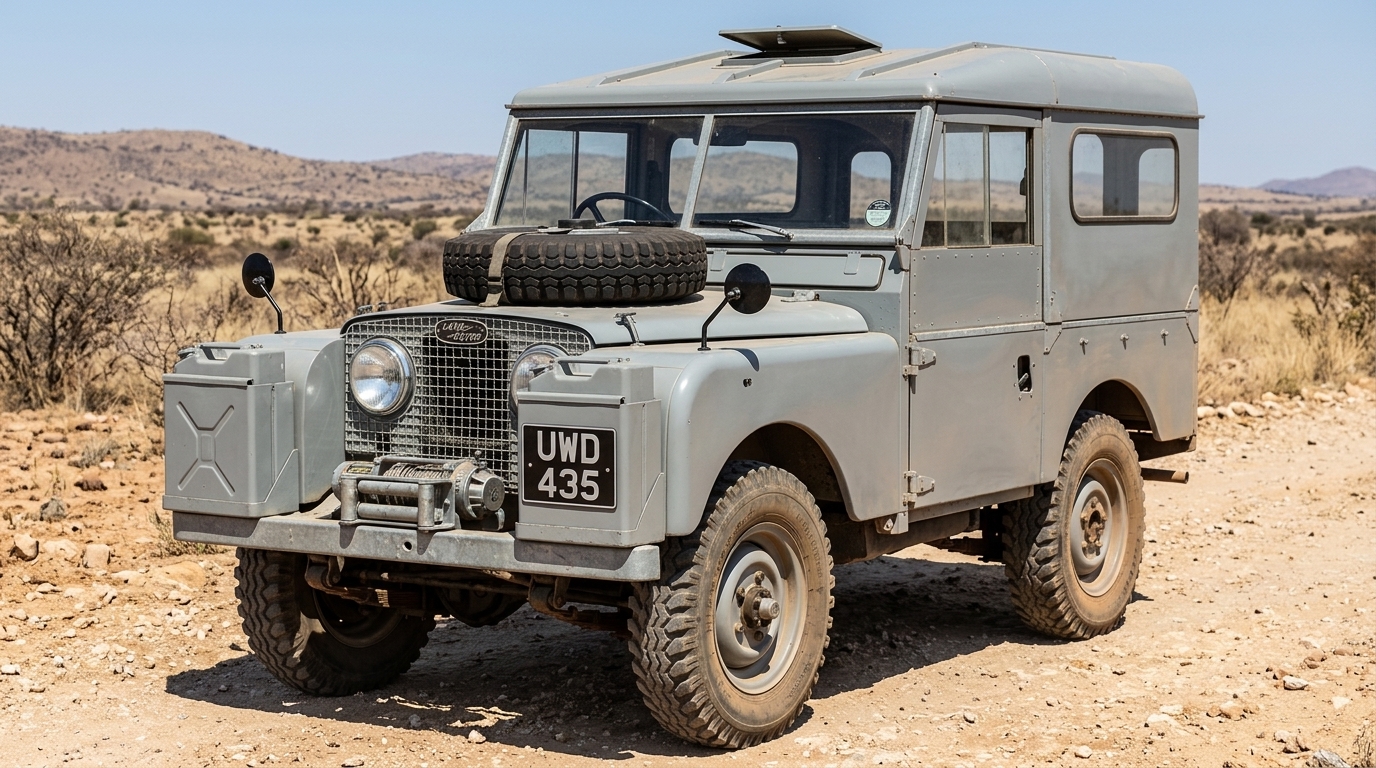 Peter Townsend — Earth, My Friend1955Van der Post Kalahari Expedition1955
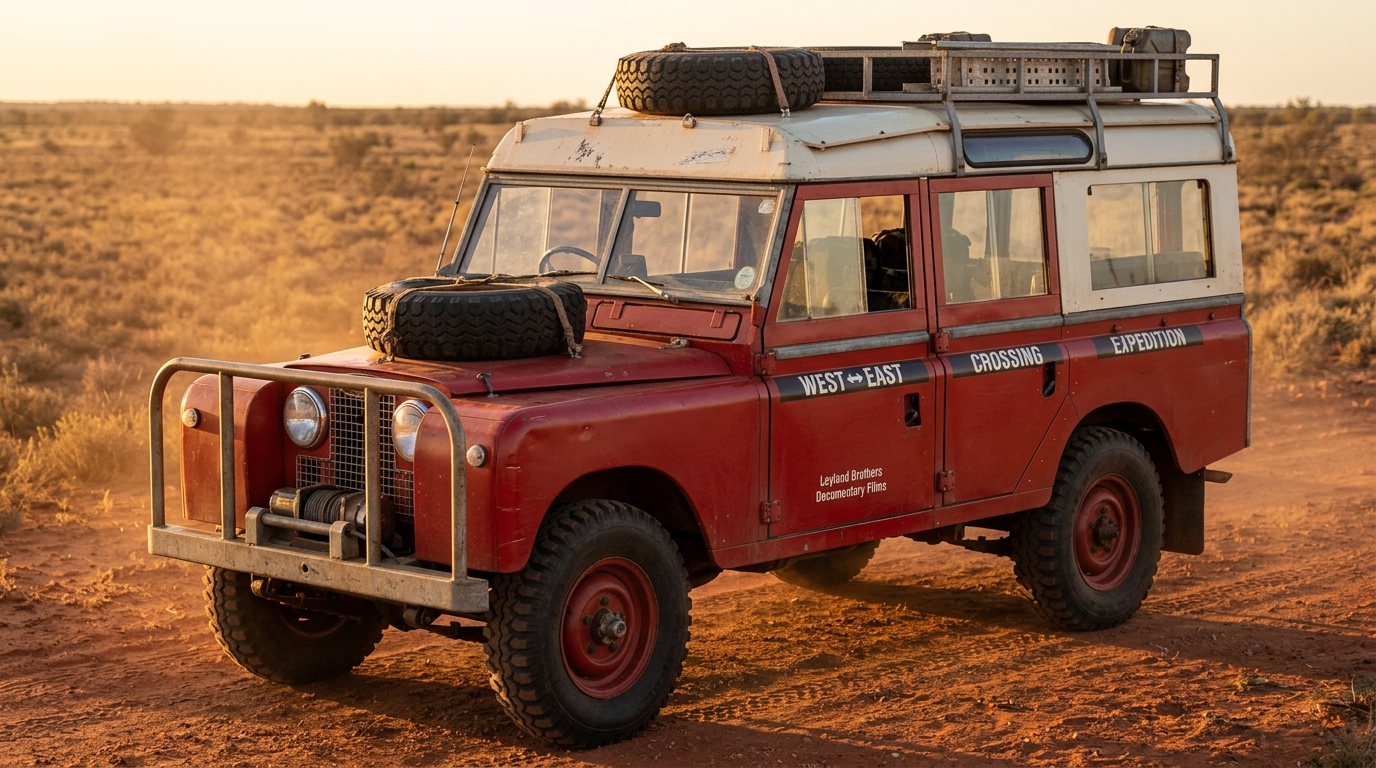 Leyland Brothers’ Series I1956 · AustraliaRudolphs’ London to India — Series I 1071956 · United Kingdom
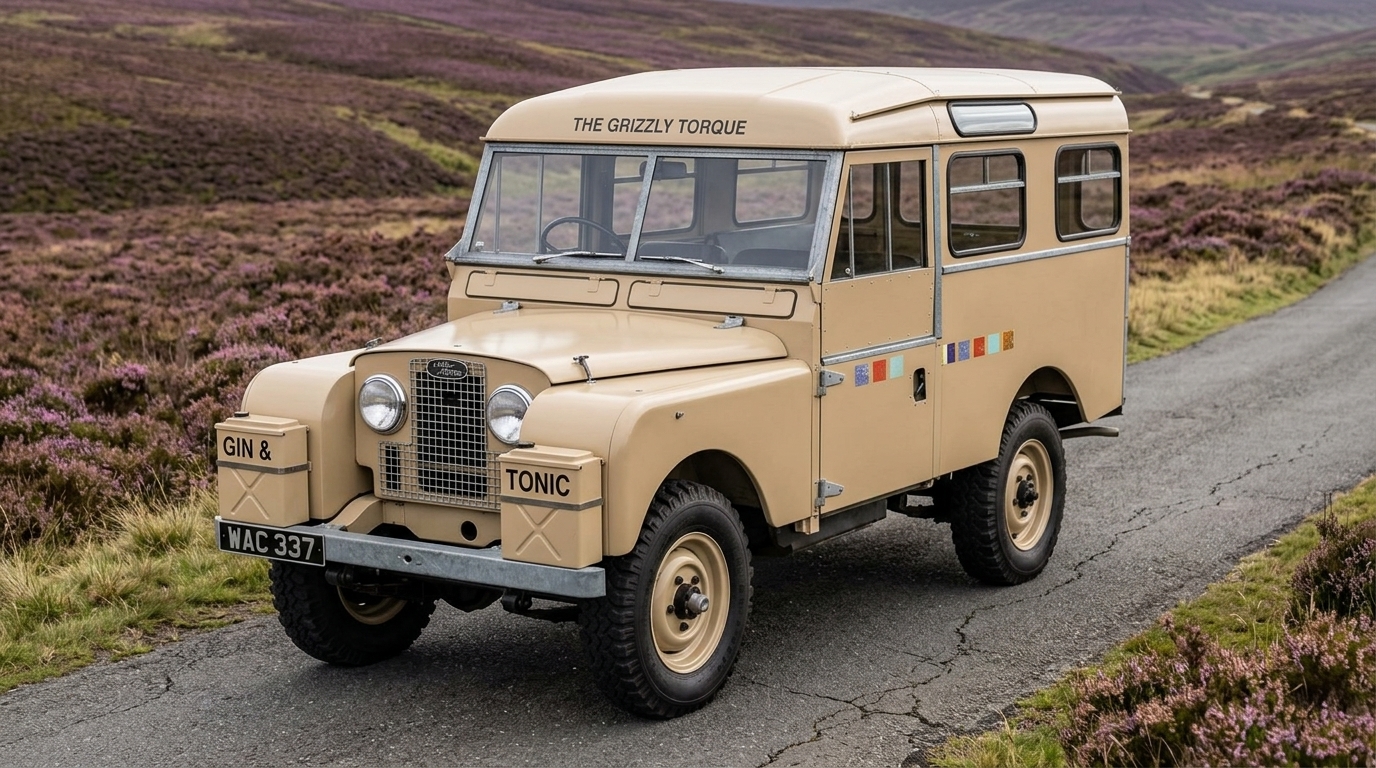 Grizzly Torque1957 · United KingdomMzuri — George and Jinx Rodger’s Series I 1071957 · United Kingdom
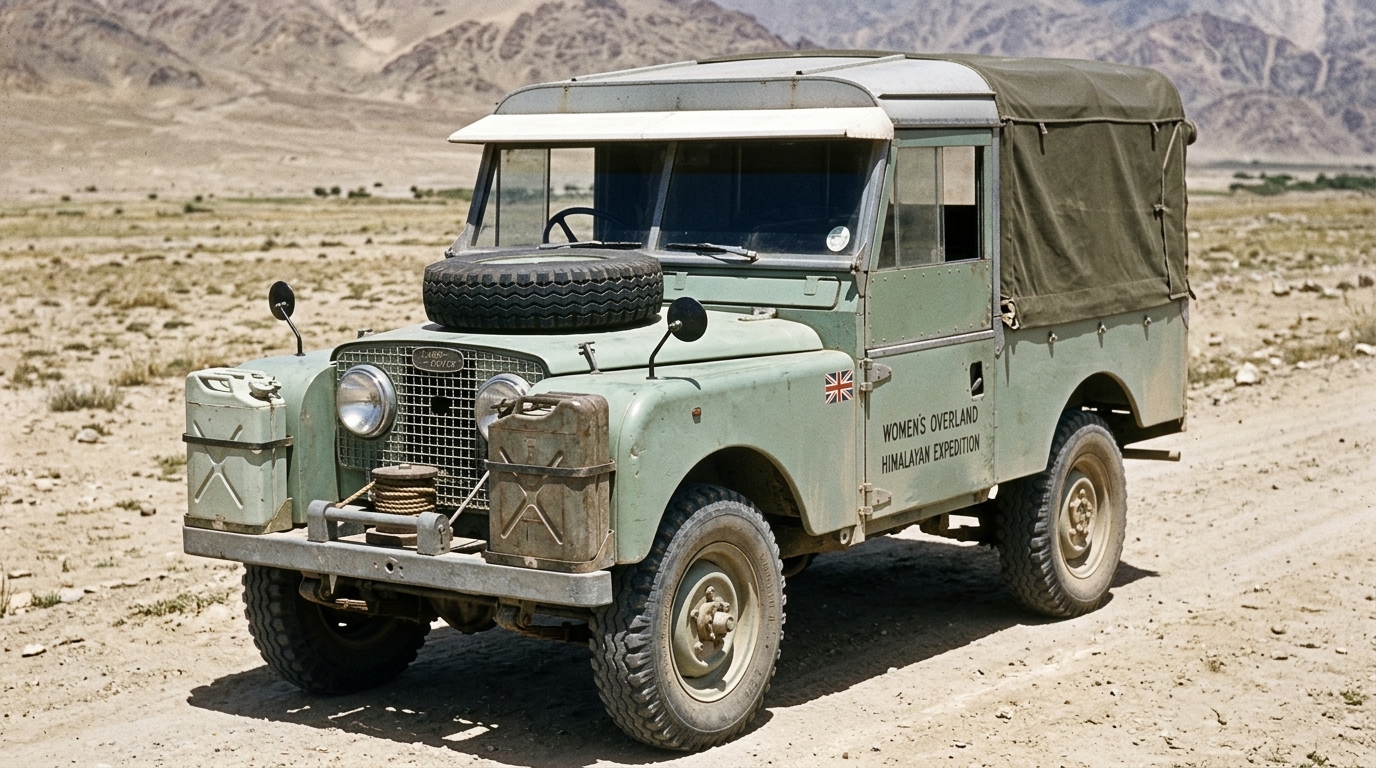 Women’s Overland Himalayan Expedition — Series I 1091958 · United KingdomLa Cucaracha Cariñosa1959Mission Berliet-Ténéré — Series II 1091959 · United Kingdom / AlgeriaMission Berliet-Ténéré — Series II 881959 · United Kingdom / AlgeriaMission Berliet-Tchad — Series II 109 Station Wagon1960 · United KingdomSchreider Great Rift — Series IIA 881960 · United KingdomBarbara Toy’s Dormobile1961Imperial College Minas de Lípez — Series II 1091961 · United Kingdom
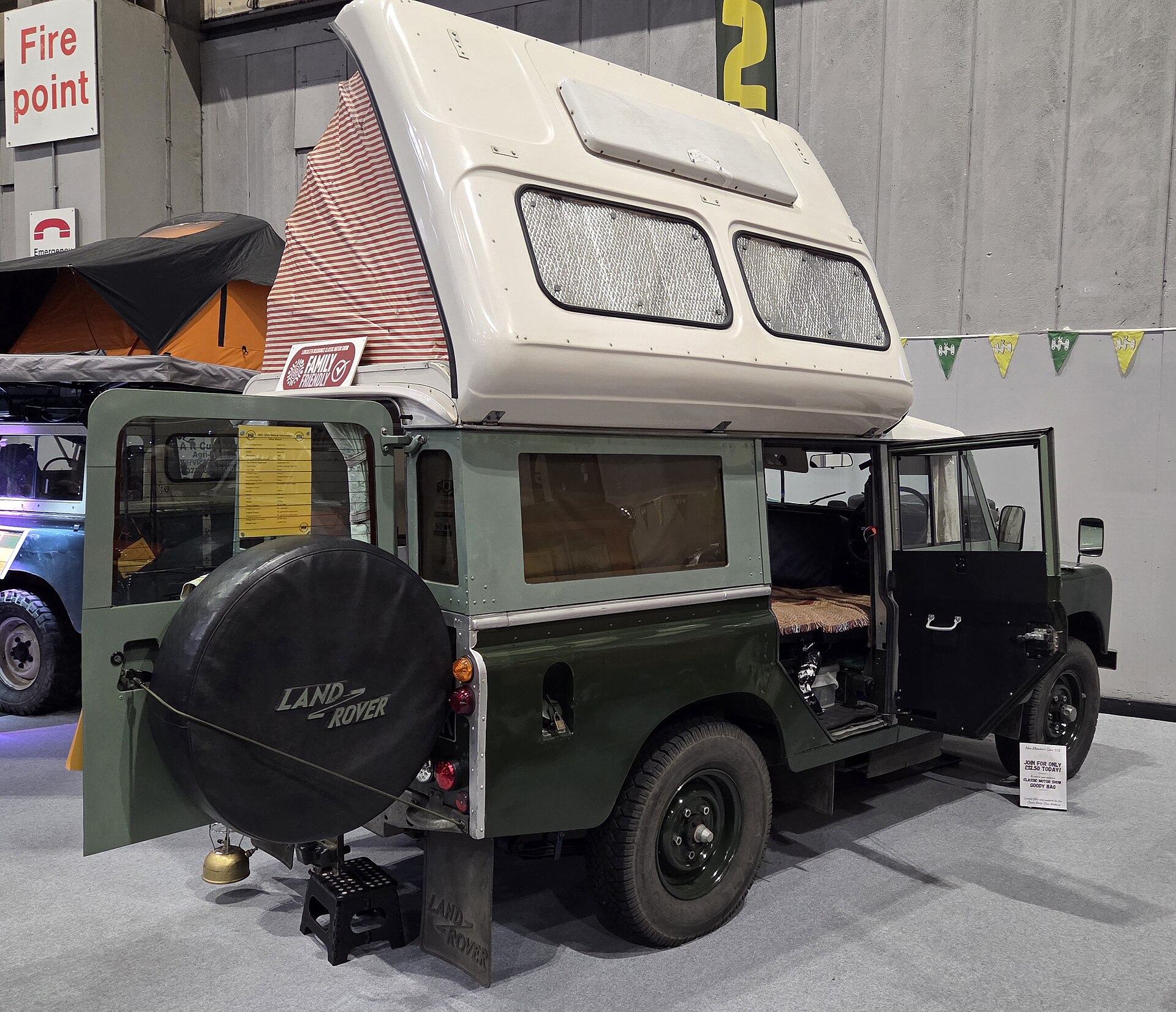 Series II 109 Dormobile1961–75 · United KingdomLeyland Brothers’ Series IIA1963 · United Kingdom
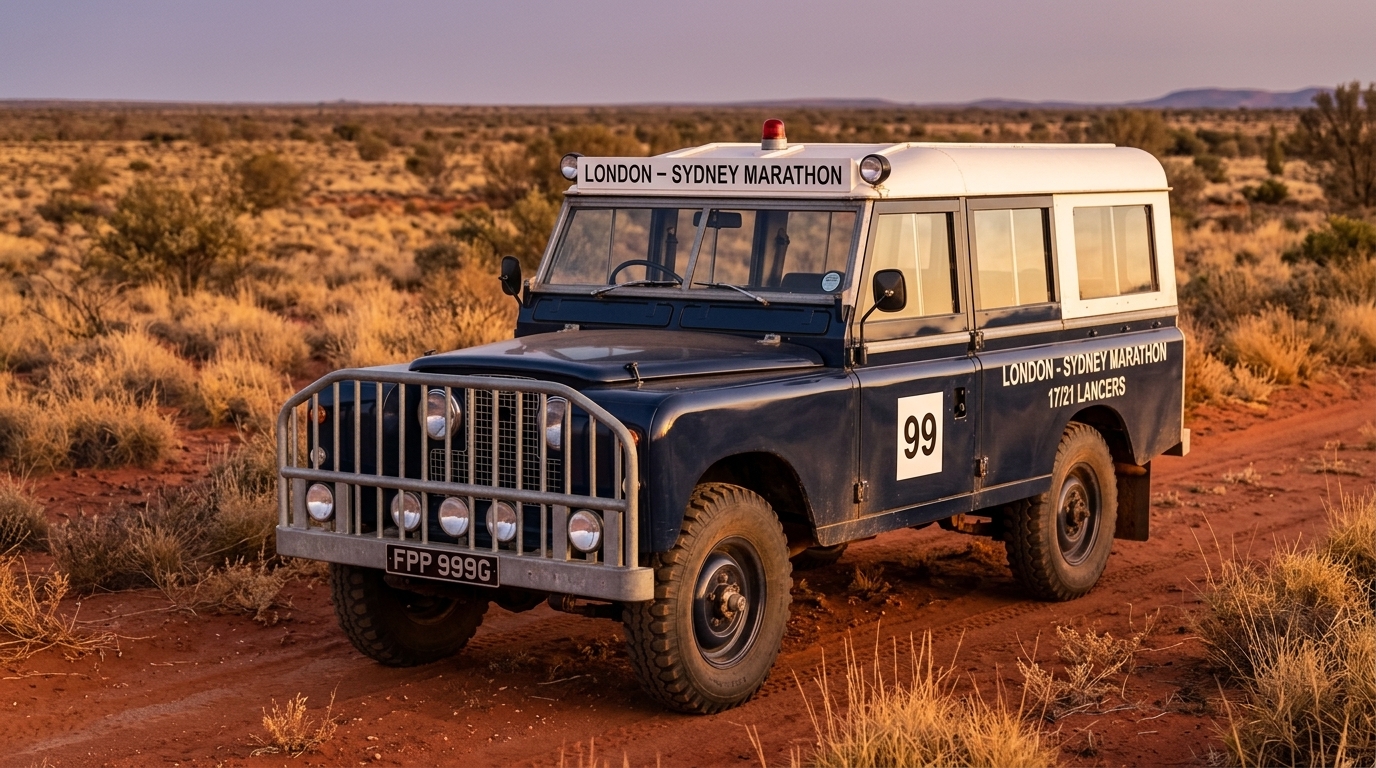 17th/21st Lancers London–Sydney Marathon Land Rover1968 · United Kingdom
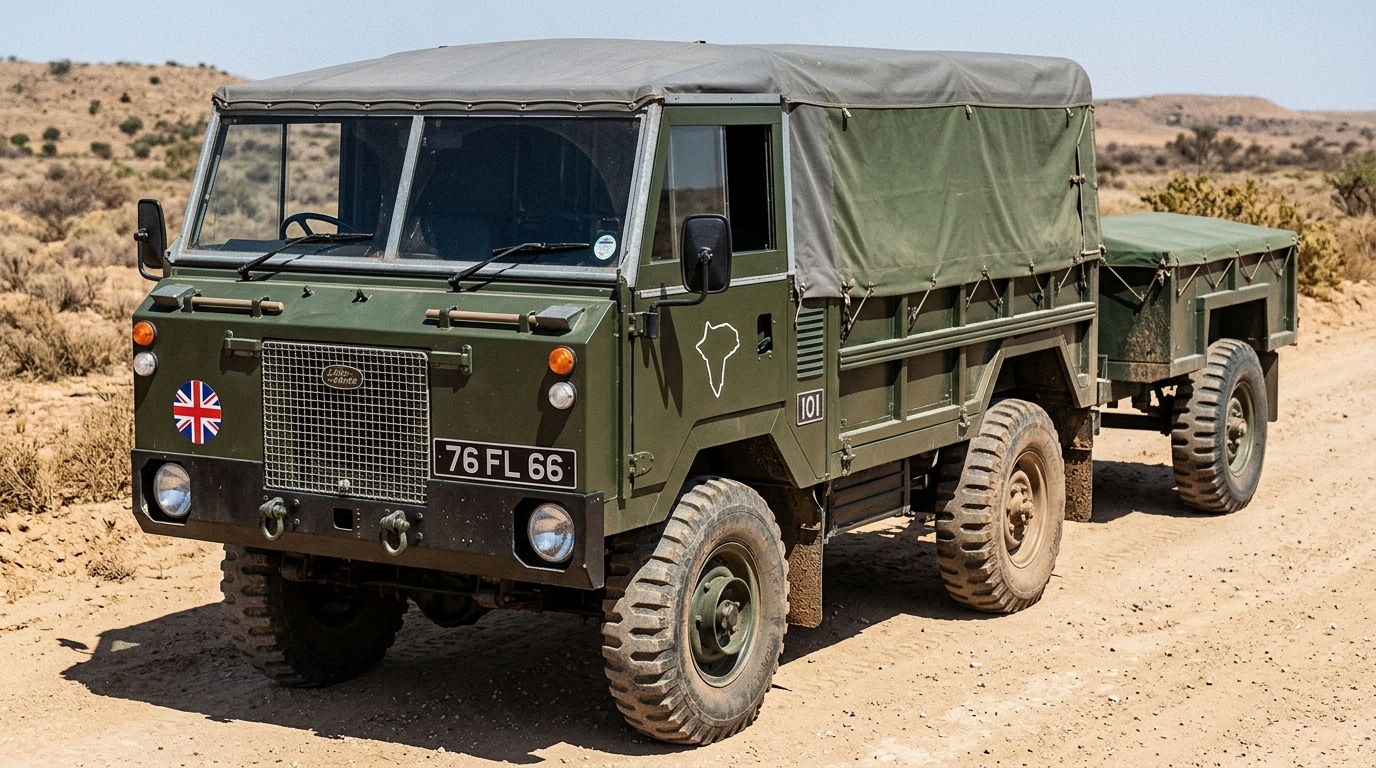 Tail End Charlie — 101 Forward Control1974 · United KingdomJoint Services Sahara Expedition 101 FC1975 · United KingdomGinny Fiennes’ Transglobe Radio Land Rover1979Transglobe Sahara Land Rover1979
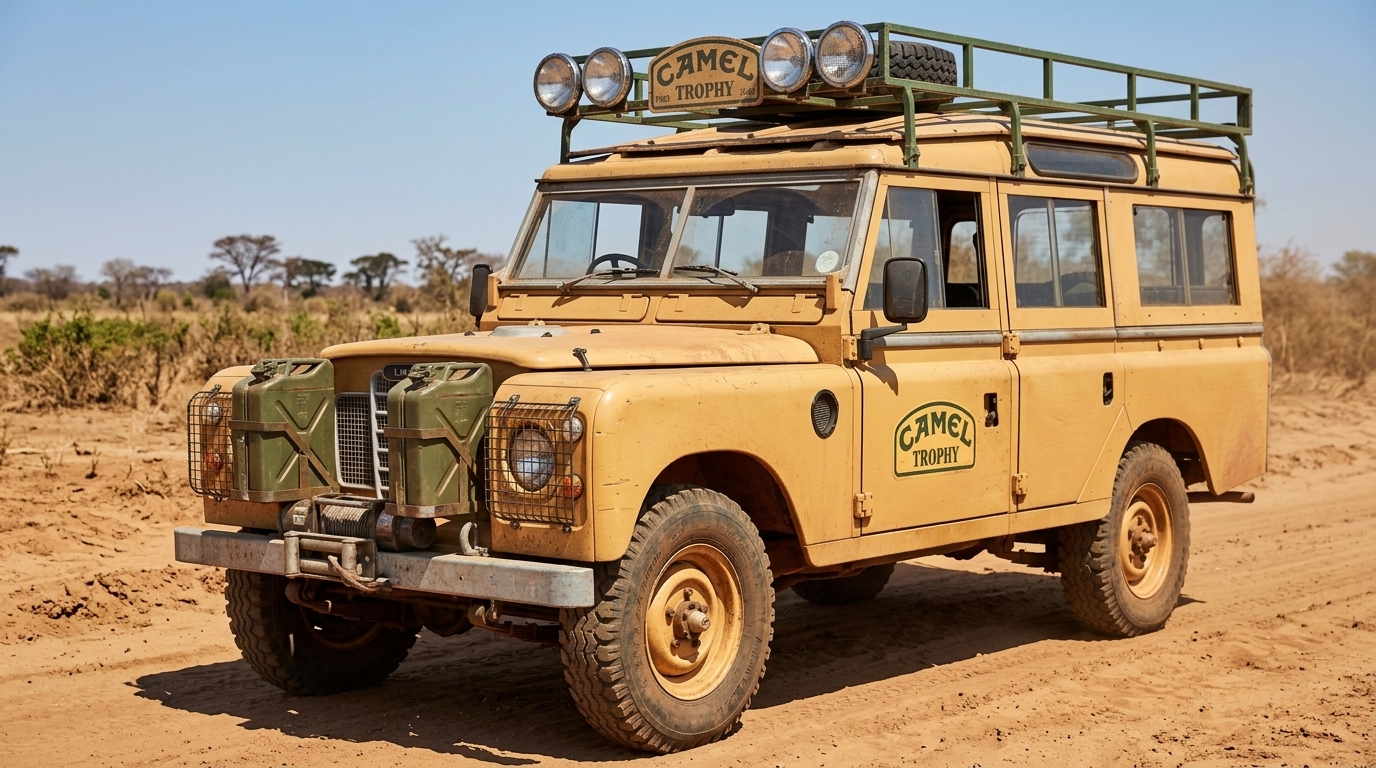 Camel Trophy 1983 — Series III 109 Support1983Camel Trophy 1983 — Series III 881983Camel Trophy 1984 — One Ten1983 · United Kingdom
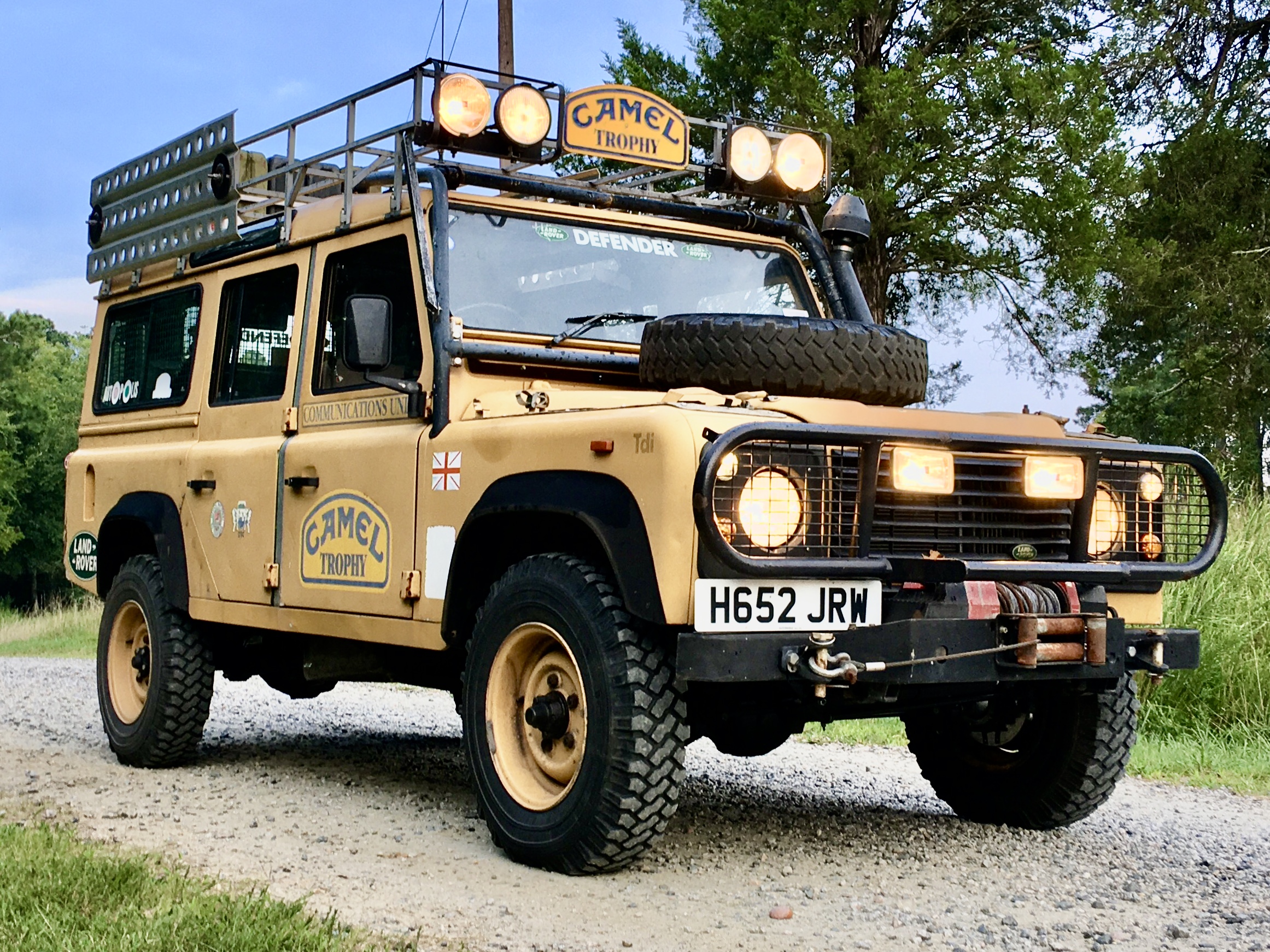 Camel Trophy 1101984–89 · United KingdomCamel Trophy 1985 — Ninety1985BAMA Ninety rally vehicle — Romeo Four1986 · United Kingdom
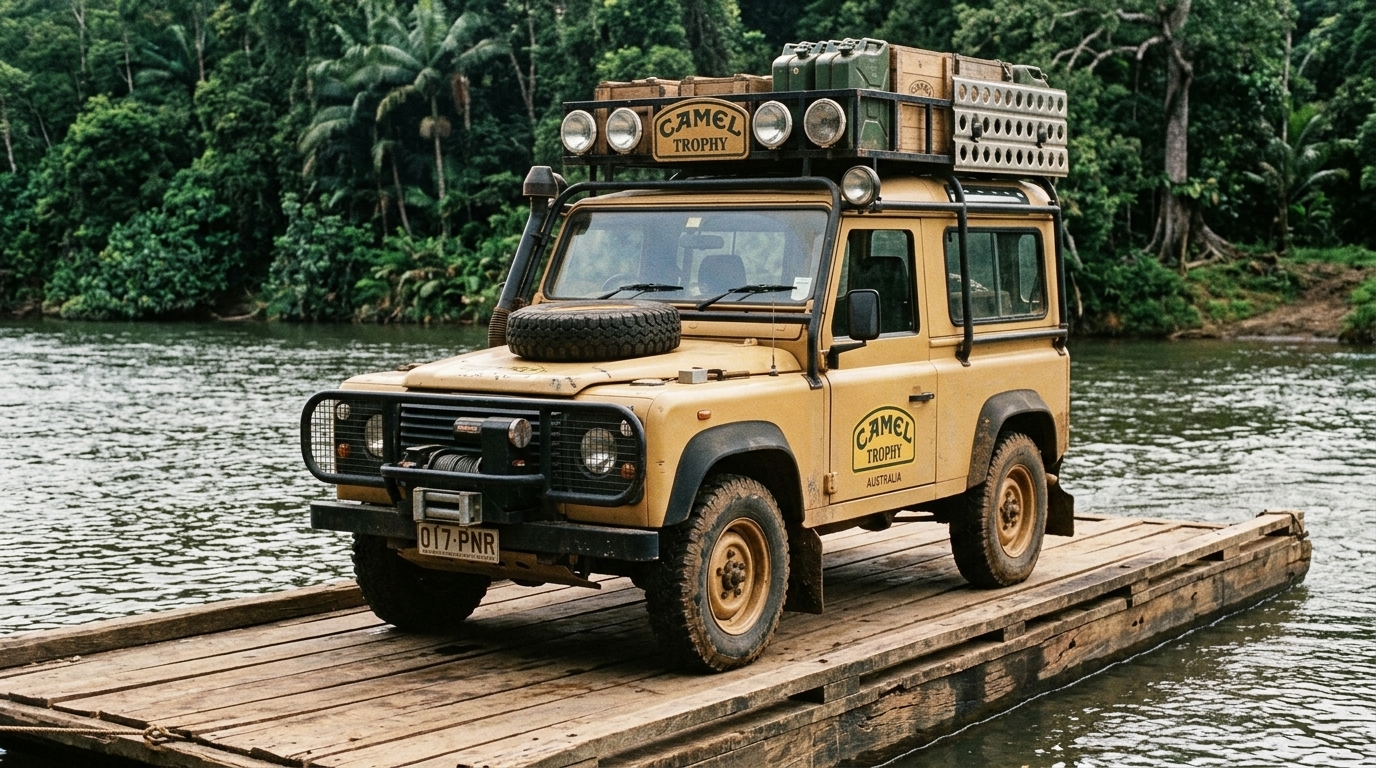 Camel Trophy 1986 — Ninety1986
 Bob and Joe Ives — Camel Trophy winner1988 · United KingdomCamel Trophy 1988 — One Ten1988
 Camel Trophy 1989 — Amazon One Ten1988 · United Kingdom
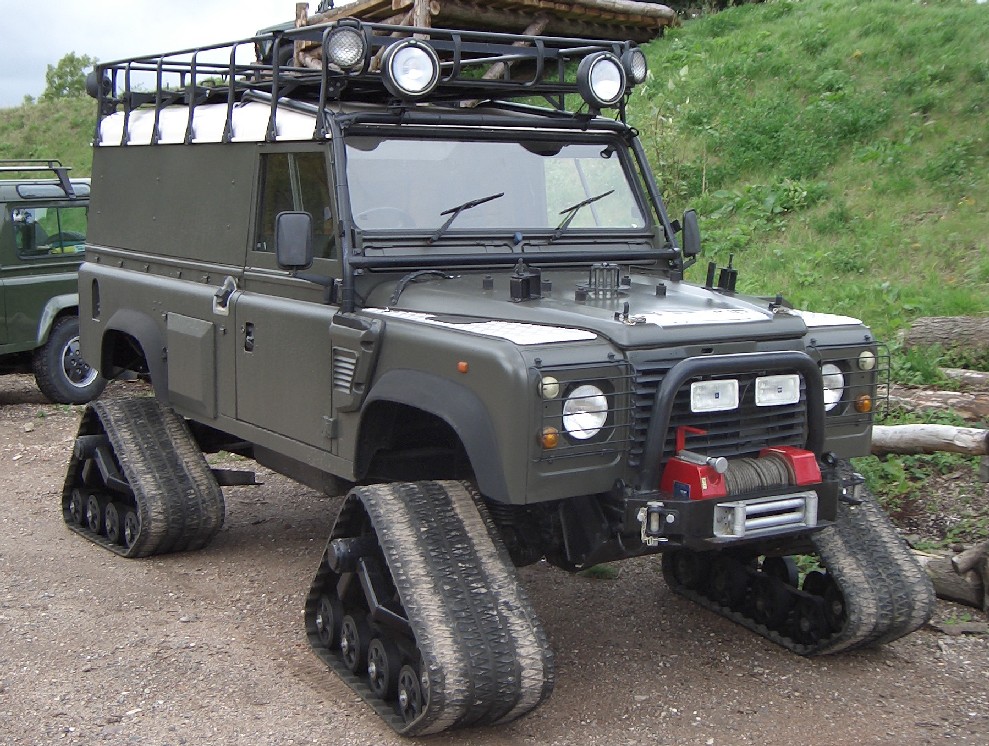 Global Expedition Wolf with Mattracks1994 · United Kingdom
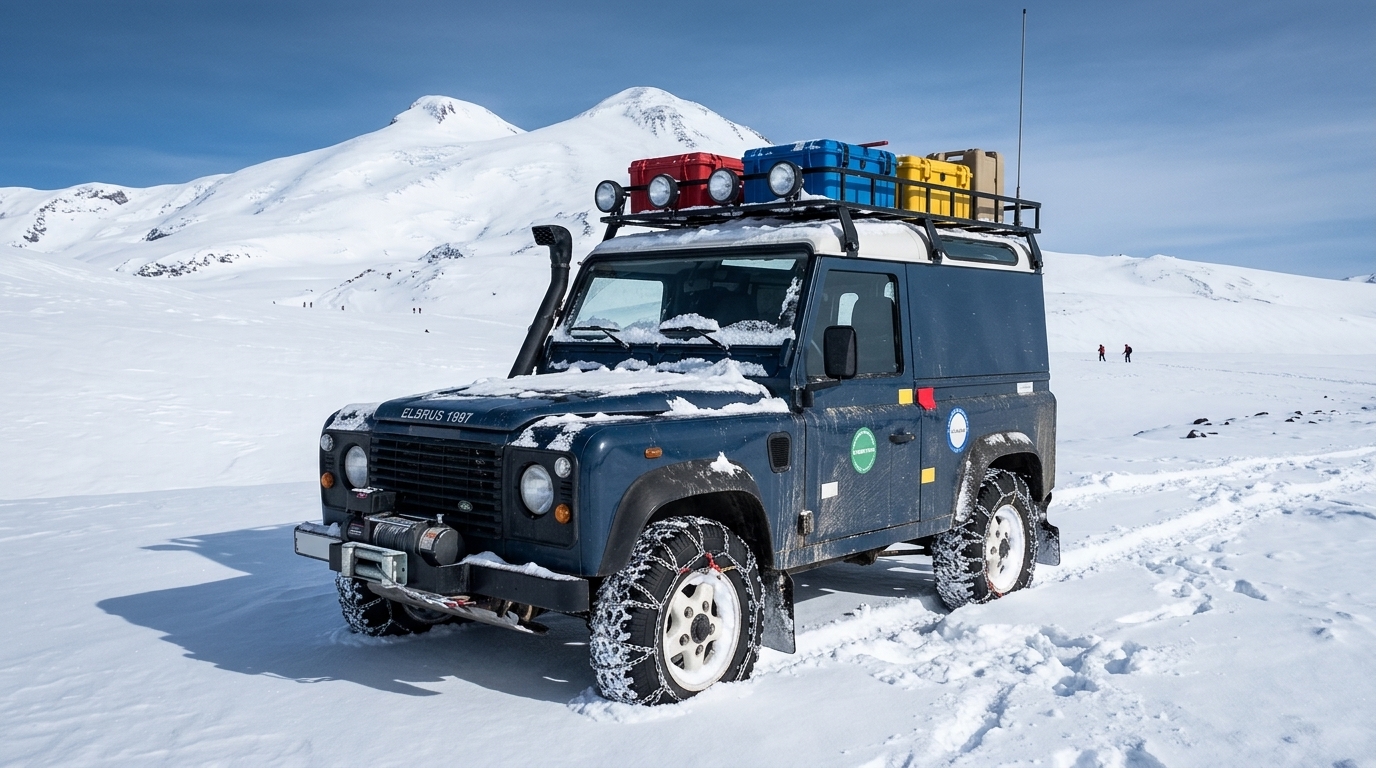 1997 Elbrus Expedition Defender 901997 · United KingdomFifty 50 Challenge Wolf 1101997 · United KingdomCapricorn Expedition — Chuma2001 · United KingdomCapricorn Expedition — Susi2001 · United Kingdom
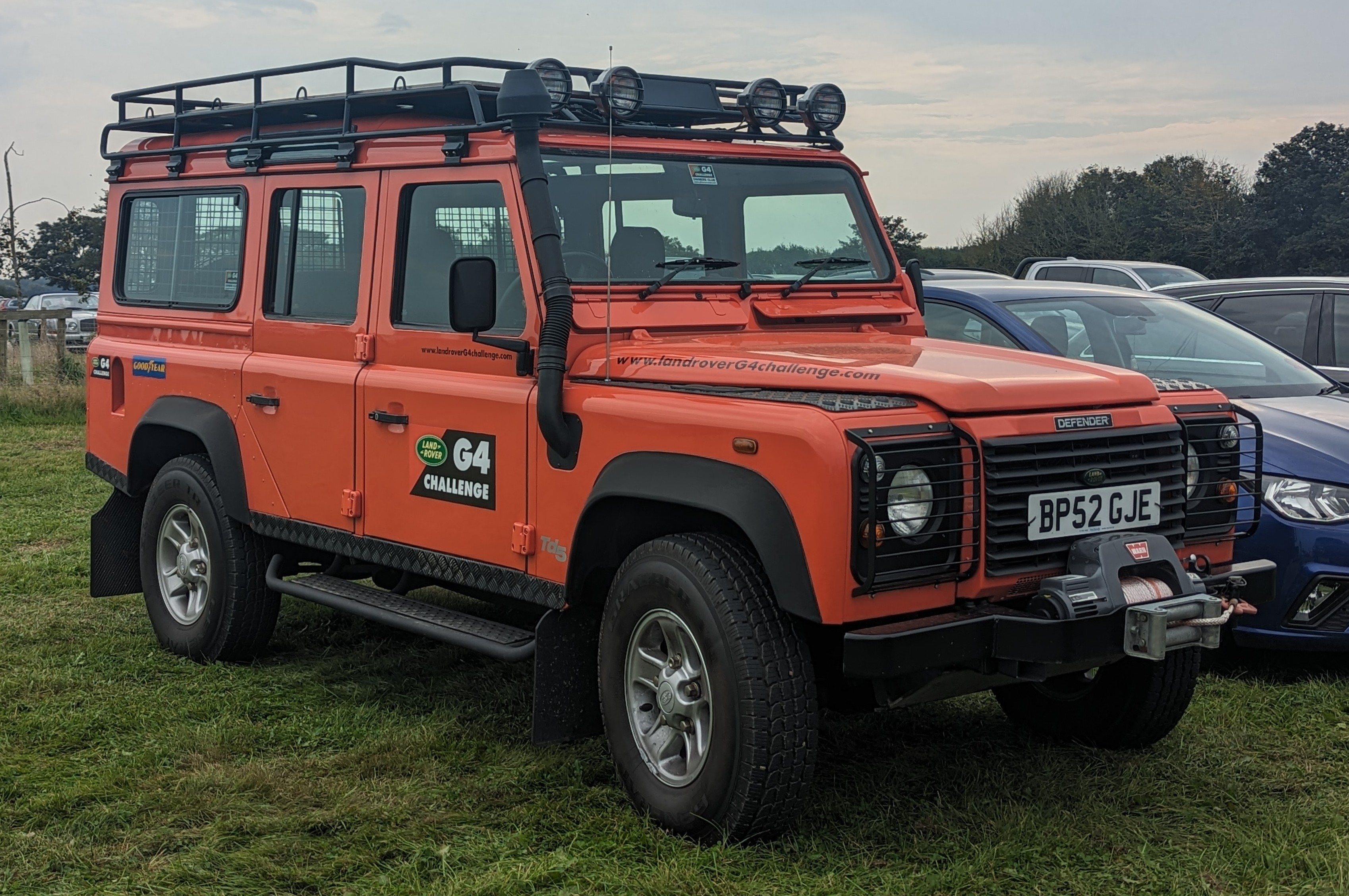 G4 Challenge 2003 Defender 110 Td52002G4 Challenge 2006 Defender 110 Support2005
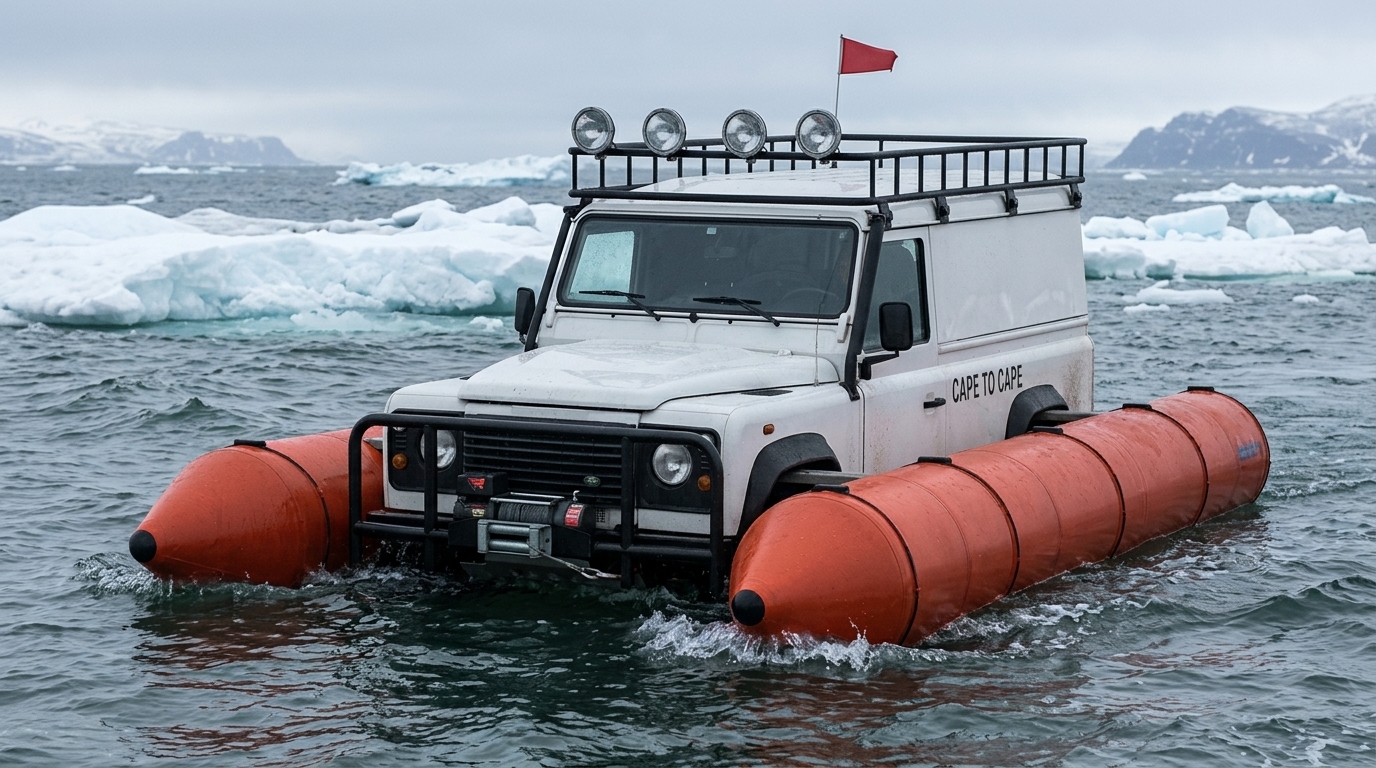 Cape-to-Cape / Bering Strait Defender2007 · United Kingdom
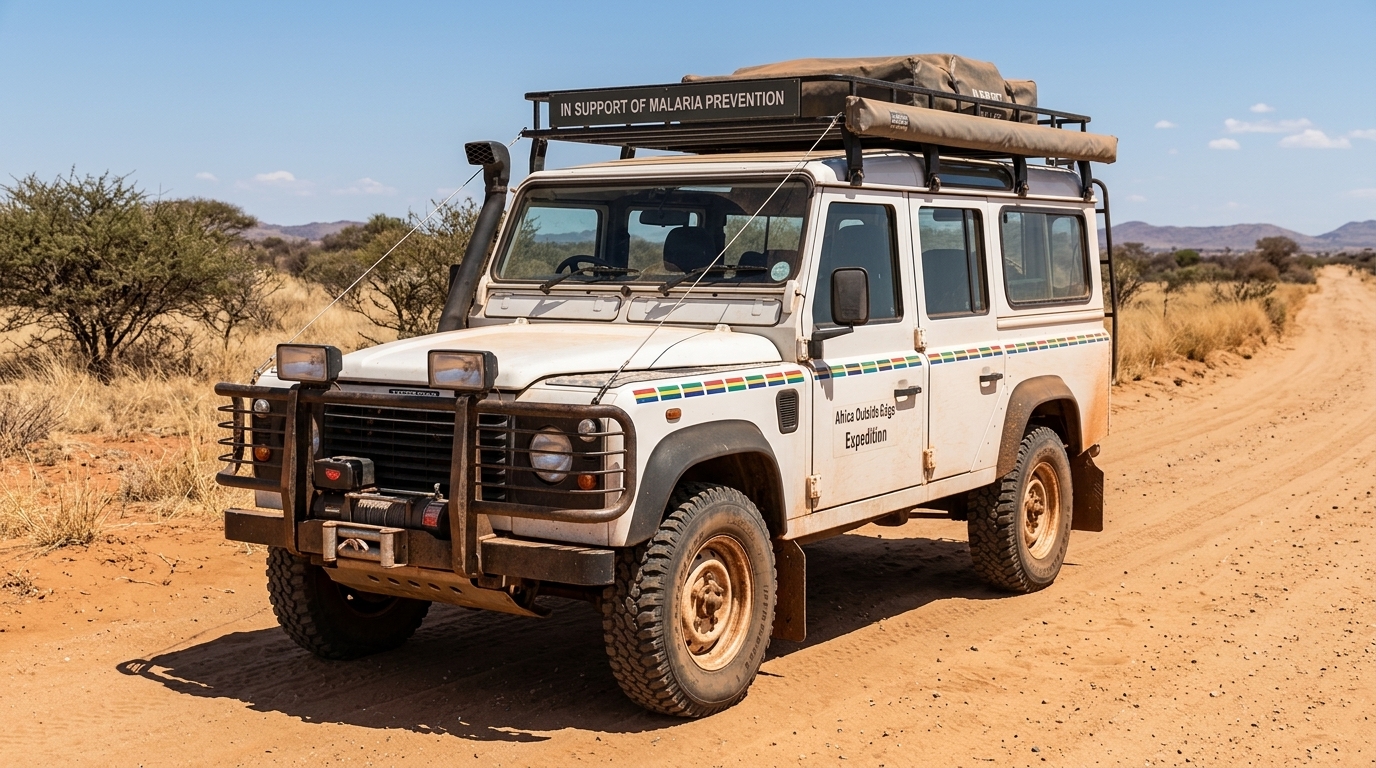 Holgate Outside Edge Defenders2007Volcano Trails Super Defender2007–16 · United Kingdom / Iceland
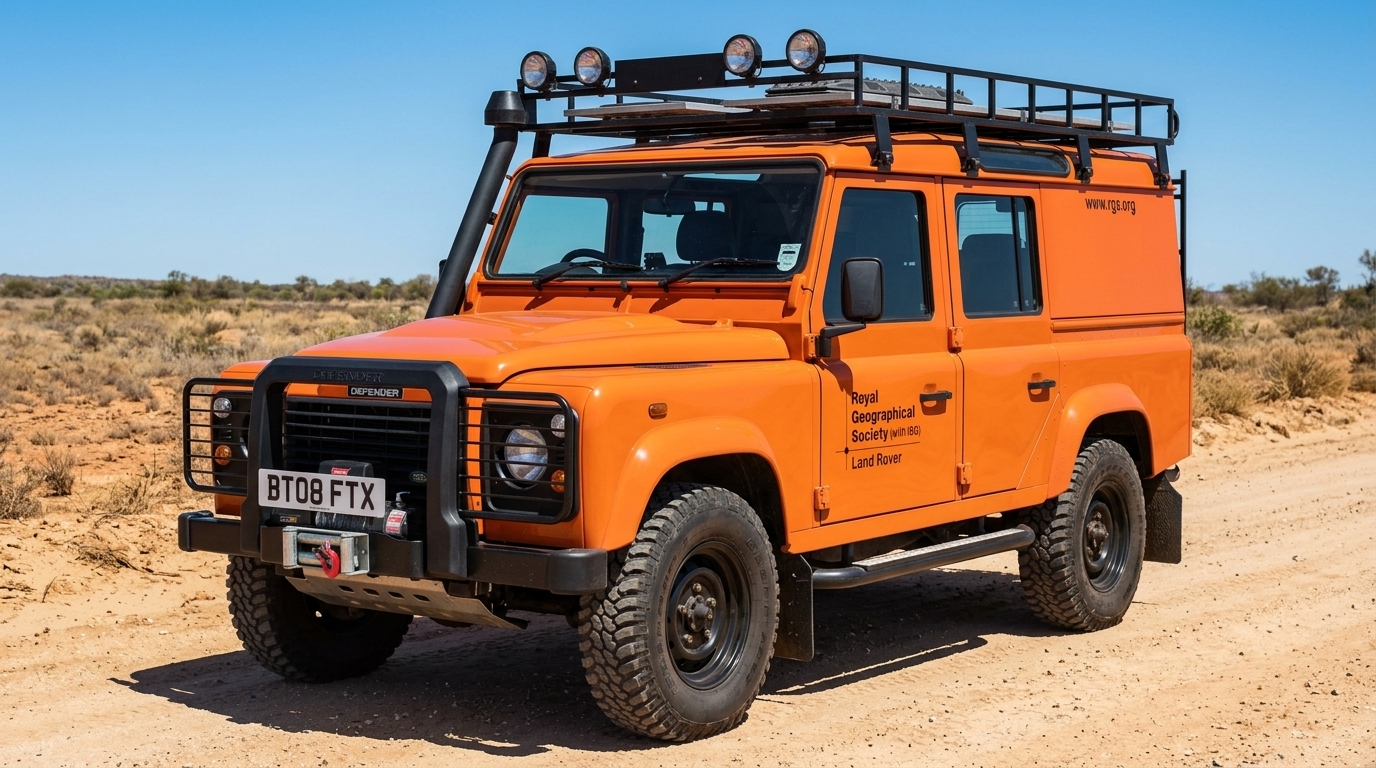 Atlantic Rising — Beatrice2008 · United KingdomFault Line Living — Lottie2010Foley Defender 110 Sand Expedition Wagon2011 · United KingdomPole of Cold Defender 1102013 · United KingdomTrail by Fire Defender 1102014 · United Kingdom
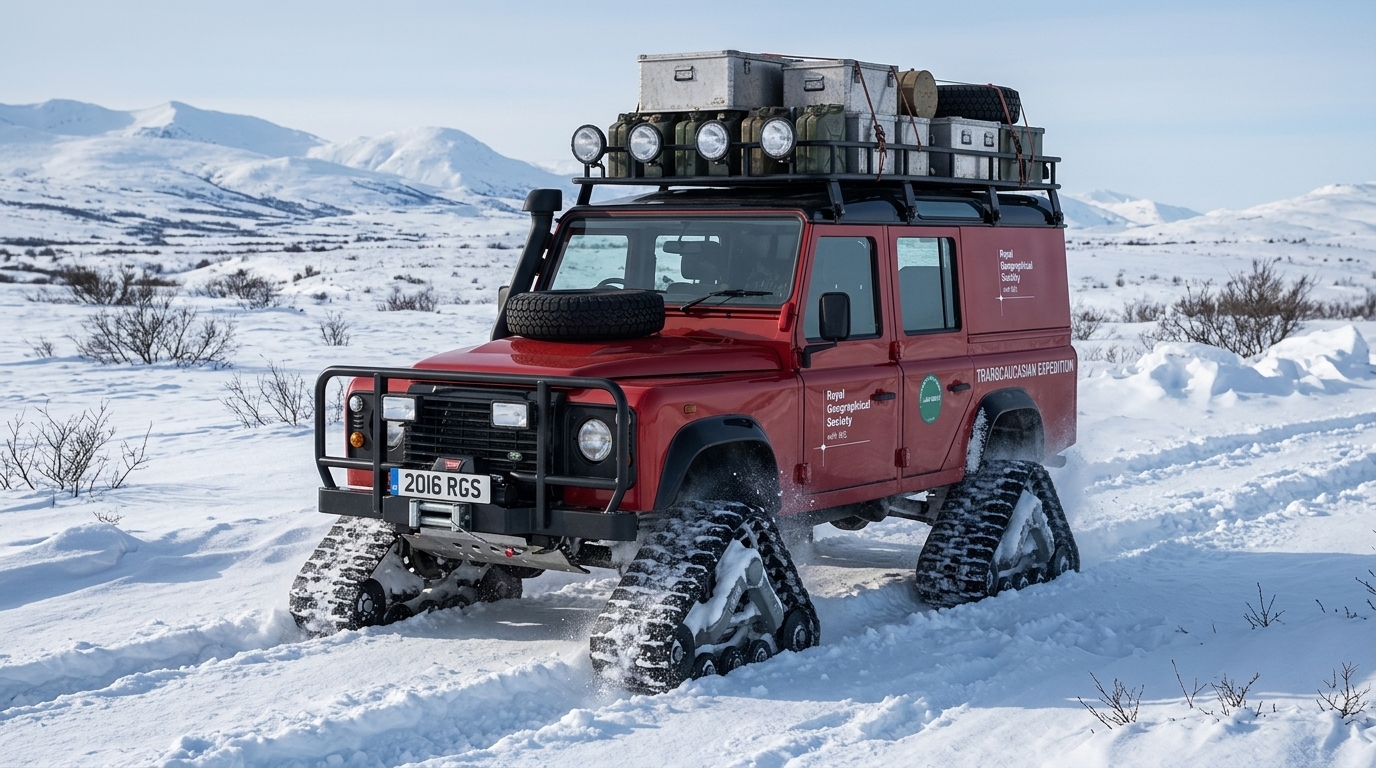 Transcaucasian Expedition Defender 1102016 · United KingdomDefenderX Amphibious Defender 1102020 · United Kingdom
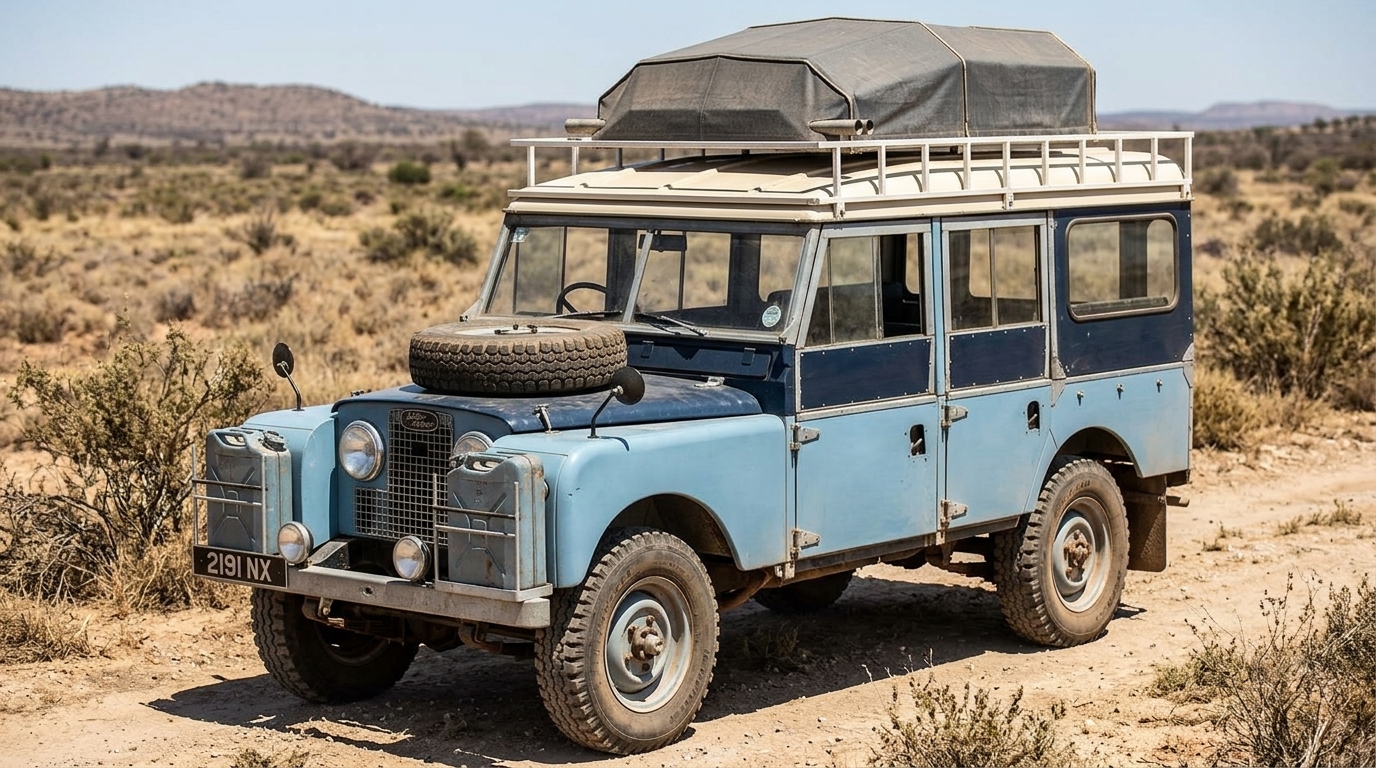 Encounter Overland — 2191 NXUnited Kingdom